Build Strength with More Support and Less Guesswork
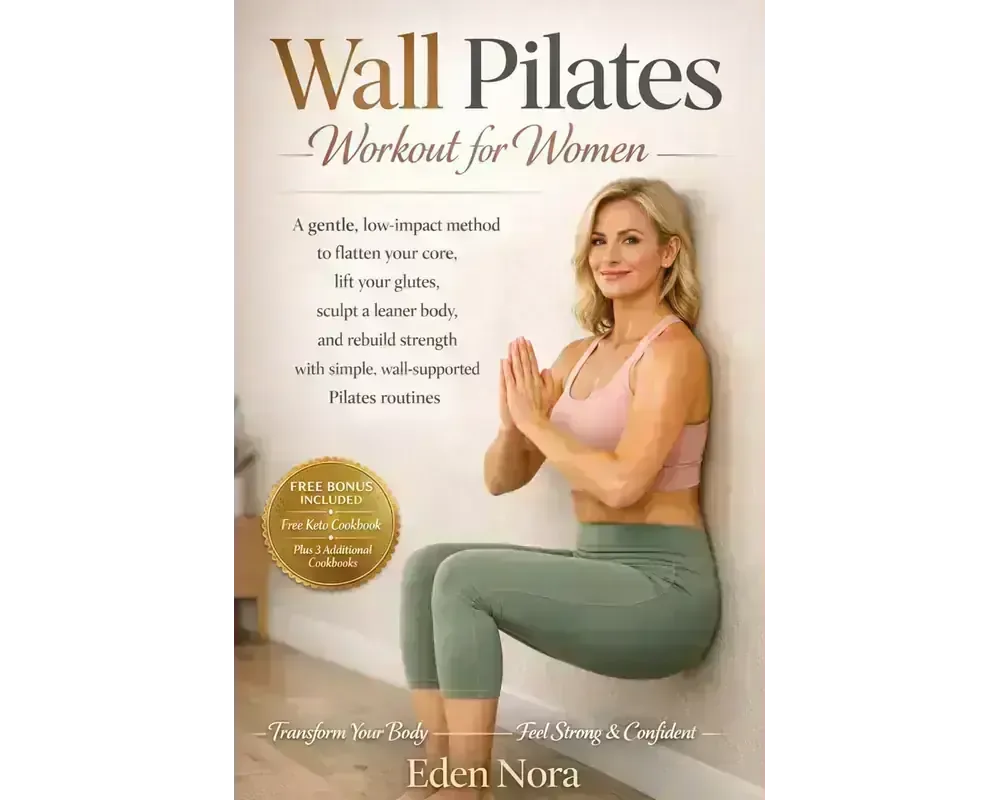
You do not need an elaborate studio setup to begin practicing controlled movement. Wall Pilates Workout for Women introduces a low-impact approach to Pilates in which a stable wall can help guide body position, balance and awareness. The book is intended for women exploring movement for the first time, returning after a break, or looking for a more approachable routine than a high-intensity class.
Its central idea is practical: begin with movements you can understand, learn how your body responds, and build a rhythm you can return to. A wall is a support tool, not a shortcut to guaranteed weight loss, a flat stomach or a particular body shape. Your starting strength, technique, consistency and recovery all affect what you gain from exercise.
What Wall-Supported Pilates Can Help You Practice
Pilates emphasizes controlled movement, alignment and deliberate engagement of muscles. Adding the wall can provide a consistent reference point as you explore balance and positioning. Depending on the exercise, this may make it easier to focus on the trunk, hips and legs without rushing through repetitions or complicated choreography.
The wall cannot eliminate every risk or make an exercise suitable for everyone. Some positions may still challenge your balance, wrists, knees, shoulders or back. What matters is the quality of movement and whether the chosen variation suits your body, not how many exercises you complete in one session.
Inside the Workout Guide
Readers can use the book to organize an at-home routine around simple, repeatable movement patterns. The practical material covers:
- Beginner-friendly wall-supported exercises and guidance on finding a comfortable starting position.
- Core-focused movements intended to develop control and trunk stability.
- Glute and lower-body sequences for muscular engagement, balance and coordination.
- Full-body combinations that offer variety without requiring advanced equipment.
- Form cues that encourage appropriate pacing, alignment and range of motion.
- Ways to build consistency with a routine you can adapt to your schedule.
Rather than treating soreness or exhaustion as proof of progress, the guide encourages attention to how each exercise feels. Learning a few movements well can be more valuable than collecting routines you cannot perform comfortably.
Start with Your First Session, Not a Perfect Plan
A first workout might involve choosing a few basic movements, checking your footing, and allowing time to understand each position. Make sure the wall is stable and the floor is not slippery. Move slowly enough to notice when your posture changes or when the exercise becomes uncomfortable. There is no need to force an extreme stretch or to maintain a position that causes pain.
For a step-by-step starting framework, see Mayobook’s Wall Pilates for Beginners. Before increasing repetitions, review the related Wall Pilates Mistakes resource for common positioning and pacing problems. Both belong to the same published Product Authority Cluster as this book.
Build a Routine Around Your Life
A sustainable fitness habit leaves room for everyday demands. You could begin with short sessions at predictable times, then add duration or variety when you feel comfortable. The point is to create enough structure to practice regularly without turning a missed workout into a reason to abandon the plan.
If you already walk, stretch or do other forms of exercise, wall Pilates may become one part of a broader movement routine. Gradual strength progression, rest, and other activities still matter. There is no evidence that a specific wall exercise will selectively burn fat from the abdomen or permanently change body proportions.
Who May Find This Book Useful?
Wall Pilates Workout for Women is a resource for readers who prefer straightforward instructions, controlled at-home exercise and a lower-impact entry point into strength and mobility. It can be especially appealing to someone curious about Pilates but unsure where to begin, or a reader who wants to feel more confident about form before increasing intensity.
Exercise should still be adapted for your circumstances. If you are pregnant or postpartum, recovering from an injury or operation, managing chronic pain, or experiencing balance difficulties, consider guidance from an appropriate health or exercise professional. Stop if a movement causes sharp pain, dizziness, chest discomfort or other concerning symptoms.
Progress Is About What You Can Practice Reliably
Meaningful improvement comes from appropriate effort repeated over time, not a dramatic first week. The goal of this book is to make Pilates movements more accessible and help readers develop a clear, manageable practice. Begin where you are, protect good technique, make adjustments when needed, and build a routine that supports strength, mobility and confidence without unrealistic promises.