
Wall Pilates Mistakes: Common Form Errors and How to Fix Them
Small setup and form errors can make Wall Pilates feel ineffective or uncomfortable. Learn how to correct wall distance, rib and pelvic control, knee tracking, breathing, tempo, progression, and common pain-provoking compensations without forcing your body through warning signs.
Keep Learning—Listen Free
Short, practical audiobooks for your next step.

Imposter Syndrome: Why Success Still Makes You Feel Like a Fraud | Full Audiobook
Imposter syndrome can make real success feel undeserved and every new achievement…

How to Stop Catastrophizing: Break the Worst-Case Thinking Loop | Full Audiobook
Learn how to stop catastrophizing and break the worst-case thinking loop that…

Emotionally Immature Parents: How Their Patterns Shape Your Adult Life | Full Audiobook
Emotionally immature parents can shape adult relationships, boundaries, self-worth and the way…

High-Functioning Anxiety: Why You Look Fine but Never Feel at Peace | Full Audiobook
High-functioning anxiety can make you look calm, capable and successful while constant…

The Art of War Explained: Sun Tzu’s Strategy for Winning Without Fighting | Full Audiobook
The Art of War, Sun Tzu, Art of War explained, strategy, winning…

Arthur Schopenhauer: Why You’re Never Satisfied — The Psychology of Desire | Full Audiobook
Arthur Schopenhauer, Schopenhauer philosophy, the psychology of desire, hedonic adaptation, the hedonic…

Friedrich Nietzsche: What “God Is Dead” Really Means — And How to Create Meaning | Full Audiobook
Friedrich Nietzsche, “God is dead,” Nietzsche philosophy, nihilism, existentialism, the meaning of…

High Agency: How to Become the Person Who Always Finds a Way | Full Audiobook
High agency is the psychology of becoming resourceful, taking initiative, and creating…

How to Find Your Purpose When You Feel Lost: Build a Life That Actually Means Something
Learn how to find your purpose when you feel lost, discover what…
Wall Pilates can look deceptively simple: put your feet or body against a wall and follow a sequence. In practice, small setup errors change the exercise quickly. Standing too close, over-arching the lower back, letting the knees drift, pressing into the wall harder than necessary, or racing through repetitions can turn a controlled movement into something that feels awkward, ineffective, or irritating.
The goal is not to chase a textbook pose. Good form means the exercise creates the intended muscular challenge while you can breathe, control the range, and keep the joints reasonably comfortable. Your proportions, mobility, strength, and the specific exercise all affect what that looks like.
The Most Common Wall Pilates Mistakes
The mistakes that matter most are usually not dramatic. They are repeated compensations that change where the work goes:
- using one wall distance for every exercise;
- letting the ribs flare and lower back over-arch when the legs move;
- allowing the knees to collapse inward or twist away from the feet;
- shrugging the shoulders or gripping the neck;
- pushing into the wall so hard that you brace and hold your breath;
- using momentum instead of controlling the lowering phase;
- progressing volume before you can repeat the movement cleanly;
- treating pain as proof that an exercise is “working.”
Most of these can be improved by changing one variable at a time. If a movement produces sharp, radiating, worsening, or destabilizing symptoms, however, do not assume it is merely a form problem that you should troubleshoot alone.
Mistake: Starting Too Close to—or Too Far From—the Wall
There is no universal distance from the wall that works for every body and every exercise. A number measured in inches or centimeters may be a useful starting cue in a specific routine, but it cannot account for height, limb length, ankle mobility, hip mobility, or the leverage of a particular movement.
If you stand too close during a wall squat, you may feel crowded and unable to keep your feet planted comfortably. Too far away, and you may slide, overreach, or lose the ability to control pressure through the feet. During floor-based work, placing the feet too high or too low can shift the angle at the knees and hips and change how much the hamstrings, glutes, or quadriceps contribute.
Use performance rather than a fixed measurement as your guide. Ask:
- Can I keep the whole foot or intended contact point stable?
- Can I move through the planned range without sliding?
- Can I keep the pelvis and ribs controlled without excessive arching?
- Can I breathe instead of bracing as hard as possible?
- Can I repeat the movement with similar form from one repetition to the next?
If the answer is no, move a little closer or farther away and retest.
Mistake: Letting the Ribs, Pelvis, Knees, or Shoulders Drift
Wall contact can help you notice alignment, but it can also tempt you to force your entire body flat against the surface. That is not necessary for every exercise. The useful question is whether your position supports the movement you are trying to perform.
Ribs and pelvis
A common compensation during leg movements is to let the ribs lift and the lower back arch as the leg moves farther away. That often means the range has exceeded what you can control. Reduce the range, slow down, exhale through the difficult part, and think about keeping the rib cage stacked more comfortably over the pelvis rather than trying to crush the lower back flat.
Some Pilates exercises intentionally use a more flexed or imprinted spinal position, while others work from neutral. One position is not automatically correct for every movement. Follow the intended exercise setup and prioritize control over forcing a shape.
Knees and feet
During squats, lunges, bridges, or leg presses, the knees should generally move in a direction that is compatible with the feet and hips rather than collapsing sharply inward or twisting. If the knees feel unstable, reduce depth, adjust stance width, slow the movement, and make sure the feet are not slipping.
Shoulders and neck
When effort rises, many people elevate the shoulders or push the head forward. Relax the jaw, allow space between the shoulders and ears, and reduce the leverage if you cannot maintain that position. In a wall plank, for example, stepping closer to the wall can reduce the demand while you relearn shoulder control.
Mistake: Using Momentum Instead of Control
Pilates-style exercise depends heavily on controlling the path of movement. If the leg swings, the hips bounce, or the body drops through the easiest part of a repetition, you may complete more repetitions while creating less useful tension.
Try a pace that lets you feel both directions of the movement. The lowering phase should not simply be a fall back to the start. That does not mean every repetition must be performed in exaggerated slow motion; it means you should be able to stop or reverse the movement without losing your position.
Breathing is another useful quality check. If you repeatedly hold your breath during a moderate exercise, you may be using more effort than necessary or bracing around poor control. Exhale through the harder portion when that helps, then inhale without losing your position. The exact breathing pattern can vary, but continuous breathing is usually a better sign than repeated breath-holding.
Mistake: Pressing Into the Wall as Hard as Possible
The wall is a tool, not an opponent. More pressure can increase muscular demand in some exercises, but excessive pressure may also make you grip, lock joints, or lose the intended movement.
Use enough contact to create support or resistance while keeping the movement smooth. If you feel the exercise only in the hands, shoulders, neck, or one joint instead of the intended muscles, reduce the pressure and reassess the setup. A lighter, more controlled contact can sometimes make the target muscles work more effectively because you are no longer using the wall to compensate.
Mistake: Doing Too Much, Too Soon—or Never Progressing
Two opposite programming errors can stall Wall Pilates progress.
The first is doing a high-volume routine every day because the exercises are labeled low impact. Muscles and connective tissues still respond to workload. If your sessions become more challenging, recovery matters. Persistent soreness, worsening joint discomfort, declining performance, unusual fatigue, or steadily deteriorating form are signs to reduce the load or add recovery.
The second error is repeating the same easy routine indefinitely. Once an exercise is comfortable and controlled, adaptation requires a new challenge. Progression might mean a larger pain-free range, longer lever, slower lowering phase, more controlled repetitions, less wall assistance, a more complex coordination demand, or appropriate added resistance. Progress does not have to mean more days every week.
Why Wall Pilates May Hurt Your Lower Back, Knees, Neck, or Wrists
Exercise discomfort can have many causes, so a general article cannot diagnose the source. It can, however, help you identify exercise variables worth adjusting.
Lower back discomfort
Common exercise-related contributors include moving the legs farther than the trunk can control, over-arching during bridges or leg work, using a range that is too large, or trying to force the spine into a position that does not suit the movement. Reduce the range, shorten the lever, slow the repetition, and see whether you can maintain easier breathing and steadier trunk control.
Knee discomfort
Check foot placement, stance width, depth, wall distance, and knee tracking. A shallower squat or bridge angle may be more comfortable. If discomfort persists, choose another exercise instead of repeatedly testing the painful range.
Neck and shoulder tension
Look for shrugging, pushing the head forward, excessive arm pressure, or a variation that is too demanding. Bring the body closer to the wall during plank-like work, lower the arm position, or select a movement that allows the shoulders to stay more relaxed.
Wrist discomfort
Wall-supported plank variations usually load the wrists less than floor planks, but wrist position can still matter. Change hand height or angle, reduce the lean, or use a different exercise if the position remains uncomfortable.
Stop rather than modify through severe or unusual symptoms. Sharp pain, radiating pain, new numbness or weakness, significant dizziness, chest pain or pressure, sudden severe shortness of breath, or loss of balance/control deserve appropriate assessment rather than another set.
A Quick Form Check Before Your Next Session
Before adding repetitions or trying a harder variation, use this five-point check:
- Setup: Is the wall distance appropriate for this specific movement?
- Contact: Are your feet, hands, or back stable without slipping or excessive pressure?
- Control: Can you move through the range without bouncing, twisting, or rushing?
- Breathing: Can you breathe continuously through the effort?
- Response: Do you feel muscular work without sharp, worsening, or destabilizing symptoms?
If one item fails, simplify the movement before assuming you need more intensity. Film a short set from the side or front if that helps you compare repetitions, but do not judge form only by whether it looks identical to someone else’s body. Proportions and mobility differ.
The most productive Wall Pilates sessions are rarely the ones with the most repetitions. They are the ones in which the setup fits your body, the intended muscles have to work, the movement remains repeatable, and the difficulty can be progressed without sacrificing control.
For broader exercise and progression guidance beyond form troubleshooting, explore Mayobook’s fitness, weight loss and body transformation hub.
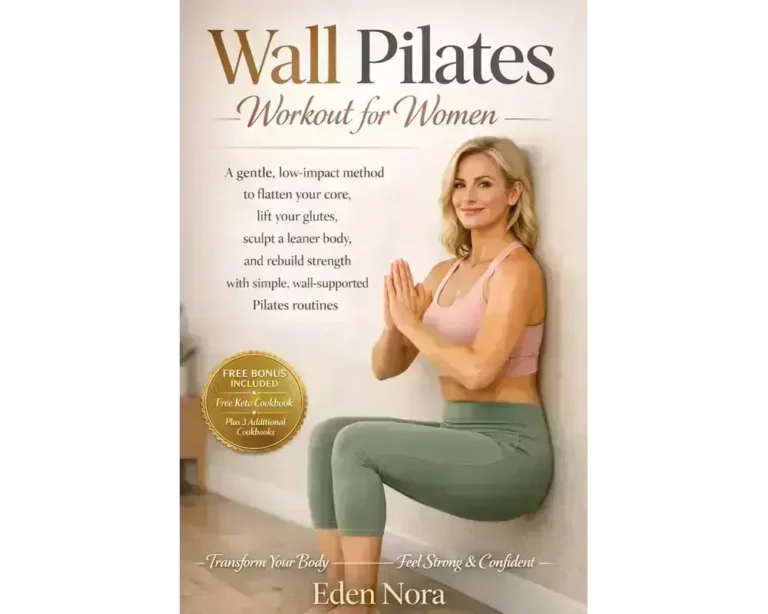
Want the complete system?
Explore the full book for a deeper, structured guide.
Wall Pilates Workout for Women
Wall Pilates Workout for Women offers a gentle, low-impact way to strengthen your core, lift your glutes, improve posture, and sculpt a leaner body…
View the BookMore in Weight Loss & Detox
View category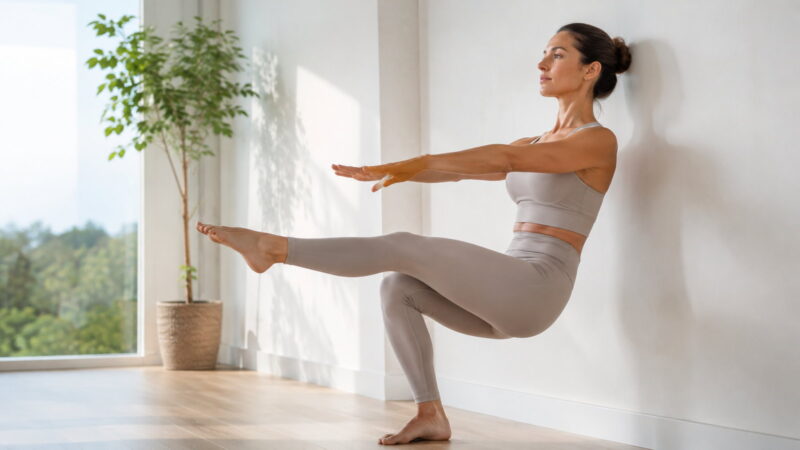
Wall Pilates Benefits: What It Can—and Cannot—Do
Wall Pilates can improve core control, muscular endurance, mobility, balance, and movement confidence—but it is not a shortcut to spot fat loss or dramatic transformation. Here is what the method can realistically do, where the evidence is stronger, and where the hype goes too far.
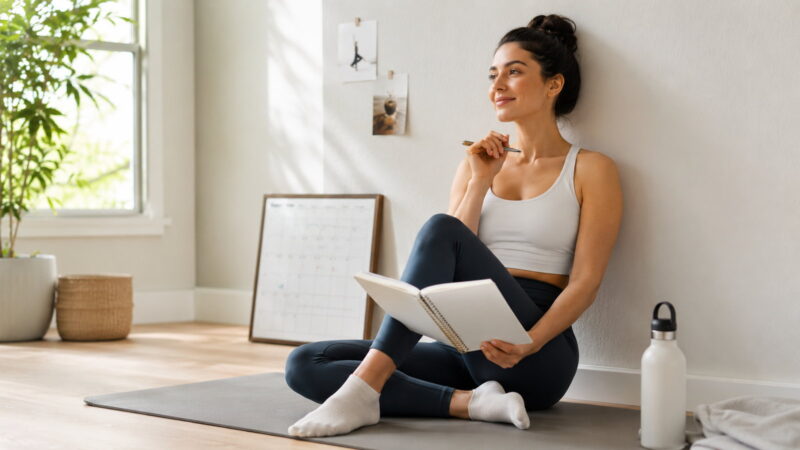
Wall Pilates Before and After: Realistic Results at 4, 8, and 12 Weeks
Wall Pilates results rarely follow a dramatic 28-day transformation script. Learn what may realistically improve around 4, 8, and 12 weeks, why visible changes vary, and how to track strength, control, mobility, balance, and consistency more reliably than photos alone.
Keep exploring
Fitness, Weight Loss & Body Transformation
See the wider Mayobook topic hub with guides, answers, comparisons, and books.
Explore the topic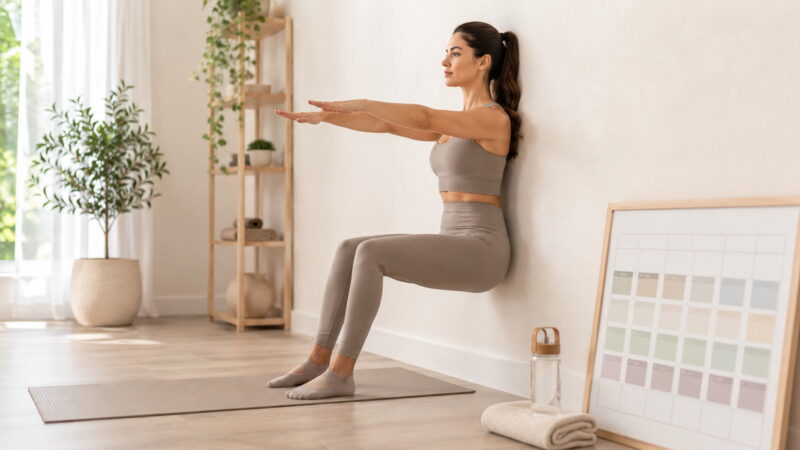
Wall Pilates for Beginners: How to Start, Exercises, and First Routine
Go deeper with a longer structured guide connected to this topic.
View guide
Wall Pilates vs Reformer Pilates: Which Is Better for Your Goals?
See a decision-stage page that helps readers compare the next best option.
Compare options