Is Wall Pilates good for weight loss? It can help, but mainly as one part of a broader plan. A consistent Wall Pilates routine adds physical activity, trains muscles, and can make exercise easier to sustain at home. Those are useful contributions. What it does not do is create a special fat-burning effect, target belly fat, or guarantee that the scale will change.
Weight loss happens when energy intake is lower than energy expenditure over time. Exercise can influence that balance, but the effect of one workout method is only part of the picture. Nutrition, total daily movement, sleep, medications, health conditions, starting body composition, and adherence all affect the outcome.
Is Wall Pilates Good for Weight Loss? It Can Help, but It Is Not a Stand-Alone Fat-Loss Solution
Wall Pilates is best viewed as a low-equipment strength-and-movement option that can support weight management indirectly and directly. It uses energy during the session, can improve muscular endurance and control, and may help someone build a more consistent exercise habit because it is accessible at home.
That does not make it uniquely effective for fat loss. A 15-minute Wall Pilates session can be worthwhile, but the total weekly activity and the overall energy balance matter much more than whether the workout happens against a wall.
How Wall Pilates Can Support a Weight-Loss Goal
It adds purposeful movement
Any exercise that meaningfully increases activity above your usual level contributes to total energy expenditure. Wall Pilates sessions can do that while also training strength and control. The calorie cost will vary with body size, exercise selection, session duration, pace, rest periods, and intensity, so universal “calories burned” promises are not useful.
It can improve muscular fitness
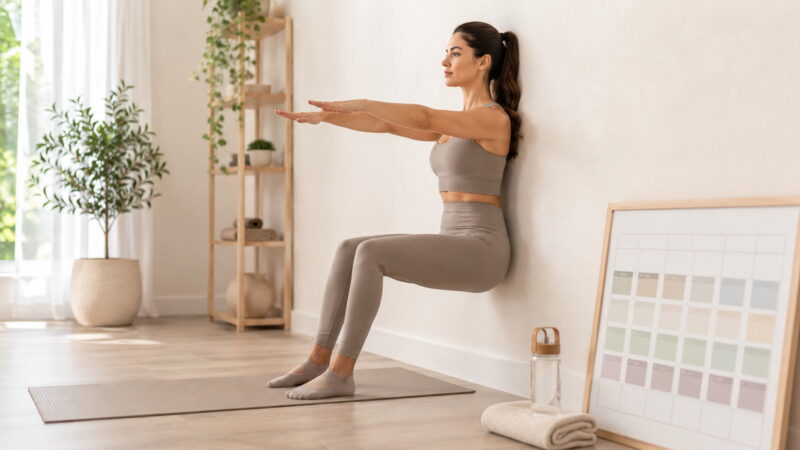
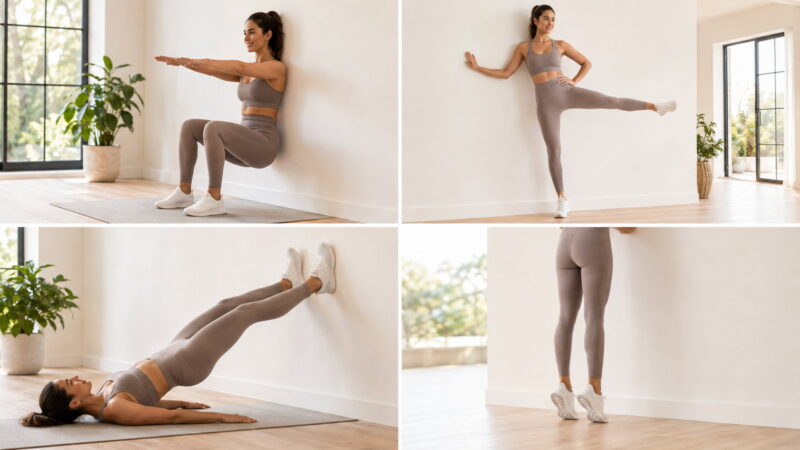
Squats, bridges, wall planks, leg presses, push-up variations, and standing leg work can challenge large muscle groups when the variation is appropriate. Maintaining or improving muscular fitness is valuable during a weight-loss effort because the goal is usually not simply to make body weight lower, but to preserve function and lean tissue while body fat changes.
It can make consistency easier
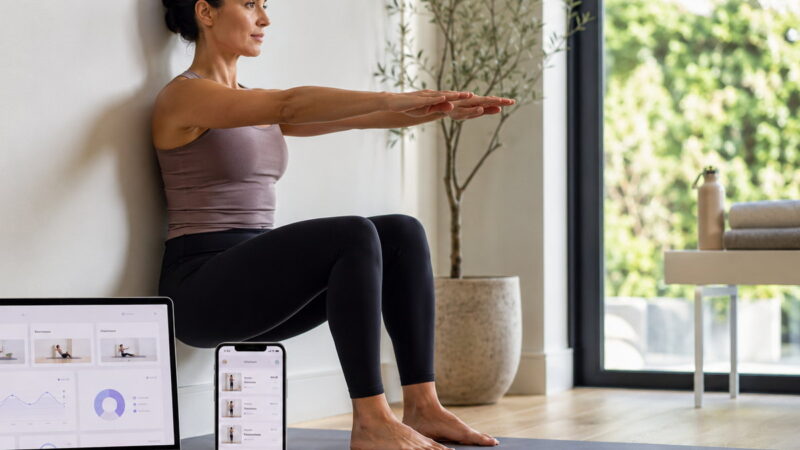
A workout that requires little equipment and can be done at home removes some barriers. If Wall Pilates is the type of exercise you can perform regularly, that practical advantage matters. A modest program completed for months is more useful than an “optimal” plan that is repeatedly abandoned.
It can complement walking or other cardio
Wall Pilates does not need to carry the entire weight-loss plan. Combining it with walking, cycling, swimming, or another form of aerobic activity can raise total weekly movement while letting Wall Pilates focus more on muscular endurance, balance, and control.
Can Wall Pilates Reduce Belly Fat?
Not specifically. Wall Pilates can strengthen abdominal and trunk muscles, but working those muscles does not force the body to remove fat from the abdomen first. Where body fat is stored and where it comes off earliest are influenced strongly by genetics, hormones, sex, age, and total body-fat change.
That means an exercise can make your core stronger without visibly shrinking your waist. It can also contribute to overall fat loss without controlling where the visible change appears first.
Be cautious with routines claiming to “melt belly fat,” “flatten the stomach in seven days,” or create a guaranteed transformation from one set of movements. The same skepticism applies to quick-fix weight-loss claims outside exercise. Mayobook’s analysis of pink salt weight-loss claims and its review of the Himalayan salt flush for weight loss show why short-term scale or appearance changes should not automatically be interpreted as fat loss.
How to Use Wall Pilates in a More Complete Weight-Loss Routine
Instead of asking Wall Pilates to do everything, give each part of your plan a job.
- Wall Pilates: use it for regular resistance-style movement, trunk control, mobility practice, and muscular endurance.
- Daily movement: increase walking, errands on foot, stairs, or other sustainable activity where appropriate.
- Aerobic exercise: add a form you can tolerate and repeat consistently if cardiovascular fitness and higher weekly activity are goals.
- Progressive resistance: as Wall Pilates becomes easier, increase range, leverage, tempo, repetitions, or external resistance so the muscles still receive a meaningful stimulus.
- Nutrition: use an eating pattern that supports an appropriate energy deficit without relying on extreme restriction or “detox” shortcuts.
- Recovery: allow enough sleep and recovery that your exercise quality and daily activity do not steadily deteriorate.
The right balance depends on your starting fitness, health, schedule, and preferences. Someone new to exercise may get a useful training stimulus from simple wall squats and bridges. Someone already strong may need substantially more resistance for the same movements to remain productive.
What Progress to Track Besides the Scale
Scale weight is only one outcome and can fluctuate for reasons unrelated to fat gain or loss. Track a few measures that tell you whether the exercise part of the plan is improving.
- more controlled repetitions at the same effort;
- longer or harder plank variations with stable form;
- greater comfortable range in squats or bridges;
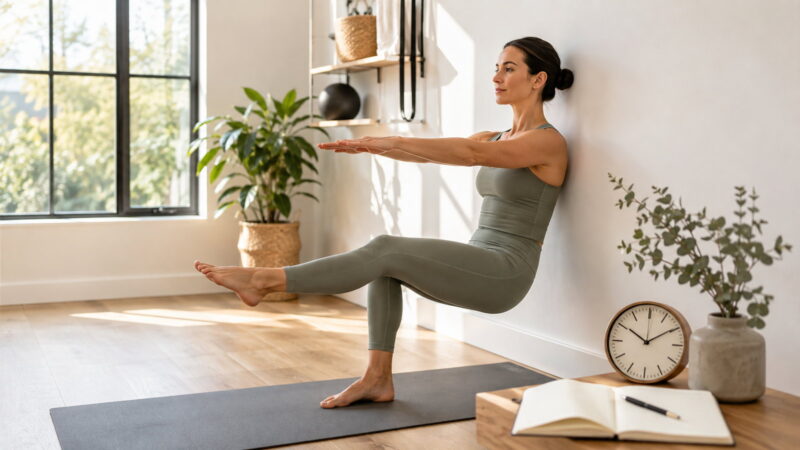
- less wall support during balance work;
- better tolerance for longer sessions;
- more consistent weekly exercise;
- waist or other measurements taken under similar conditions, if useful to your goal;
- body-weight trends across weeks rather than reactions to single-day changes.
These markers help separate fitness progress from body-composition progress. Both can matter, but they do not always move at the same speed.
When Wall Pilates Alone Is Not Enough
If your routine has become easy and you never increase the challenge, it may provide too little stimulus for further muscular adaptation. If your total weekly activity is low, a few short sessions may not create much additional energy expenditure. And if calorie intake consistently exceeds expenditure, Wall Pilates does not override that balance.
It may also be incomplete for people whose goals include substantial strength gains or higher-level cardiovascular fitness. In those cases, add progressively heavier resistance, more demanding conditioning, or another appropriate training method rather than simply adding more identical Wall Pilates sessions.
If you have a history of disordered eating, significant unexplained weight change, or a medical condition or medication that affects weight or exercise tolerance, individualized professional guidance is more appropriate than aggressive calorie targets or generic online weight-loss advice.
Bottom Line
Wall Pilates can be good for weight loss when it helps you move more, train consistently, maintain muscular fitness, and build a routine you can sustain. It is not a shortcut, a belly-fat treatment, or a replacement for the broader factors that determine body-weight change.
Use it as one strong piece of a complete plan: progressive exercise, enough daily movement, appropriate nutrition, and realistic recovery. For broader exercise and body-composition guidance, continue through Mayobook’s Fitness, Weight Loss & Body Transformation hub.