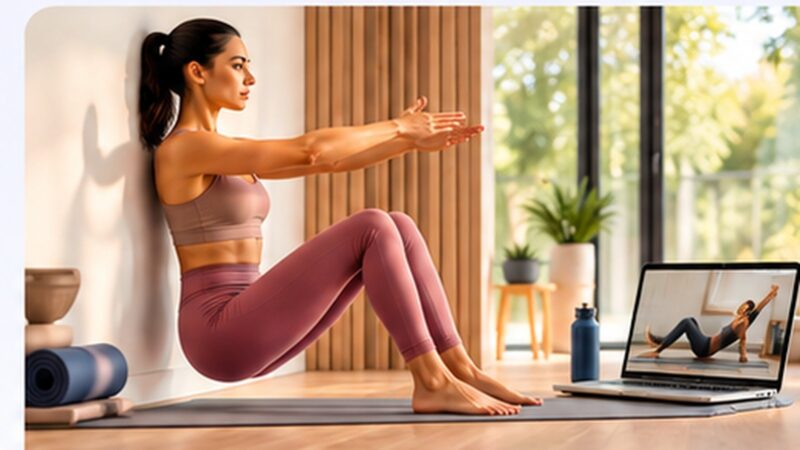
The best free Wall Pilates workout is the one that matches your current ability, available time, and the kind of support you need. A complete beginner may benefit from a slower 15-minute introduction, while someone who already knows the basic movements may prefer a short full-body session or a structured multi-week series.
Every named workout in this collection was rechecked on September 4, 2026 to confirm that it remained publicly accessible without a required paid subscription. Free status can change, so verify access before relying on any external program long term.
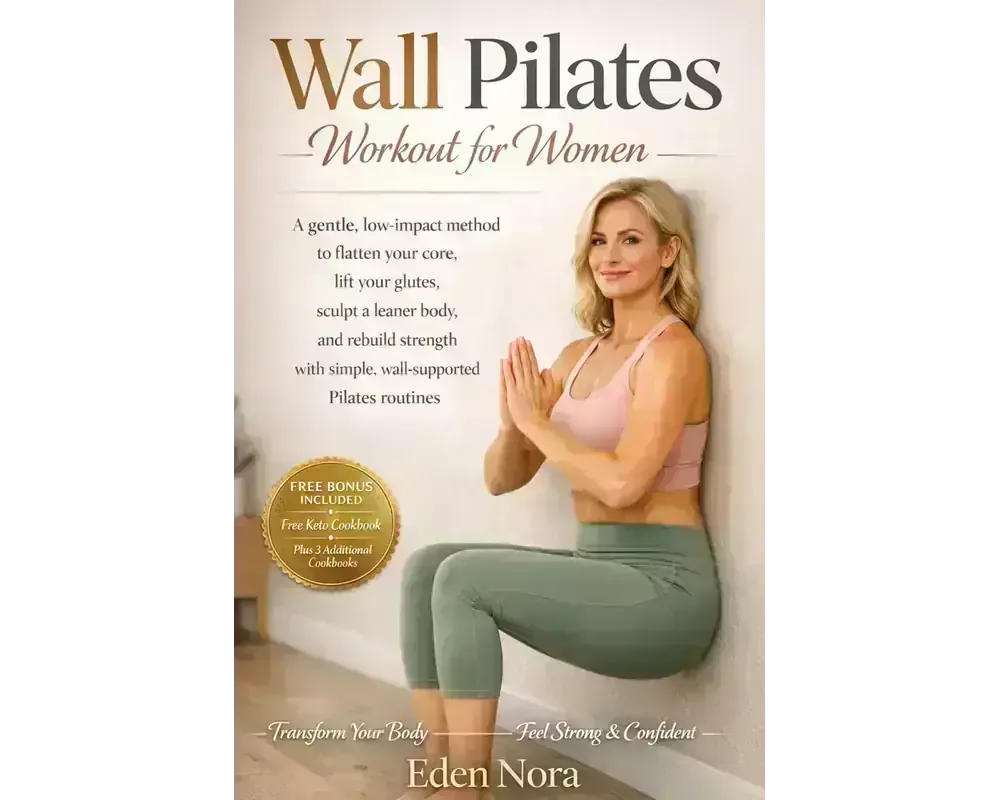
If you want a structured starting point beyond individual videos, Mayobook’s Wall Pilates Workout for Women resources can help you understand the exercises and progression principles before you build a routine from free sessions.
Best Free Wall Pilates Workouts: Quick Picks by Level and Goal
- Best for complete beginners: Jessica Valant’s 15 Minute Wall Pilates Workout for Beginners. It is short enough to feel approachable while still being a complete guided session.
- Best 10-minute beginner option: Callie Jardine Gualy’s 10 Minute Wall Pilates Workout for Beginners, designed as a no-equipment session.
- Best newer short beginner option: Renée Mowatt’s 10 Minute Wall Pilates Workout for Beginners, another no-equipment choice for readers who want a concise routine.
- Best short full-body option: Jessica Valant’s 10 Minute Wall Pilates Workout – Full Body Wall Pilates at Home.
- Best for older adults or readers wanting slower support-focused work: SeniorShape’s Wall Pilates Workout for Beginners & Seniors, approximately 18 minutes.
- Best longer accessible full-body option: SeniorShape’s Wall Pilates for Beginners & Seniors – 30 Minute Full Body Workout, which combines standing and mat-based work.
- Best free 28-day YouTube challenge: Rachel’s Fit Pilates 28 Day Wall Pilates Challenge for Beginners, which points viewers into a free challenge structure and supporting playlist.
- Best free written 28-day plan: Pilates Protocols’ 28 Day Wall Pilates Challenge, a current free four-week plan with progression and lighter days built in.
- Best alternate beginner series: PILATESBODY by Kayla’s 28-Day Wall Pilates Beginner Challenge, built around free YouTube workouts. The videos are free; some supporting calendar/community access may involve an email signup.
What Makes a Free Wall Pilates Workout Worth Recommending
Free access alone is not enough. A worthwhile session should help you exercise with less guesswork, not simply use “Wall Pilates” in the title.
The main criteria used here are:
- True public access: the workout must be usable without a mandatory paid subscription or paid trial.
- Clear instructional purpose: the session should make it reasonably obvious whether it is for beginners, full-body work, core emphasis, seniors, or a challenge format.
- Usable duration: a short clip is not treated as a complete workout simply because it demonstrates one exercise.
- Appropriate pacing: readers should have enough time to understand transitions and maintain control.
- Reasonable progression or modification: good programming gives some way to scale the challenge rather than forcing everyone into the same version.
- Realistic claims: recommendations should not depend on promises of guaranteed belly-fat loss, instant toning, or dramatic transformation in a fixed number of days.
- Source credibility: creator identity, exercise background, consistency of instruction, and the clarity of the source are useful signals when they can be verified.
View count is not a quality score. A video can be popular because of a thumbnail, trend, or challenge promise. The useful question is whether the session fits your needs and can be repeated or progressed safely.
Best Free Workouts for Complete Beginners
Jessica Valant’s 15-minute beginner session is the strongest first choice in this collection because the duration is manageable and the workout is clearly positioned for beginners. Fifteen minutes is long enough to experience a guided sequence without asking a new exerciser to sustain a long session before learning the movements.
Callie Jardine Gualy’s 10-minute beginner workout is a useful alternative when time is the main barrier. It requires no equipment beyond the wall and enough safe space to move.
Renée Mowatt’s 10-minute beginner session offers another short, current option. A newer upload can be useful for variety, but newness alone is not a reason to choose it over a session whose pacing or teaching style suits you better.
If you are completely new, do not rotate among many videos immediately. Repeat one or two sessions long enough to learn the setup and notice whether your control is improving.
Best 10–15 Minute Wall Pilates Workouts
Short sessions are useful when you want a complete movement break or a manageable training day rather than a long workout.
- Callie Jardine Gualy – 10 minutes: best for a concise beginner session without additional equipment.
- Renée Mowatt – 10 minutes: another beginner-oriented short session and a useful alternate teaching style.
- Jessica Valant – 10-minute full body: better when you want a short session explicitly framed as full-body work.
- Jessica Valant – 15-minute beginner: the better pick when an extra five minutes gives you more comfortable pacing.
Ten minutes can be enough to create useful muscular effort or practice, but it is not automatically enough for every fitness goal. The value depends on exercise difficulty, your starting level, what else you do during the week, and whether the routine is progressed over time.
Best Full-Body and Core-Focused Free Workouts
For a more complete session, SeniorShape’s longer full-body workout is useful because it extends beyond a short challenge clip and includes both standing and floor-based components. That also means it is not automatically the best choice for someone who has difficulty getting down to or up from the floor.
Jessica Valant’s 10-minute full-body session is the more time-efficient option when you want broad movement exposure without committing to a longer workout.
For a more core- and lower-body-focused accessible option, SeniorShape’s Beginner & Senior Wall Pilates Workout – Core & Lower Body is approximately 28 minutes and is presented as knee- and wrist-friendly.
Core-focused exercise can strengthen the trunk, but it does not selectively remove abdominal fat. Choose core sessions for strength, endurance, and control—not for spot-reduction promises.
Best Free 28-Day Challenge or Multi-Session Series
If you want a longer structure, the strongest free options are programs that clearly extend beyond one video.
Rachel’s Fit Pilates offers a free YouTube-based 28-day beginner challenge with a supporting playlist and printable challenge material. This is a good fit if you prefer following video instruction and want the next session chosen for you.
Pilates Protocols offers a current free written four-week plan. Its published schedule uses approximately 15–25 minute sessions, five training days each week, and two lighter days. The main advantage is visible progression and recovery structure rather than a random stack of videos.
PILATESBODY by Kayla offers another free beginner challenge based on YouTube workouts, generally around 15 minutes per day. The workout videos themselves are public; some supporting calendar or community material may require an email signup, so readers should distinguish “free with signup” from “paid.”
Mayobook’s dedicated 28-day guide remains the better place for a complete progression framework. This collection is for choosing among external free resources, not reproducing another creator’s full calendar.
Best Free Options for Older Adults or Extra Balance Support
SeniorShape’s 18-minute beginner-and-senior workout is the clearest pick for readers specifically seeking a slower, support-oriented option. Its positioning makes it more relevant than a generic viral challenge for someone who values controlled pacing and accessible exercise choices.
The longer SeniorShape full-body workout can also work for readers who want more time and are comfortable with both standing and mat work.
No online video should be treated as medically safe for every older adult. Balance problems, recent falls, osteoporosis, surgery, cardiovascular symptoms, neurological conditions, and difficulty getting to the floor can change which movements are appropriate. Choose a video that matches your current ability rather than relying on the word “senior” in the title.
How to Choose the Right Workout Length and Difficulty
Use five questions before pressing play:
- How much time do I realistically have? A focused 10-minute session is better than abandoning a 30-minute one halfway through because it never fit your day.
- How recovered am I? If your legs or core are still fatigued from a hard session, choose lighter mobility or technique rather than another demanding workout.
- Can I control the movements? If balance, range, or breathing breaks down early, scale down instead of forcing the instructor’s version.
- Do I need to avoid floor transitions? Choose standing-oriented sessions when getting down to or up from the floor is a barrier.
- Does this session move my program forward? Repeating easy workouts forever may maintain a habit without providing enough progression for new adaptation.
Longer is not automatically better. Difficulty and usefulness come from the exercises, leverage, range, tempo, resistance, rest, and your current capacity.
Are Free YouTube Workouts Enough—or Is an App Better?
Free video workouts can be completely adequate if you can organize your own training. They offer variety, different teaching styles, and no recurring subscription cost.
An app becomes useful when it solves a specific problem: remembering your schedule, selecting the next session, tracking progress, providing a coherent challenge, or reducing the time you spend searching.
The downside of free libraries is unlimited choice. It is easy to jump between unrelated routines, repeat only your favorite movements, or stack several hard sessions because each video is short. The downside of apps is paying for structure you may not need.
Use the format that removes your biggest barrier. Do not pay simply because a free workout feels less “official.”
How to Build a Week From Free Workouts Without Overdoing It
A simple beginner framework is to choose two or three purposeful sessions across the week rather than trying to complete every recommended video.
For example:
- Session 1: a beginner full-body workout.
- Session 2: a shorter session or a different emphasis after adequate recovery.
- Session 3: a longer full-body or progressively harder workout if you are recovering well.
Walking, other cardio, conventional strength training, mobility, and normal daily activity can fill the rest of the week according to your goals. If you follow a structured 28-day series, use its recovery pattern instead of adding several extra Wall Pilates videos on top simply because they are free.
Free content works best when you treat it as programming material rather than an endless playlist. Choose deliberately, repeat long enough to improve, progress when the routine becomes easy, and allow recovery between harder sessions.
For broader programming guidance, continue through Mayobook’s Fitness, Weight Loss & Body Transformation hub.