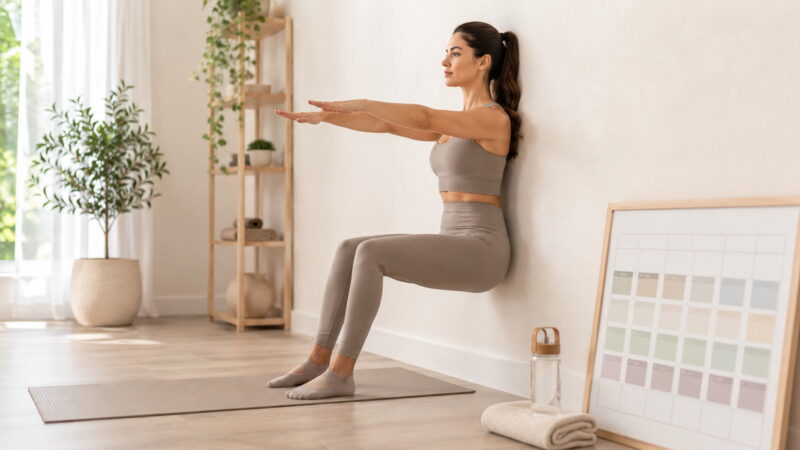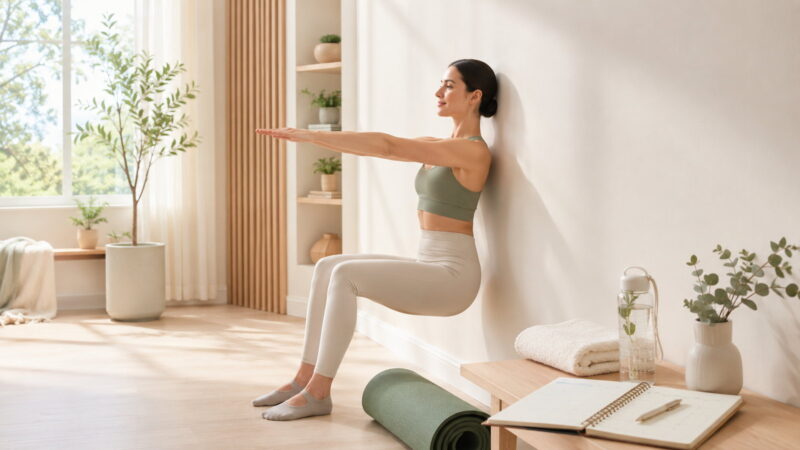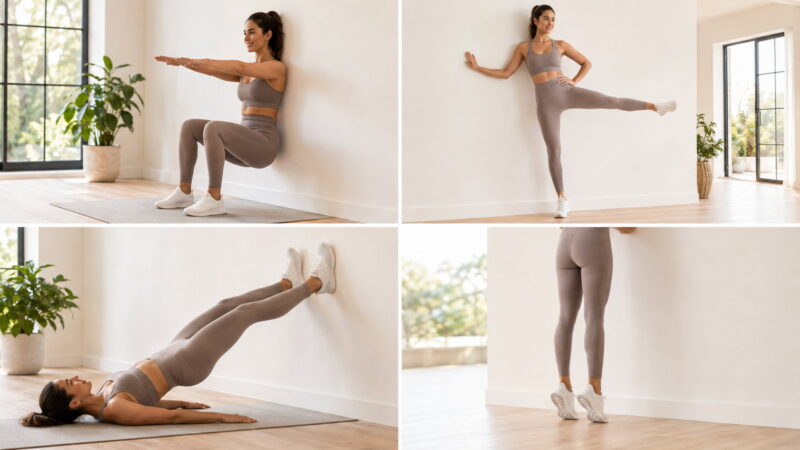
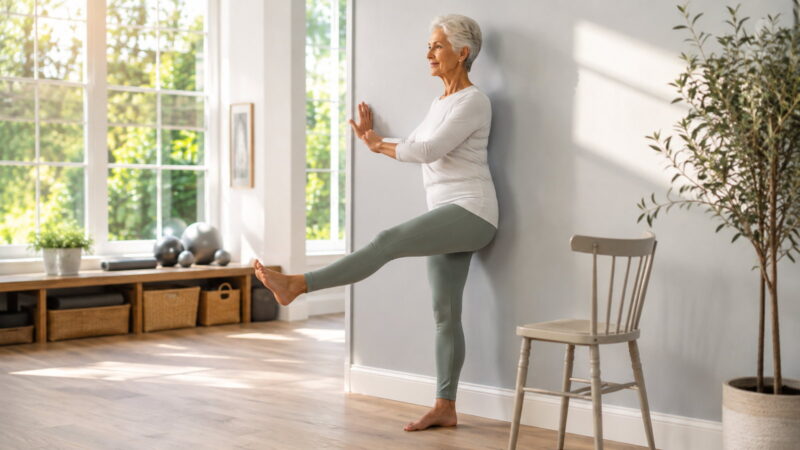
Is Wall Pilates safe for seniors? It can be a practical low-impact option for many older adults when the exercises are matched to the person’s balance, mobility, strength, health conditions, and current activity level. The wall can provide useful support and feedback, but it does not make every exercise automatically safe.
Age by itself is not the deciding factor. An active 70-year-old with good balance may tolerate a routine that is inappropriate for a younger person recovering from surgery or managing significant dizziness. Start from what you can control comfortably, not from what a challenge calendar says you should be able to do.
If you are using Wall Pilates at home, prioritize stable support, predictable transitions, comfortable range, and gradual progression.
Is Wall Pilates Safe for Seniors? Often, With the Right Modifications
Many older adults can participate in Wall Pilates safely, especially when the routine emphasizes controlled movement and does not exceed current balance or strength capacity. Wall-supported squats, gentle standing leg work, heel raises, posture exercises, and selected core movements can be adapted across a wide range of abilities.
However, “low impact” does not mean “no risk.” Some wall exercises require getting to the floor, lifting the legs, holding body weight through the arms, maintaining single-leg balance, or using spinal positions that may not suit everyone.
Current physical-activity guidance for older adults emphasizes a mix of aerobic activity, muscle-strengthening work, and balance training. Wall Pilates can contribute to the strength, balance, mobility, and movement-control parts of that bigger picture, but it does not need to replace every other form of activity.
Why the Wall Can Help With Support and Confidence
A wall can be useful in several ways:
- External support: a hand or forearm on the wall can reduce balance demand during standing exercises.
- Tactile feedback: contact with the wall can help you notice body position and whether pressure is even from side to side.
- Controlled range: the wall can provide a predictable reference during squats, heel raises, shoulder movements, and selected stretches.
- Confidence: having a stable surface nearby may make new movements feel less intimidating.
That support has limits. A wall cannot catch every fall, and an exercise can still be challenging if you are reaching, turning, standing on one leg, or moving quickly. The safest support is one you can actually use without having to lunge or twist to reach it.
Who Should Get Medical or Physiotherapy Guidance Before Starting
Generic online exercise is not the right starting point for every older adult. Individualized guidance is especially appropriate when you have:
- a recent surgery, fracture, or significant injury;
- new, unexplained, or unstable symptoms;
- recurrent falls or major balance problems;
- a medical professional’s current exercise restrictions;
- known osteoporosis with previous spinal or other fragility fractures, especially if you are unsure which bending or twisting movements are appropriate;
- uncontrolled cardiovascular symptoms or unexplained chest discomfort, fainting, or severe breathlessness;
- neurological limitations that substantially affect balance, coordination, sensation, or movement;
- a recent major change in medications that affects blood pressure, balance, alertness, or exercise tolerance.
This does not mean that everyone with a chronic condition must avoid Wall Pilates. It means the exercise should respect the condition and any existing clinical restrictions rather than relying on a one-size-fits-all internet routine.
Safer Starting Principles for Older Beginners
A safer first session is deliberately simple.
- Clear the floor: remove rugs, cords, pets, stools, and anything you could trip over.
- Use a stable wall: avoid leaning on doors, movable furniture, or surfaces that could shift.
- Wear appropriate footwear: use the option that gives you secure traction for the surface and exercise. Avoid slippery socks on a smooth floor.
- Keep transitions predictable: move slowly when turning, stepping away from the wall, or changing from standing to floor work.
- Start with a comfortable range: a shallow squat performed with control is more useful than forcing depth you cannot manage.
- Use modest volume: begin with a few movements and short sets so you can judge how you recover afterward.
- Keep support within reach: if balance is uncertain, do not set up so far from the wall or chair that support is unavailable when you need it.
For some people, getting down to the floor and standing up again is more challenging than the exercise itself. That is a valid reason to choose standing alternatives rather than forcing mat-based Wall Pilates.
How to Modify Range, Balance Demand, Floor Work, and Pace
Most general Wall Pilates exercises can be made more accessible by changing one variable at a time.
If the range feels too deep
Use a smaller squat, shorter leg lift, or more upright body position. Increase range only when the shorter version feels controlled.
If balance feels uncertain
Use a wider stance, keep more of the hand or forearm in contact with support, reduce single-leg time, and avoid rapid direction changes.
If floor work is difficult
Choose standing versions that train a similar general quality, such as standing hip extension instead of a floor bridge, or wall push-ups instead of floor-based upper-body work. Not every exercise has a perfect standing equivalent, and that is fine.
If the session feels too fast
Pause between exercises, reduce repetitions, and make transitions deliberate. You do not need to keep pace with an instructor when doing so would reduce control.
If an exercise feels too difficult
Shorten the lever, reduce body angle, use more support, or choose a simpler movement. Progression should come after you can perform the easier version confidently.
Medical conditions can require more specific modifications. For example, people with osteoporosis or previous vertebral fractures may need individualized advice about repeated loaded spinal flexion or twisting. Do not rely on a generic “senior-friendly” label as a substitute for those restrictions.
Can You Use a Chair or Stay Standing?
Yes. A stable chair, countertop, or wall can supplement support for selected standing exercises. This can make Wall Pilates more practical for people who have difficulty kneeling, lying down, or repeatedly getting up from the floor.
Useful standing categories can include:
- supported heel raises;
- shallow wall squats or sit-to-stand practice where appropriate;
- standing hip abduction or extension with support;
- posture and shoulder-control exercises against the wall;
- supported marching or weight shifts;
- gentle calf, chest, or shoulder mobility work within a comfortable range.
A chair must be stable and placed where it cannot slide. Do not use a light folding chair, wheeled chair, or unstable piece of furniture as exercise support.
Staying standing also does not mean every exercise is suitable. Choose movements that match your current balance and mobility rather than trying to convert every viral Wall Pilates move into a standing version.
Warning Signs to Stop the Session
Normal muscular effort can include warmth, a sense of working muscles, and mild short-term fatigue. Stop rather than pushing through symptoms such as:
- chest pain or pressure;
- fainting or severe or persistent dizziness;
- sudden severe pain;
- new weakness, numbness, confusion, or other neurological symptoms;
- unusual shortness of breath that feels out of proportion to the exercise;
- a sudden loss of balance or control that makes continuing unsafe;
- pain that becomes sharper or progressively worse with each repetition.
Seek appropriate medical care based on the severity and nature of the symptom. Exercise is not the place to “test” serious warning signs.
How Often Should Seniors Practice?
There is no single age-based Wall Pilates schedule. A beginner may start with a small number of purposeful sessions each week and adjust based on soreness, fatigue, other exercise, health status, and movement quality.
Harder sessions usually require more recovery than light mobility or balance practice. If performance is declining, soreness is accumulating, or daily activities feel harder because of the workouts, reduce the training dose before adding more sessions.
The goal is a sustainable week that includes appropriate strength, balance, aerobic movement, and recovery—not a daily Wall Pilates streak at all costs.
Bottom Line
Wall Pilates can be safe and useful for many seniors when the movements are adapted to current ability and health context. The wall can improve support and confidence, but it cannot make an unsuitable exercise automatically appropriate.
Start with stable support, comfortable ranges, slow transitions, and modest volume. Use standing or chair-supported options when floor access is a problem, follow existing clinical restrictions, and get individualized guidance when significant balance, fracture, neurological, cardiovascular, or post-surgical concerns make generic exercise advice insufficient.
For broader movement and fitness guidance, continue through Mayobook’s Fitness, Weight Loss & Body Transformation hub.