
How to Use Pink Salt for Weight Loss? What the Evidence Says
Is there a safe or effective pink-salt drink for weight loss? Understand sodium, hydration, metabolism claims and why there is no proven fat-loss recipe.
Keep Learning—Listen Free
Short, practical audiobooks for your next step.

Imposter Syndrome: Why Success Still Makes You Feel Like a Fraud | Full Audiobook
Imposter syndrome can make real success feel undeserved and every new achievement…

How to Stop Catastrophizing: Break the Worst-Case Thinking Loop | Full Audiobook
Learn how to stop catastrophizing and break the worst-case thinking loop that…

Emotionally Immature Parents: How Their Patterns Shape Your Adult Life | Full Audiobook
Emotionally immature parents can shape adult relationships, boundaries, self-worth and the way…

High-Functioning Anxiety: Why You Look Fine but Never Feel at Peace | Full Audiobook
High-functioning anxiety can make you look calm, capable and successful while constant…

The Art of War Explained: Sun Tzu’s Strategy for Winning Without Fighting | Full Audiobook
The Art of War, Sun Tzu, Art of War explained, strategy, winning…

Arthur Schopenhauer: Why You’re Never Satisfied — The Psychology of Desire | Full Audiobook
Arthur Schopenhauer, Schopenhauer philosophy, the psychology of desire, hedonic adaptation, the hedonic…

Friedrich Nietzsche: What “God Is Dead” Really Means — And How to Create Meaning | Full Audiobook
Friedrich Nietzsche, “God is dead,” Nietzsche philosophy, nihilism, existentialism, the meaning of…

High Agency: How to Become the Person Who Always Finds a Way | Full Audiobook
High agency is the psychology of becoming resourceful, taking initiative, and creating…

How to Find Your Purpose When You Feel Lost: Build a Life That Actually Means Something
Learn how to find your purpose when you feel lost, discover what…
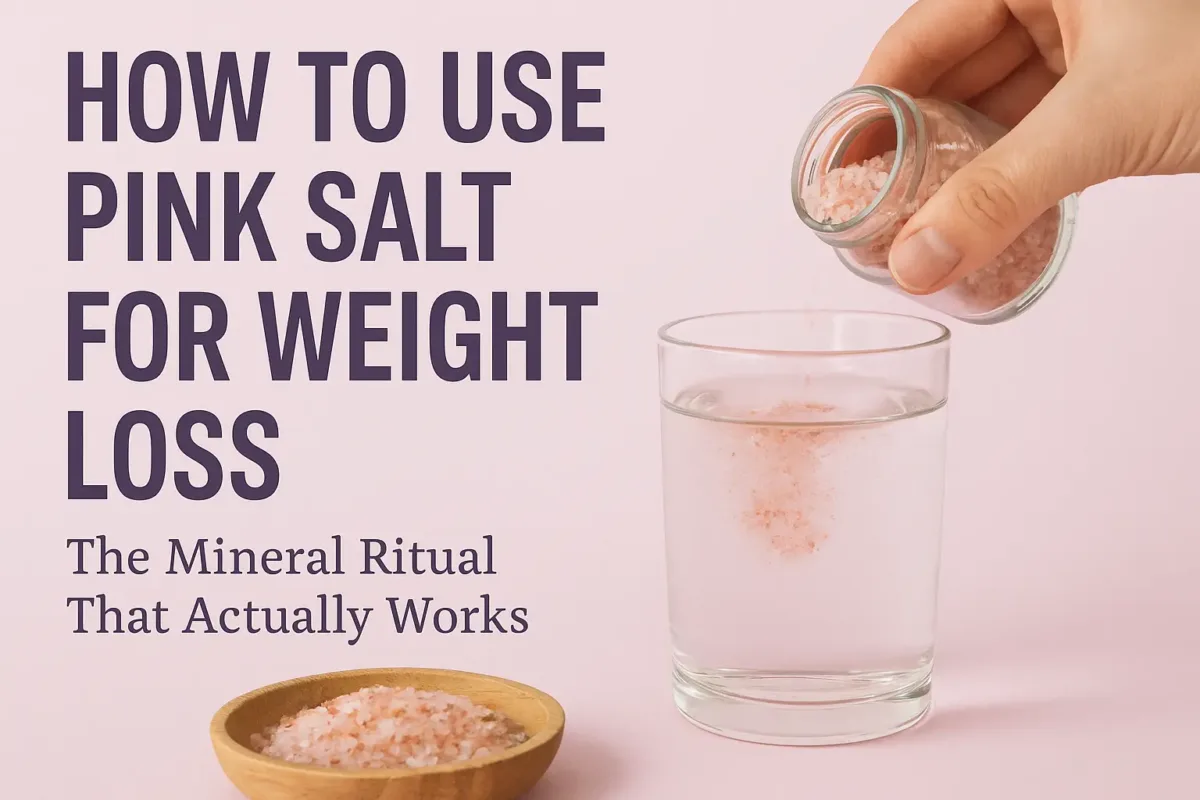
People searching for how to use pink salt for weight loss usually encounter a simple-looking recipe: dissolve Himalayan salt in warm water, add lemon, drink it in the morning, and wait for improvements in metabolism or cravings. The practical answer is less dramatic. There is no clinically established pink-salt drink, dose or schedule that causes body-fat loss. The evidence does not justify adding salt to your drinking water as a weight-loss treatment.
Pink salt can still have a place in your kitchen. If you enjoy its flavour, use it as a seasoning within your overall sodium needs. What deserves scrutiny is the leap from “sodium is essential” to “extra sodium burns fat or balances hormones.” Those are different claims, and the second has not been demonstrated by good human studies.
What the popular pink-salt recipe usually contains
Most versions combine a pinch of pink Himalayan salt with a glass of water. Some add lemon, honey or apple cider vinegar. They may be presented as a morning ritual, a pre-meal appetite-control drink or a “detox.” None is a standardized, evidence-based weight-loss protocol, and the added ingredients do not make the salt a fat-burning agent.
A glass of water can be refreshing when you wake up, and a predictable morning routine may help you start your day deliberately. But a satisfying ritual is not proof that the salt is doing something special to your metabolism. The relevant question is whether an ingredient reliably changes body-fat outcomes compared with ordinary hydration and nutrition. There is no convincing evidence that pink salt does.
If you like pink salt, the sensible way to use it
Treat it as ordinary culinary salt. A light sprinkle on a meal may improve flavour, but portion size should be guided by your total diet and any personal advice about sodium—not by a social-media dosage. Reading labels on packaged foods and being mindful of how much salt is used across the day often matters more than choosing pink crystals over white ones.
You do not need to take pink salt on an empty stomach, mix it into tea, drink it before breakfast or use it at bedtime for weight management. Nor is there a proven advantage to using it with lemon. A person who enjoys a lemon-flavoured glass of water can have the water without adding sodium.
Why more sodium is not the same as better hydration
Sodium plays an important role in fluid regulation and muscle and nerve function. However, most people eating an ordinary diet already obtain sodium from food. Drinking added salt is not automatically useful for everyday hydration, and it can increase intake unnecessarily. The amount of sodium a person needs depends on the circumstances, including sweating, health conditions and clinical treatment.
In particular situations—prolonged vigorous exertion, substantial losses through illness or other medically assessed needs—electrolyte replacement may be appropriate. A home-mixed salt drink is not interchangeable with a properly formulated oral rehydration solution, and a recreational weight-loss ritual is not a reason to treat yourself for an assumed electrolyte deficiency.
Can a pink-salt drink reduce hunger, cortisol or belly fat?
Reliable clinical evidence has not shown that ordinary Himalayan salt-water drinks reduce appetite, lower cortisol, normalize thyroid function or selectively burn abdominal fat. Online explanations sometimes connect real physiological words—insulin, adrenal glands, electrolytes, metabolism—without demonstrating the advertised outcome. A plausible-sounding mechanism is not a controlled human trial.
Our evidence review of pink salt and metabolism addresses that specific claim. The wider pink salt tricks guide compares the various recipes and promises. Neither establishes a recommended salt-water dose for fat loss.
The risk of confusing water weight with fat loss
Sodium can influence how much fluid the body retains. A shift on the scale over a day or two may therefore reflect water and digestion, not a change in fat tissue. Some extreme online versions call for salt-water flushes to provoke a bowel movement. Such a response is not detoxification and can carry risks, including diarrhea, dehydration and electrolyte disturbance.
Rapid loss of fluid is not the same achievement as sustainable improvement in health or body composition. If a recipe promises immediate changes, ask what was measured, for how long, and whether meaningful outcomes were studied in people.
How much salt is too much?
The World Health Organization advises adults to consume less than 2,000 milligrams of sodium per day, or less than about 5 grams of salt from all sources. Individual guidance may differ. The sodium in a drink counts just as much as the sodium in sauces, breads, snacks, restaurant food and homemade meals.
Pink Himalayan salt and regular table salt are both predominantly sodium chloride. Trace minerals in pink salt are present in quantities too small to make it a practical supplement. Regular iodized table salt may provide iodine, while specialty salts are not necessarily iodized. Read the packaging if iodine intake matters to you. Our pink salt versus table salt comparison explores the distinction.
Who should avoid trying a salt-water ritual?
Extra sodium can be particularly concerning for people with high blood pressure, heart or kidney disease, fluid retention or instructions to restrict salt. Medicines and health conditions can alter electrolyte balance in ways a generic online recipe cannot account for. Pregnancy, childhood and older age may bring additional considerations. Seek individualized advice rather than assuming a small-looking “pinch” is risk-free.
If you experience swelling, persistent dizziness, unexplained fatigue or weight change, do not diagnose yourself with a salt or hormone deficiency. Those symptoms can have many causes and are better evaluated with a healthcare professional.
A more useful morning routine for weight management
The alternative does not require giving up the comfort of a ritual. Keep the parts that genuinely help you feel organized and remove the unsupported medicinal promise. A short sequence might look like this:
- Drink ordinary water if you are thirsty. Add lemon for flavour if you like it; extra salt is generally unnecessary.
- Choose a satisfying breakfast when it suits your routine. A balanced mix of protein, fibre-rich foods and other nutrients can support healthy eating patterns.
- Move in a way you can repeat. A brief walk or suitable strength activity is more meaningful than a supposed metabolic “activation” drink.
- Set one achievable habit. Consistency, sleep and realistic food choices tend to matter more than one dramatic morning ingredient.
- Seek care for persistent symptoms. No self-directed drink can diagnose a thyroid, adrenal, kidney or cardiovascular problem.
These habits are not guaranteed weight-loss prescriptions either; results depend on individual circumstances and overall patterns. If weight management is a health concern, a clinician or registered dietitian can help identify evidence-based steps that fit your needs.
Where the evidence points
The NIH Office of Dietary Supplements emphasizes the limited evidence behind many promoted weight-loss shortcuts and the importance of evaluating effectiveness and safety. Its guidance is consistent with a larger lesson: claims about metabolism, cravings or dramatic weight change need evidence for the actual product and outcome—not merely a statement that minerals are essential.
There is nothing inherently wrong with enjoying the taste of pink salt on food. The problem begins when a seasoning is sold as a remedy for complex conditions or as a replacement for appropriate nutrition and care.
The bottom line
If you want to know how to use pink salt for weight loss, the evidence-based answer is that there is no proven way to use it for that purpose. Use it sparingly as a seasoning if you enjoy it, but do not rely on salt water for fat loss, hormone balance, appetite suppression or “detox.” Ordinary hydration and sustainable health habits are more practical starting points.
For related lifestyle information, browse Mayobook’s Fitness, Weight Loss & Body Transformation topic. The goal is to evaluate what works without turning every appealing ritual into a medical claim.
Sources: World Health Organization, Sodium reduction; NIH Office of Dietary Supplements, Dietary Supplements for Weight Loss. This is general educational information, not a personalized treatment plan.