
Homemade Antibiotic Recipes: 7 Kitchen Remedies and Their Limits
Can homemade antibiotic recipes treat an infection? Explore seven familiar kitchen drinks and foods, the research behind the claims, and key safety limits.
Keep Learning—Listen Free
Short, practical audiobooks for your next step.

Imposter Syndrome: Why Success Still Makes You Feel Like a Fraud | Full Audiobook
Imposter syndrome can make real success feel undeserved and every new achievement…

How to Stop Catastrophizing: Break the Worst-Case Thinking Loop | Full Audiobook
Learn how to stop catastrophizing and break the worst-case thinking loop that…

Emotionally Immature Parents: How Their Patterns Shape Your Adult Life | Full Audiobook
Emotionally immature parents can shape adult relationships, boundaries, self-worth and the way…

High-Functioning Anxiety: Why You Look Fine but Never Feel at Peace | Full Audiobook
High-functioning anxiety can make you look calm, capable and successful while constant…

The Art of War Explained: Sun Tzu’s Strategy for Winning Without Fighting | Full Audiobook
The Art of War, Sun Tzu, Art of War explained, strategy, winning…

Arthur Schopenhauer: Why You’re Never Satisfied — The Psychology of Desire | Full Audiobook
Arthur Schopenhauer, Schopenhauer philosophy, the psychology of desire, hedonic adaptation, the hedonic…

Friedrich Nietzsche: What “God Is Dead” Really Means — And How to Create Meaning | Full Audiobook
Friedrich Nietzsche, “God is dead,” Nietzsche philosophy, nihilism, existentialism, the meaning of…

High Agency: How to Become the Person Who Always Finds a Way | Full Audiobook
High agency is the psychology of becoming resourceful, taking initiative, and creating…

How to Find Your Purpose When You Feel Lost: Build a Life That Actually Means Something
Learn how to find your purpose when you feel lost, discover what…
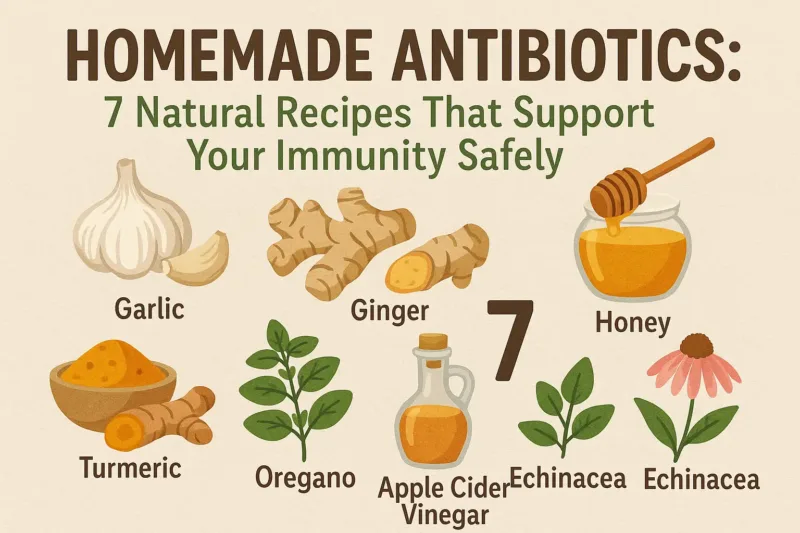
The phrase homemade antibiotics is popular because it suggests that common kitchen ingredients might do the work of prescription medicine. Garlic, honey, ginger, and herbs do contain interesting compounds, and some inhibit microbes in laboratory experiments. Yet there is a decisive distinction between an ingredient tested in a petri dish, a food that makes you feel more comfortable, and a treatment proven to cure a bacterial infection in people. No kitchen recipe on this page is a substitute for prescribed antibiotics or professional evaluation.
The seven preparations below are foods and comforting drinks, not infection treatments. Their purpose is to make a meal or a quiet moment more pleasant—not to claim cures for sinus infections, urinary tract infections, dental abscesses, infected wounds, or pneumonia. That boundary matters as much as the ingredients.
Why “natural antibiotic” is not a medical category
An antibiotic is a medicine used to treat certain infections caused by bacteria. Antibiotics do not work on viruses such as those responsible for many colds. Even bacterial illnesses are not all treated the same way: the organism, severity, patient and available evidence guide the choice of treatment. The CDC’s antibiotic-use guidance explains why using antibiotics appropriately matters and why the right diagnosis comes first.
A compound with antimicrobial effects under laboratory conditions cannot simply be swallowed as food and expected to reach an infected tissue at an effective and safe concentration. Likewise, a person feeling better while drinking tea does not prove a bacterial infection has been treated. Our related guide to homemade-antibiotic claims and safety explores the wider evidence question.

Seven kitchen preparations—and what they can realistically offer
1. Ginger and lemon tea for warmth and comfort
Steep a few slices of washed fresh ginger in hot water, let the drink cool to a comfortable temperature, and add lemon if you like the flavour. This is a beverage, not an antibacterial dose. Ginger can cause heartburn or stomach discomfort in some people, and concentrated supplements may be inappropriate with certain medicines. A warm drink may feel soothing without treating the underlying cause of a fever or infection.
2. Garlic stirred into a cooked meal
Crush or mince a little garlic and add it to a vegetable dish, beans, soup or a cooked sauce. Garlic contains sulfur compounds that have attracted laboratory interest, but the US National Center for Complementary and Integrative Health notes that clinical evidence for garlic as an immune booster is limited. Ordinary culinary use is not the same as concentrated garlic supplements, which can cause adverse effects and interact with medicines, including medicines that affect bleeding.
Do not apply raw garlic to wounds or skin as a treatment. It may cause chemical burns. Do not store homemade garlic-in-oil mixtures at room temperature: improper food storage can create a botulism hazard. Use reliable food-safety guidance for any infused oil.
3. Turmeric-spiced warm milk
Stir a modest culinary amount of turmeric and a little cinnamon into warmed milk or a suitable fortified alternative. Enjoy it as a flavoured drink. Research into curcumin and inflammation does not establish that turmeric milk eradicates bacterial infections. Concentrated turmeric products can have different safety profiles from normal food portions; ask a clinician about supplements if you take medicines or have relevant health conditions.
4. Onion and vegetable broth
Simmer onions with vegetables and seasonings in water or low-sodium stock, then serve as a nourishing soup. Warm liquids can be easier to consume when appetite is low. Onion’s laboratory chemistry is not proof that onion broth treats bronchitis, strep throat or another infection. More importantly, a person who is unable to drink, is dehydrated, or is becoming increasingly ill needs medical assessment rather than another bowl of soup.
5. Thyme as a culinary herb
Add a small amount of culinary thyme to roasted vegetables, soup or a cooked bean dish. Its aroma can contribute flavour, and some thyme constituents have been studied in laboratory antimicrobial work. That research does not supply an antibiotic prescription or justify inhaling essential oils over boiling water. Concentrated essential oils should not be swallowed as DIY infection treatments; children and people with asthma may be especially susceptible to irritation.
6. Honey and lemon in a comfortably warm drink
For an adult or a child old enough to have honey, a little honey in a warm drink may temporarily soothe throat irritation. It does not cure a bacterial infection. Never give honey to infants younger than 12 months; the CDC warns of infant botulism risk, including from honey mixed into food or drinks. People managing blood glucose or limiting added sugars should take the sugar content into account.
Food-grade honey is not interchangeable with a sterile medical-grade dressing. Do not apply pantry honey to an open wound or use it in place of appropriate infection care.
7. A vinegar and herb dressing
Whisk vinegar with an appropriate cooking oil, herbs, and seasonings to dress vegetables or a salad. Acidity makes a dressing taste bright; it does not turn the finished food into medicine. Concentrated vinegar, so-called fire tonics, and unusually strong preparations can irritate the mouth or digestive tract. Food safety depends on the ingredients and storage conditions, not on a claim that vinegar “preserves everything naturally.”
Why not use oregano essential oil or a salt-water flush?
Online “antibiotic recipes” sometimes advise swallowing drops of oregano essential oil, applying undiluted oils to skin, or inhaling medicated steam over a bowl of boiling water. Those are not harmless kitchen variations. Essential oils are concentrated substances that may irritate tissues or cause toxicity if used improperly; hot-water steam can cause burns. This article deliberately does not give instructions or dosages for these practices.
A salt-water flush is likewise not an infection treatment or a scientifically established detoxification practice. It may cause gastrointestinal distress and fluid or electrolyte problems. More intense sensations should not be mistaken for greater effectiveness.
When to seek medical help instead of trying a recipe
An infection may require diagnosis, testing, a prescription, drainage or another targeted treatment. Seek prompt care for worsening fever, trouble breathing, severe facial or dental pain, spreading redness, a painful wound with discharge, confusion, or signs of dehydration. An urgently ill person should not delay care while waiting to see whether a home drink works. A person with immune suppression, significant chronic illness or a high-risk condition should seek individualized guidance even sooner.
The questions readers ask are often more specific than “Which herb kills bacteria?” If you are considering a urinary problem, read the discussion of so-called natural antibiotics for urinary tract infections as educational background, not a reason to postpone diagnosis. The risks are different for a tooth abscess, skin infection or sinus problem.
Why the research can sound more impressive than it is
Studies on compounds from garlic, oregano or other plants sometimes identify activity against bacteria in a controlled laboratory setting. These findings can help researchers decide what to study next. They do not establish that the original food or home preparation treats infection at a tolerable dose. A clinical claim needs well-designed human evidence, appropriate comparisons, reproducible preparations, safety data and outcomes that matter to patients.
Antibiotic resistance is another reason for precision. Serious bacterial illness deserves effective treatment; replacing a needed medicine with a weak or untested preparation is not a responsible response to concerns about antibiotic overuse. The goal is neither to prescribe antibiotics for every symptom nor to reject them when they are needed.
How to read herbal-remedy claims responsibly
Start with the named illness and the exact formulation studied. Ask whether the evidence concerns a laboratory extract, a dietary ingredient, a standardized medical product or human patients. Check whether a source distinguishes comfort from cure. Treat extravagant claims about “broad-spectrum natural antibiotics,” guaranteed immune protection and no side effects as warning signs rather than as proof of potency.
Our guide to how herbal-antibiotic claims are evaluated provides further context, and the Herbal Medicine topic hub organizes related reading. These links are educational; they should never be used to substitute one-size-fits-all advice for clinical care.
The bottom line
A warm ginger tea, a nourishing soup, or a garlic-seasoned meal can be a pleasant part of everyday living. That is reason enough to enjoy them. Calling them “homemade antibiotics,” however, implies a level of demonstrated infection treatment they do not possess. Use the kitchen for food and comfort; use qualified healthcare when symptoms suggest an illness that needs diagnosis or treatment.
Evidence and safety references: CDC: Antibiotic Do’s and Don’ts; NCCIH: Garlic Usefulness and Safety; CDC: Foods and Drinks to Avoid or Limit. General educational information only, not medical diagnosis or treatment advice.