
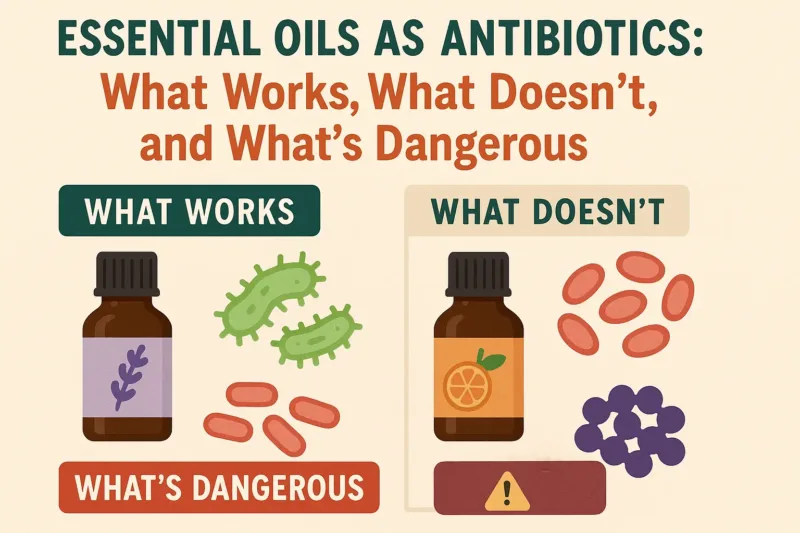
Essential Oils as Antibiotics: What Works, What Doesn’t, and What’s Dangerous
A detailed look at essential oils as antibiotics with antibacterial effects, how they work, their risks, and how to use them safely without harm.
Keep Learning—Listen Free
Short, practical audiobooks for your next step.

How to Find Your Purpose When You Feel Lost: Build a Life That Actually Means Something
Learn how to find your purpose when you feel lost, discover what…

How to Be Happy Alone Without Feeling Lonely: The Psychology of Emotional Independence
Learn how to be happy alone without feeling lonely and build emotional…

How to Stay Unbothered When People Disrespect You: The Psychology of Unshakable Self-Respect
How to deal with disrespect without losing your peace, confidence, or self-respect…

How to Learn Anything: Self-Education in the Age of AI | Full Audiobook
How to learn anything, become self-educated, and think for yourself in the…
Perimenopause Symptoms: Hormones, Weight Gain, Sleep & Brain Fog | Full Audiobook
Perimenopause symptoms, hormones, weight gain, sleep problems, and brain fog are explained…

Investing for Beginners: Stock Market, Index Funds & Building Wealth | Full Audiobook
Investing for beginners, stock market basics, index funds, ETFs, diversification, compound growth,…

Personal Finance for Beginners: Budgeting, Money Management & Financial Literacy | Full Audiobook
Personal finance for beginners, budgeting, money management, and financial literacy explained in…

Time Management: How to Stop Procrastinating & Be More Productive | Full Audiobook
Time management, how to stop procrastinating, and how to be more productive…

How to Sleep Better: Insomnia, Deep Sleep & Falling Asleep Faster | Full Audiobook
How to sleep better, manage insomnia, get more deep sleep, and fall…
Essential oils as antibiotics have captured attention in the wellness world, offering natural alternatives to chemical drugs. Yet the line between benefit and harm is thin. Used wisely, essential oils can complement healing; used carelessly, they can irritate skin, disrupt hormones, or even damage organs. Understanding where their true antibacterial power lies—and where marketing exaggerates it—can save you both money and health.
The Science Behind Antibacterial Essential Oils
Essential oils are concentrated plant extracts distilled from leaves, bark, flowers, or roots. Their potent chemistry—rich in terpenes, phenols, and aldehydes—acts as the plant’s immune system, deterring bacteria, fungi, and insects. In laboratory studies, oils like tea tree, oregano, clove, and thyme show measurable inhibition of common bacteria, including Staphylococcus aureus and E. coli.
However, “kills bacteria in a petri dish” doesn’t always mean “cures infection in the body.” Concentrations used in lab tests are far higher than what’s safe for skin or internal use. Realistic application requires nuance: topical, diluted, and mindful of sensitivity.
Top Essential Oils with Proven Antimicrobial Effects
- Tea Tree Oil (Melaleuca alternifolia): Excellent for acne, minor fungal infections, and wound cleansing. Dilute 1 drop in 1 teaspoon carrier oil.
- Oregano Oil (Origanum vulgare): Contains carvacrol and thymol, powerful phenols effective against resistant bacteria. Always dilute heavily; internal use requires clinical supervision.
- Clove Oil (Syzygium aromaticum): High in eugenol, valued for dental infections and pain relief. Potent—use minimal concentration (0.5%).
- Thyme Oil (Thymus vulgaris): Balanced antibacterial and antiviral properties; supports respiratory health when diffused.
- Lavender Oil (Lavandula angustifolia): Gentle antiseptic and skin regenerator—ideal for burns and stress-linked slow healing.
How Essential Oils Work Against Microbes
Essential oils disrupt bacterial cell membranes and interfere with communication signals called quorum sensing, making colonies less virulent. Their lipid solubility allows them to penetrate biofilms—protective layers that make bacteria resistant to drugs. This mechanism complements traditional antibiotics rather than competes with them.
The Myth of “Natural Equals Safe”
Because essential oils come from plants, many assume they’re harmless. Yet their potency demands respect. Inhaling undiluted vapors or applying directly to skin can cause allergic reactions or chemical burns. Ingesting them without medical supervision risks liver toxicity. Even diffusing continuously in small rooms may overwhelm pets or children.
Key safety rule: “Natural” does not mean “risk-free.” Nature’s medicines are powerful precisely because they evolved to defend life—sometimes from us.
How to Dilute and Use Safely
- For topical use, mix 1–2 drops essential oil per teaspoon (5 mL) carrier oil such as jojoba or coconut.
- Perform a patch test on the inner forearm before full application.
- Never drop oils directly into ears, eyes, or mucous membranes.
- Limit diffusion to 30–45 minutes with proper ventilation.
- Store oils in dark glass, away from heat and children.
When to Use and When to Avoid
Use diluted essential oils to clean minor cuts, purify air, or soothe mild skin irritation. Avoid using them internally unless under expert supervision. Pregnant or breastfeeding women should avoid clary sage, basil, and rosemary oils. People with asthma or epilepsy must consult physicians before diffusion.
Combining Essential Oils for Greater Effect
Blending amplifies synergy. For instance, combining tea tree with lavender offers both antimicrobial and anti-inflammatory effects. Oregano with frankincense balances intensity with skin tolerance. Use small glass bottles and record ratios—successful blends are both art and chemistry.
Understanding Research Limits
Most studies on essential oils are in vitro—performed on isolated cells or bacteria, not human trials. Results are promising but preliminary. There’s also variability: climate, harvest timing, and extraction method change composition. Two bottles labeled “oregano oil” may differ vastly in strength. Quality matters as much as species name.
When Essential Oils Become Dangerous
Misuse stories abound: children poisoned after accidental ingestion, burns from undiluted application, seizures from overexposure. This doesn’t invalidate essential oils—it reminds us they’re concentrated chemicals. A single ounce can equal pounds of plant material. Treat them with the same caution as pharmaceuticals.
Integrating Essential Oils Into a Conscious Lifestyle
Used thoughtfully, essential oils can enrich modern living—adding scent to mindfulness, aiding relaxation, or naturally disinfecting surfaces. The goal isn’t to replace medicine but to restore relationship with nature’s chemistry. Always cross‑check enthusiasm with evidence; healing happens at the intersection of wisdom and restraint.
FAQs
Which essential oils act as natural antibiotics?
Tea tree, oregano, thyme, clove, and cinnamon oils show strong antibacterial effects in laboratory studies.
Can I use essential oils internally?
Only under clinical supervision. Ingesting undiluted oils can damage organs or interact with medication.
How much should I dilute essential oils for skin use?
Typically 1–2 drops per teaspoon carrier oil (1–2%). Sensitive skin may require 0.5% or less.
Are essential oils safe for children or pets?
Many are not. Diffuse lightly with ventilation and avoid topical use on babies or cats.
What is the best carrier oil?
Jojoba, coconut, or sweet almond oil work well—they’re stable and non‑reactive.
Can essential oils replace antibiotics?
No. They can complement minor care but not cure serious infections.
How should I store essential oils?
In dark glass bottles away from sunlight and heat, tightly capped.
Do essential oils expire?
Yes—most last 1–3 years after opening. Oxidized oils lose potency and can irritate skin.
Essential oils are reminders of nature’s concentration. When used with respect and education, they offer aroma, comfort, and gentle defense—the way nature intended.