
What Are Herbal Antibiotics?
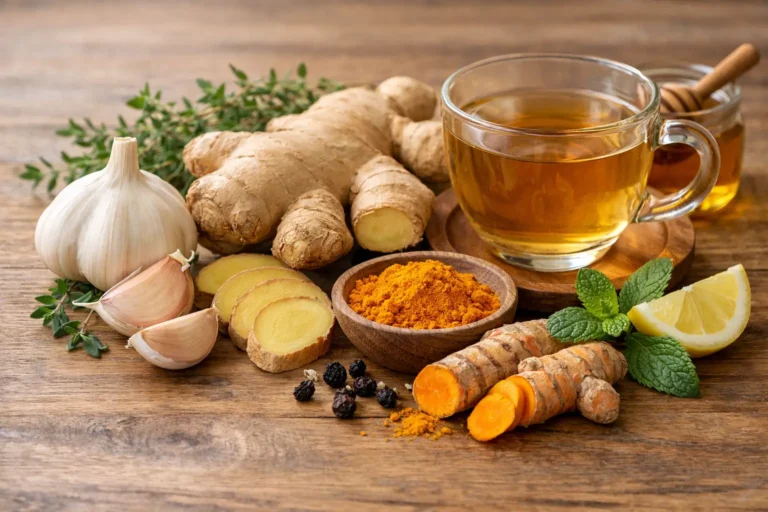
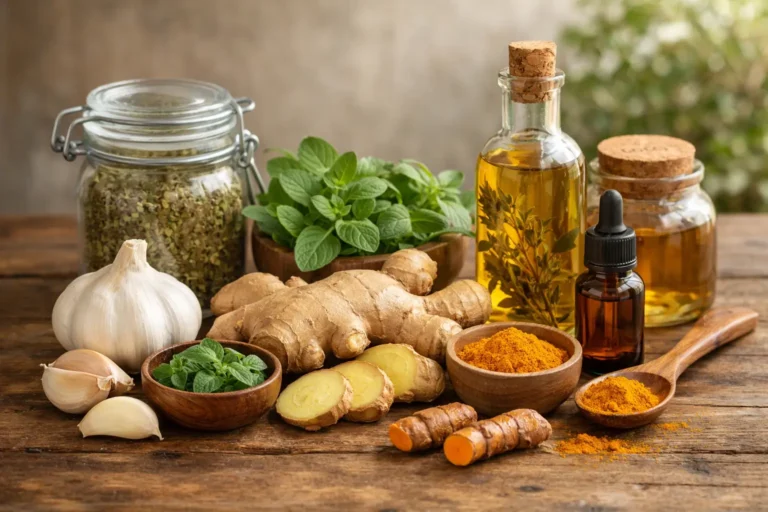
Herbal antibiotics are plant-based substances with natural antimicrobial properties. These can include:
- antibacterial effects
- antiviral support
- antifungal activity
Unlike synthetic antibiotics, which are usually designed to eliminate bacteria directly, herbal compounds tend to act in broader, more balanced ways.
Some well-known examples include:
- oregano oil
- garlic
- echinacea
- turmeric
Each of these contains active compounds that interact with pathogens in different ways.
How Herbal Antibiotics Actually Work
Herbal antibiotics do not rely on a single mechanism. Instead, they often work through a combination of actions:
1. Direct Antimicrobial Activity
Many herbs contain compounds that can directly inhibit or destroy harmful microorganisms.
For example:
- oregano oil contains carvacrol, which disrupts bacterial cell membranes
- garlic produces allicin, known for its broad-spectrum antimicrobial effects
These compounds weaken or eliminate pathogens without necessarily wiping out beneficial bacteria to the same extent as some pharmaceuticals.
2. Immune System Support
One of the most important differences is that herbal antibiotics often support your immune system rather than replacing it.
Instead of doing all the work themselves, they help your body:
- recognize threats more efficiently
- respond more effectively
- recover more quickly
This makes them especially useful for long-term resilience.
3. Anti-Inflammatory Effects
Infections are not just about microbes—they also involve inflammation.
Many herbs help reduce inflammation while fighting infection, which can:
- ease symptoms
- support healing
- prevent excessive immune response
Turmeric, for example, is widely used for its anti-inflammatory properties.
4. Microbiome Balance
Unlike many conventional antibiotics, which can disrupt gut bacteria significantly, herbal approaches often:
- preserve beneficial microbes
- reduce harmful overgrowth
- support overall balance
This is one reason they are often used in longer-term health strategies.
When Herbal Antibiotics Are Most Useful
Herbal antibiotics can be helpful in situations such as:
- mild to moderate infections
- early-stage symptoms
- immune system support
- recurring issues where balance matters
They are not always a replacement for conventional treatment, especially in severe or acute conditions.
When You Should Be Careful
Herbal does not mean harmless.
You should be cautious when:
- symptoms are severe or worsening
- you are dealing with serious infections
- you are combining multiple herbs without guidance
- you are pregnant or have underlying conditions
In these cases, professional guidance is important.
Herbal vs Conventional Antibiotics
The difference is not simply “natural vs synthetic.”
It is:
- targeted vs broad-spectrum support
- rapid intervention vs system support
- short-term vs long-term approach
Both have their place.
The most effective approach is often knowing when to use each.
The Real Key: Proper Use
Herbal antibiotics are only effective when used correctly.
That includes:
- proper dosage
- correct preparation (oil, extract, tea, etc.)
- consistency
- understanding timing
Without this, even powerful herbs can produce weak results.
Want a Complete System?
If you want more than general knowledge—and you’re looking for a structured way to actually use herbal antibiotics safely and effectively:
👉 your guide:
Herbal Antibiotics & Antivirals Handbook
Inside, you’ll find:
- specific herbs and how to use them
- step-by-step protocols
- safety guidelines
- practical applications for real situations
This is where theory becomes something you can actually apply.
Final Thought
Herbal antibiotics are not a replacement for modern medicine—they are a complementary system that, when understood properly, can be incredibly powerful.
Used with knowledge and intention, they give you more control, more options, and a deeper understanding of how your body responds to infection.