
Defining element
Valerian contains multiple naturally occurring constituents whose concentrations vary with plant part and processing.
An evidence-aware reference to Valerian (Valeriana officinalis), including preparation differences and safety considerations.
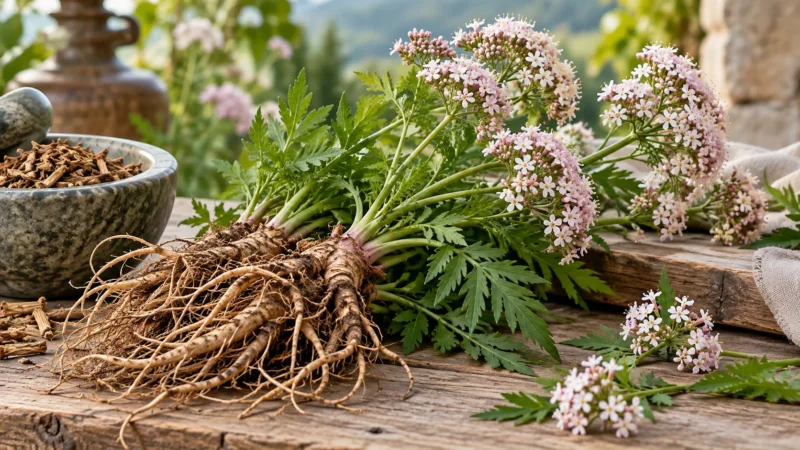
Valerian (Valeriana officinalis) is a medicinal plant commonly prepared from roots and underground stems (rhizomes) and traditionally associated with sleep support and nervous-system calming.
Traditional use, laboratory research and human clinical evidence should be distinguished rather than treated as equivalent.
Use this map to move through the concept in a clear order: meaning, mechanism, use, and wider context.
Valerian (Valeriana officinalis) has been used as a nighttime herb for centuries, yet modern trials have not produced a simple yes-or-no answer about whether it improves sleep. The plant’s dried root has a powerful earthy odor, and that underground material—not the leaves—is the basis of most traditional and commercial preparations. Understanding valerian means separating subjective sleep improvement, objective sleep measurements, sedative side effects and the wide differences between products.
The root and rhizome are harvested and dried for medicinal use. Drying changes the chemical profile and contributes to valerian’s characteristic smell. Valerenic acids and other constituents have been studied for effects on GABA-related signaling, but a plausible mechanism does not make every product clinically effective.
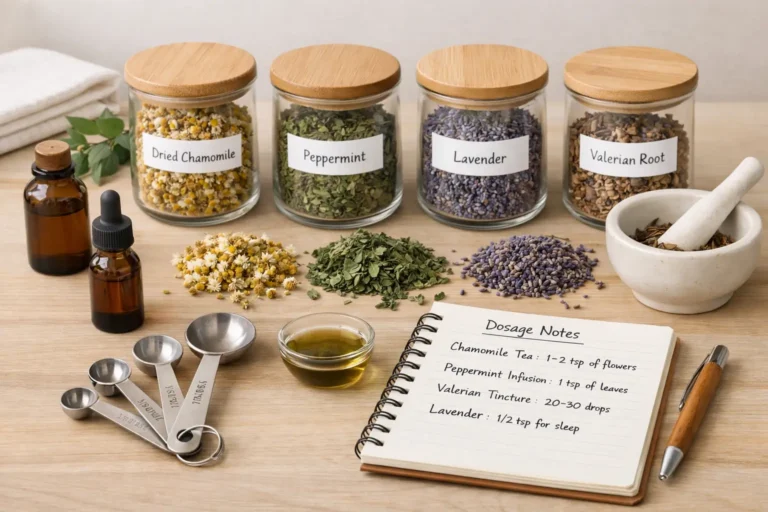
Root powder, tincture, tea and standardized extract can deliver different exposures. Some research products specify valerenic-acid content, while many retail capsules do not.
Traditional use centers on restlessness, nervous tension and difficulty sleeping. Modern consumers often take valerian as a single herb or in blends with hops, lemon balm, passionflower or melatonin. A multi-ingredient sleep formula creates an attribution problem: if sleep improves, no single component can automatically claim the credit.
Valerian is also sometimes promoted for daytime anxiety. That use raises a trade-off: a product strong enough to feel calming may also impair alertness, which matters for driving, work and fall risk.
Trials have measured sleep quality, time to fall asleep, nighttime waking and next-day effects. Some studies report improvements in self-rated sleep, while others show little difference from placebo, especially on objective measurements. Variation in extract, dose, duration and participant selection likely contributes to the inconsistency.
The evidence therefore supports neither a guarantee nor a blanket dismissal. A particular preparation may help some people, but persistent insomnia can also reflect sleep apnea, restless legs, depression, medication effects, pain or poor sleep timing—problems valerian does not diagnose.
Another limitation is duration. Many studies are short, so they tell us more about brief use than about taking a sedating botanical continuously for months or years.
Traditional tea uses dried root and has a strong flavor and odor. Capsules may contain powdered root or extract. Tinctures use an alcohol-water solvent, while standardized extracts may concentrate specific compounds. Comparing milligrams across these formats is misleading if the extraction strengths differ.
Combination products deserve careful label reading because hops, lemon balm, passionflower and melatonin can all change the total sedative effect.
Headache, stomach upset, vivid dreams, mental dullness and daytime drowsiness are among the reported adverse effects. Because the intended effect is often sedating, next-day function is part of safety. A user who feels groggy should avoid driving or other safety-sensitive tasks until the effect has fully cleared.
Mayobook’s Are There Side Effects of Herbal Medicine? places valerian’s drowsiness in the wider context of dose, combinations and individual susceptibility.
Additive central nervous system depression is the main practical concern. Alcohol, benzodiazepines, prescription sleep medicines, sedating antihistamines and other calming herbs can increase impairment when combined with valerian.
People preparing for anesthesia should disclose valerian and other sedating supplements to the surgical team. Prescribed medicines should not be stopped or adjusted without medical guidance.
Pregnancy, breastfeeding and routine medicinal use in young children lack strong safety evidence. People who already have excessive daytime sleepiness, unexplained falls, breathing-related sleep problems or several sedating medicines should seek advice before adding another sedative product.
Look for Valeriana officinalis, root or rhizome, and a clear description of powder versus extract. Combination products should state every sedating ingredient and amount. A brand that promises to “cure insomnia” or provide drug-strength sleep with no impairment is claiming more than the evidence can support.
Valerian is a plausible but inconsistent sleep aid. Product type, combination ingredients and next-day sedation matter as much as the herb’s reputation. Readers comparing valerian with other popular botanicals can browse What Are the Most Popular Medicinal Herbs?, then evaluate each calming herb on its own evidence and interaction profile.
A sensible trial, if appropriate for the individual, should have a defined goal and a stop point. Continuing indefinitely because “natural sleep aids are harmless” ignores both the uncertain long-term evidence and the possibility that persistent sleep difficulty has an underlying cause worth identifying.
Valerian contains multiple naturally occurring constituents whose concentrations vary with plant part and processing.
A constituent or laboratory mechanism does not by itself establish a clinical benefit.
Evidence for one Valerian preparation or outcome should not be generalized to every product or health claim.
Use these connected pages for the next step.
A practical, evidence-aware introduction to herbal medicine: preparations,…
Read next
Valerian should be evaluated by preparation, evidence quality and individual risk rather than broad natural-health claims.