A better path is slower and stronger. Herbal medicine is not about replacing wisdom with hype. It is about learning how to work with plants in a way that is practical, grounded, and responsible.
What herbal medicine actually is
Herbal medicine is the use of plants, or parts of plants, to support health and wellbeing. That can include leaves, roots, flowers, seeds, bark, or resins prepared in ways that make them easier to use. Sometimes that preparation is as simple as making tea. Sometimes it is more concentrated, like a tincture or capsule.
At its best, herbal medicine belongs to a wider way of caring for the body. It is not separate from sleep, nutrition, stress management, movement, and medical judgment. It works best when it is part of a thoughtful system, not treated like magic.
One of the most important mindset shifts for beginners is this: herbs are not all trying to do the same thing. Some are soothing. Some are warming. Some support digestion. Some are traditionally used for immune support. Some are best understood as daily allies, while others are stronger and demand more caution.
That means the real beginner question is not “What herb fixes everything?” It is “What am I trying to support, and what is the gentlest sensible place to begin?”
Why herbal medicine appeals to so many people
People are often drawn to herbal medicine because it feels more connected to the body and to everyday life. A cup of chamomile tea before bed does not feel like a dramatic intervention. Ginger tea after a heavy meal feels intuitive. Peppermint for digestive discomfort makes sense to many people because it is simple, familiar, and tangible.
There is also a deeper emotional reason. Herbal medicine can return a sense of participation. Instead of feeling passive, people begin paying attention. They notice how their body responds, what rhythms affect their energy, what foods increase discomfort, what helps them sleep, and what daily habits quietly shape their wellbeing.
That does not mean herbs should be romanticized. It means they can help people build a more attentive relationship with health. Used wisely, they encourage observation rather than panic, and consistency rather than impulse.
How herbal medicine works
Herbs contain naturally occurring compounds that interact with the body in different ways. Some herbs are valued because they are calming, some because they are aromatic and digestive, some because they are rich in compounds traditionally associated with immune or inflammatory support. But beginners do not need to become chemists before they begin.
Different plants contain different compounds, and effects seen in a laboratory do not automatically translate into proven benefits in people. Evidence varies by herb, preparation, and health goal. A more useful beginner framework is to separate traditional uses, human research, and known safety concerns:
Gentle herbs
Familiar culinary herbs and teas may be approachable starting points, but familiarity is not a safety guarantee. Chamomile can trigger allergies in people sensitive to related plants and can interact with some medicines; peppermint products may be unsuitable for certain digestive problems. Research the specific plant, preparation, and your circumstances before using it medicinally.
Targeted herbs
These are herbs people use for more specific goals, such as immune support, stress support, or topical care. They may still be useful for beginners, but they require more intention.
Stronger herbs
These demand caution. They may have more potent effects, more interaction concerns, or more context-dependent use. They are not where most beginners should begin.
The practical point is simple: herbal medicine works best when the herb, the preparation, the dose, and the goal all fit together.
The safest way to start
The safest beginner approach is surprisingly modest.
Start with one or two herbs you already recognize. Choose herbs used for common, low-stakes forms of support, such as digestion, evening relaxation, or simple daily wellness. Begin with traditional preparations that are easier to understand, especially tea.
Do not begin with a shelf full of bottles. Do not combine six herbs because a social post made it sound powerful. Do not assume higher dose means better result.
Instead:
Start with one goal
Pick one area you want to support. Better sleep. Calmer digestion. Gentle daily wellness. Clearer routine.
Start with one herb
This makes it easier to understand what is helping and what is not.
Start with one preparation
Tea is often the most approachable form. It slows the process down, which is usually a good thing for beginners.
Start with a short observation period
Notice how you feel over several days. Is the herb soothing? Energizing? Neutral? Irritating? Helpful?
That rhythm can help beginners notice preferences and possible side effects, but personal impressions do not establish that a treatment works. Stop and seek clinical advice for adverse effects, unexpected symptoms, or medication-interaction concerns.
Common herbal preparations beginners should know
One reason herbal medicine becomes confusing is that the same herb can appear in several forms. Understanding the preparation makes the whole field easier to navigate.
Herbal tea
Tea is a familiar preparation for many leaves and flowers, but strength depends on the plant, amount, and brewing method. A food-style herbal tea is not interchangeable with a concentrated extract, and not every herb is appropriate as a tea. Check plant identity and safety information before regular use.
Infusions
An infusion is similar to tea but is often steeped longer, especially when using nourishing herbs. It is a simple way to work more deeply with certain plants.
Decoctions
Roots, bark, and denser materials sometimes need simmering rather than steeping. This is called a decoction. It is stronger and more extractive than a quick tea.
Tinctures
Tinctures are concentrated liquid extracts, often made with alcohol or glycerin. They are convenient, but because they are more concentrated, beginners should treat them with more care.
Capsules and powders
These can be useful for convenience, but they also make it easier to take something without really understanding the herb. For that reason, they are not always the best first step.
Salves and infused oils
For skin or topical support, herbs are sometimes used externally in oils, balms, or salves.
The form matters. A cup of herbal tea is not equivalent to taking a concentrated extract or essential oil. Never ingest an essential oil merely because an herb is described as edible, and do not improvise a medicinal dosage from recipes or social media advice.
The best beginner herbs to know first
A beginner does not need to know fifty herbs. It is better to know a few well than many poorly.
Chamomile
Chamomile is often one of the best beginner herbs because it is gentle, familiar, and associated with calm. Many people use it as an evening tea or as a way to soften tension at the end of the day.
Ginger
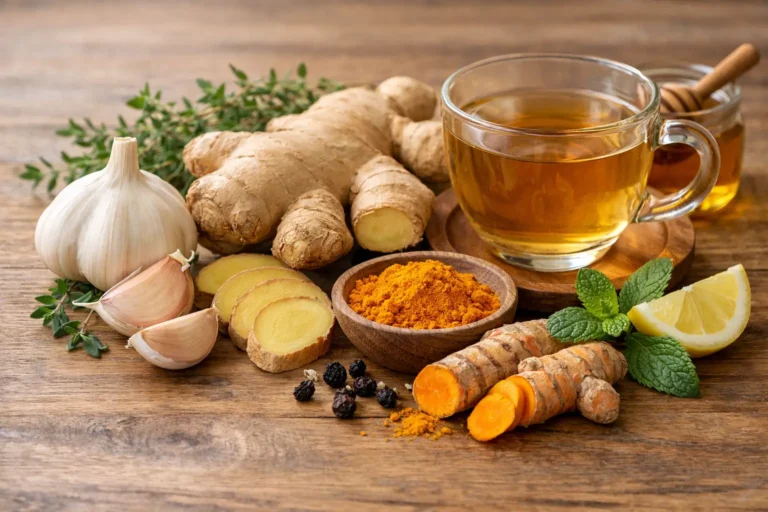
Ginger is practical, versatile, and easy to understand. It is commonly used in tea, food, and simple home preparations. For many beginners, it becomes the herb that makes herbal medicine feel real rather than abstract.
Peppermint
Peppermint is widely used for digestive comfort and has a refreshing, recognizable character. It is another herb that helps beginners understand how a simple plant can have a clear purpose.
Turmeric
Turmeric is one of the best-known culinary herbs associated with broader wellness support. It often introduces beginners to the idea that some herbs are used as part of daily life rather than occasional remedies.
Garlic
Garlic is a familiar kitchen staple that also introduces the broader herbal principle that foods and herbs sometimes overlap. It reminds beginners that herbal medicine is not always exotic.
These herbs are not the answer to everything. They are simply a sane place to begin.
What beginners often get wrong
The first mistake is assuming that natural means automatically safe. It does not. Herbs can still cause side effects, interact with medication, or be inappropriate in specific situations.
The second mistake is trying too many herbs at once. When that happens, the body becomes a guessing game. If something helps, you do not know why. If something causes discomfort, you do not know what caused it.
The third mistake is choosing herbs based on drama rather than fit. The herb with the loudest reputation is not always the herb you need.
The fourth mistake is looking for immediate transformation from something designed for steadier support. Herbal medicine often rewards consistency more than intensity.
The fifth mistake is ignoring context. Sleep, stress, food quality, hydration, and rest all shape how helpful herbs may feel. An herb cannot carry the entire burden of an exhausted lifestyle.
Safety matters more than enthusiasm
Beginners should learn safety early, not as an afterthought.
Herbs deserve respect for the same reason they deserve interest: they are active. Some may not be suitable during pregnancy or breastfeeding. Some may interact with medications. Some may be inappropriate for people with specific health conditions. Some may not be suitable before surgery. Even familiar herbs may not suit everyone.
That means a wise beginner asks a few simple questions before regular use:
- What is this herb traditionally used for?
- What form am I taking?
- How much am I using?
- Is it appropriate for my situation?
- Could it interact with anything else I use?
If symptoms are severe, persistent, worsening, or unclear, herbal self-experimentation should not replace proper medical evaluation.
How to build a beginner herbal routine
A good beginner routine is light enough to maintain and clear enough to learn from.
Step 1: Choose your first purpose
Pick one:
- evening calm
- digestive support
- gentle seasonal wellness
- simple daily ritual
Step 2: Choose one herb or one simple blend
Keep it narrow. Simplicity teaches faster.
Step 3: Use it consistently for a short period
That might mean several days or a couple of weeks, depending on the herb and goal.
Step 4: Notice response
Pay attention to:
- taste
- timing
- body response
- energy
- comfort
- sleep
- digestion
Step 5: Adjust or continue
If it helps, you now have a foundation. If not, you have still learned something useful.
A beginner herbal routine should feel sustainable, not theatrical.
Herbal medicine and modern medicine are not enemies
Many beginners are tempted to frame the issue as a battle: natural versus pharmaceutical, ancient versus modern, traditional versus scientific. That mindset creates unnecessary confusion.
A more useful approach is integration with discernment. Herbal medicine can be supportive, practical, and meaningful without pretending it should replace every other form of care. Modern medicine can be essential without requiring people to reject traditional plant knowledge.
When beginners let go of the false fight, they become better decision-makers. They stop asking which side they are on and start asking which form of support makes sense in this moment.
That is a healthier question, and usually a safer one.
How to buy herbs without making poor choices
Quality matters. A beginner does not need the most expensive product, but they do need clarity.
Look for products or dried herbs that tell you what the herb is, how it is prepared, and how it should be used. Be wary of vague miracle language, exaggerated promises, or products that sound designed more for urgency than understanding.
For beginners, it is usually better to start with recognizable single herbs rather than aggressive all-in-one formulas. Single herbs teach. Mystery blends mostly confuse.
Signs you are learning herbal medicine well
You do not need to memorize dozens of plant names to know you are progressing. Real progress looks simpler than that.
You are learning well when:
- you choose herbs based on purpose, not hype
- you understand the difference between tea and concentrated extracts
- you approach safety as part of the practice
- you can name a few herbs and explain why you use them
- you are becoming more observant, not more obsessive
- your routine feels calmer, not more chaotic
The goal is not to become impressive. It is to become competent.
A good first herbal medicine mindset
If you remember only one thing from this guide, let it be this: herbal medicine is best approached as a relationship, not a shortcut.
A relationship asks for attention, respect, and patience. It grows stronger with practice. It becomes clearer over time. It teaches you to work with the body rather than bully it.
That slower, steadier mindset is exactly what protects beginners from the two extremes that ruin progress—skepticism so rigid it prevents learning, and excitement so careless it ignores wisdom.
Herbal medicine becomes more useful when it becomes more grounded.
What the evidence can—and cannot—tell you
Traditional use can explain why a plant is popular, but it is not the same as evidence that a preparation prevents or treats a particular disease. Human studies may examine a specific extract, concentration, or population; their findings should not be applied automatically to kitchen tea, essential oils, or unrelated conditions. For plant-by-plant summaries of evidence and precautions, consult the U.S. National Center for Complementary and Integrative Health (NCCIH) herb fact sheets.
In the United States, dietary supplements are not approved by the FDA for safety and effectiveness before marketing. Read ingredient labels and consult the FDA’s dietary supplement guidance when comparing concentrated herbal products. A label such as “natural” is not a guarantee of quality, correct identification, or freedom from interactions. For clarity about when a botanical product counts as a dietary supplement, read the difference between herbal medicine and supplements.
Herbal preparations should not be promoted as substitutes for prescribed treatment of bacterial infections. Antibiotics treat certain bacterial infections but do not treat viruses, and deciding whether an infection needs treatment requires the right diagnosis. See the CDC’s guidance on appropriate antibiotic use. Seek prompt medical care for severe or worsening symptoms, breathing difficulty, rapidly spreading redness, dehydration, or other urgent warning signs.
A practical reading path for first-time learners
Start at the Herbal Medicine topic hub to see the wider subject. The Herbal Medicine Safety and Dosage Guide discusses risks and decisions to review with a qualified professional; the herbal medicine safety question provides a quicker overview. For one concrete botanical example, explore Mayobook’s Chamomile reference alongside independent NCCIH safety information.
To understand the difference between everyday plants and marketed products, compare Herbal Remedies vs Supplements. For a broader reading list, visit the Herbal Medicine Starter Collection. The book Herbal Antibiotics and Antivirals Handbook (Expanded) explores preparedness-themed reading; it is educational material, not a replacement for professional infection care.
Keeping clear notes and healthy habits can make learning easier. If you want a wider approach to routines beyond herbs, the Self-Help, Habits & Life Mastery topic explores habit-building separately from medical decision-making.
Where to go next
Once you understand the basics, the next step is not collecting random herbs. It is learning by theme.
You might go deeper into:
- herbs for immune support
- safety and dosage
- how to prepare remedies at home
- herbs for digestion, stress, or everyday wellness
That is where herbal medicine begins to feel not just interesting, but genuinely useful.