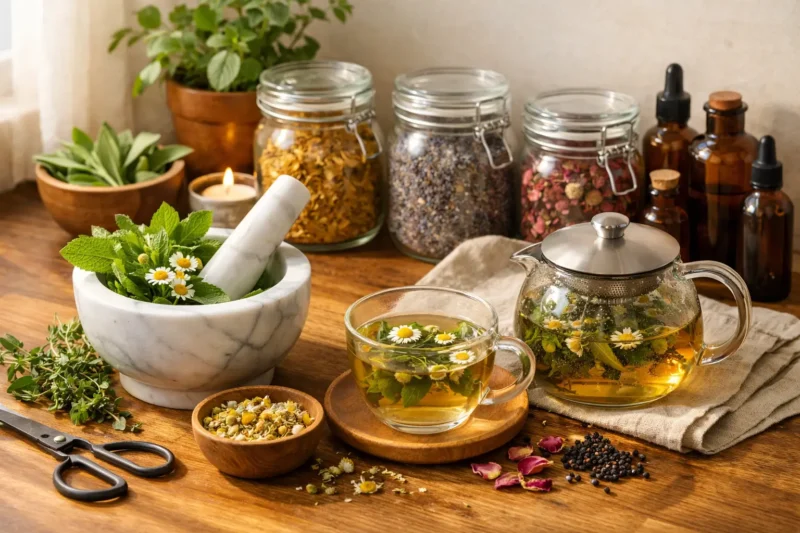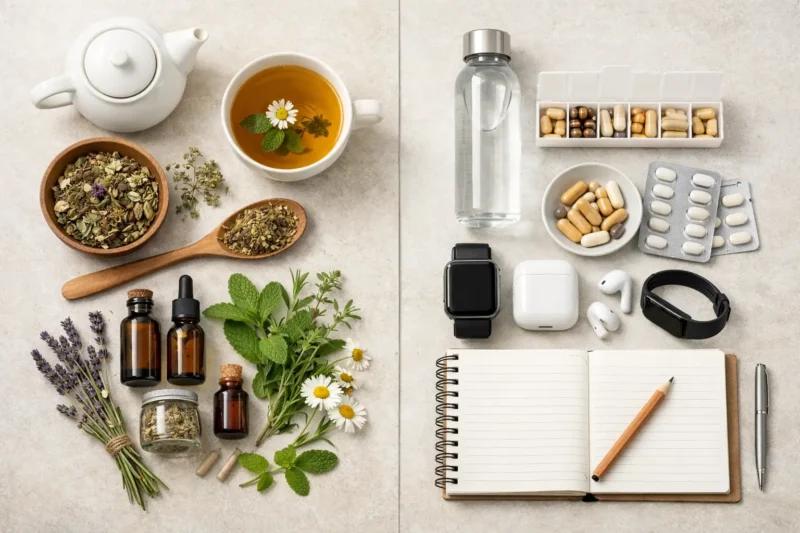
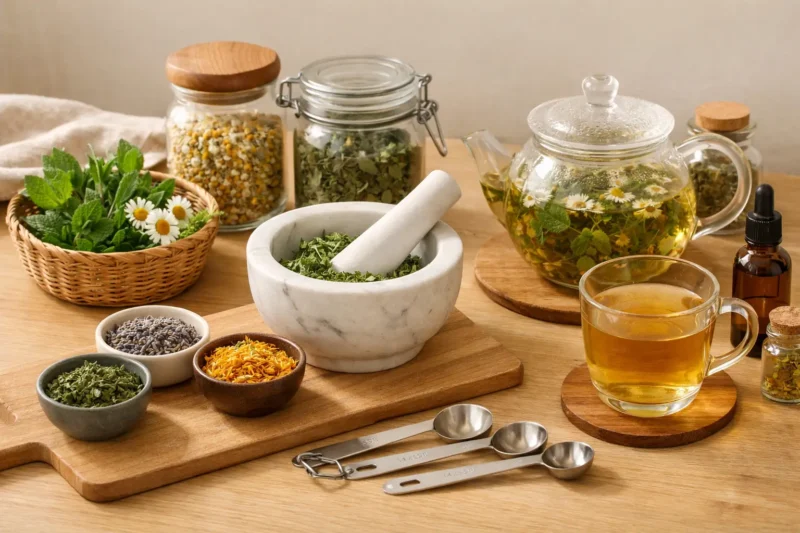
To prepare a simple herbal tea at home, begin with a correctly identified, food-grade herb, clean equipment, and the preparation directions supplied for that herb. Place the herb in a clean cup or infuser, add freshly heated water according to the instructions, cover while it steeps, then strain and allow it to cool before drinking. This is a familiar food-style preparation—not a standardized medicinal dose or a proven treatment for illness.
Other botanical preparations include decoctions, tinctures, powders, and infused oils. These methods are not interchangeable. A plant that is appropriate as a culinary tea is not necessarily safe as a concentrated extract, and an ingredient safe on skin may not be safe to swallow.
What you need before starting
- A reliably identified herb: choose a food-grade, labeled product from a reputable supplier. Do not experiment with an unidentified foraged plant.
- Clean kitchen equipment: a cup, kettle, clean infuser or strainer, and an appropriate food-safe container.
- Preparation-specific information: check the label or a reliable botanical resource for the exact plant and form.
- A safety check: consider allergies, medicines, pregnancy, breastfeeding, and any health condition that affects whether the plant is suitable.
The safest beginner example: a food-style herbal infusion
An infusion is made by steeping suitable plant material—often leaves or flowers—in heated water. Follow the package directions for water temperature, quantity, and steeping time instead of assuming that a stronger or longer brew will be better. Use a clean vessel, cover if directed, strain, and let the beverage cool enough to drink safely.
Food-grade chamomile, peppermint, and ginger preparations are familiar examples, but none is universally safe. Chamomile can cause allergic reactions in susceptible people; peppermint may aggravate some digestive conditions; and ginger may not suit every person taking medication. Look up the specific plant before regular use.
How decoctions, tinctures, and infused oils differ
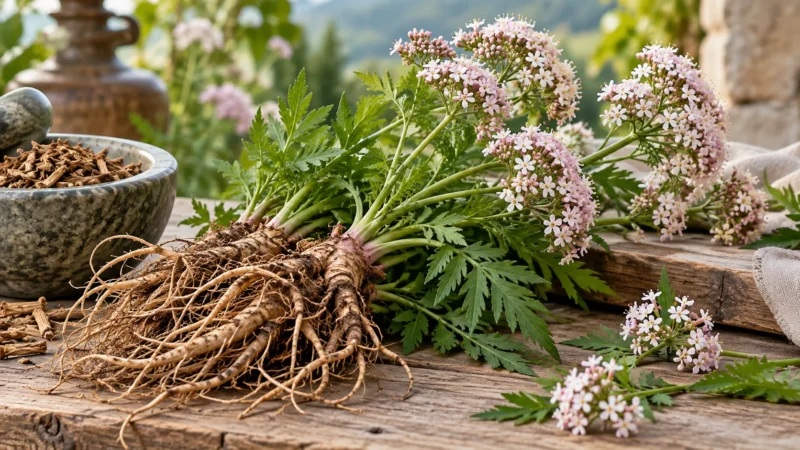
Decoction: a method that simmers certain tougher plant materials, such as some roots or bark. The suitable plant, strength, and preparation instructions matter; do not use unfamiliar roots or bark on the assumption that simmering makes them safe.
Tincture: a concentrated extract commonly made with alcohol or another solvent. Homemade tincture strength is difficult to standardize. Beginners should not improvise medicinal concentrations or doses, particularly for children, pregnancy, medication use, or illnesses.
Infused oil: a plant material is steeped in oil, usually for culinary or external applications depending on the ingredient and preparation. Water introduced through fresh plant matter can create spoilage hazards. An infused oil is not automatically edible, sterile, or appropriate for an open wound. Never swallow an essential oil because its source plant is edible.
Five checks that matter more than the recipe
- Correct identity: ensure the herb and the relevant plant part are known.
- Right preparation: use directions intended for the specific ingredient and route of use.
- Cleanliness: wash hands and utensils, use clean food-safe containers, and avoid cross-contamination.
- Freshness: prepare small quantities; do not keep homemade water-based mixtures at room temperature for days.
- The intended use: do not treat an infection, severe symptom, or chronic medical condition with an unverified home preparation.
How long can a homemade preparation be stored?
There is no universal shelf life. A freshly brewed tea is perishable, especially if kept warm or exposed to contamination. Follow food-safety storage guidance, refrigerate promptly if it will be kept, and discard products with unusual odor, mold, or changes in appearance. More concentrated preparations can have different storage requirements, but longevity cannot be assumed from the method alone.
When to avoid self-preparation
Do not rely on a home remedy when symptoms suggest an infection or urgent illness, or when a specific product could interact with prescribed treatment. This is particularly important in pregnancy, breastfeeding, for young children, before surgery, or when taking multiple medications. A pharmacist or clinician can help assess the ingredient and the intended use.
The NCCIH herb fact sheets offer plant-specific research and cautions. The FDA guidance on supplements explains why marketed botanical products should not be mistaken for medicines approved to treat disease.
Where to find the full preparation guide
This answer is a starting checklist. Mayobook’s How to Prepare and Use Herbal Remedies Guide explains the preparation categories, ingredient selection, common mistakes, contamination risks, and safe storage in greater depth.
Explore related learning resources in the Herbal Medicine topic, or read the Herbal Remedies Encyclopedia for broader educational context. Neither resource replaces individualized healthcare.