Start with the botanical identity—not the promised benefit
A common plant name is not enough. Different species can share similar names, and flowers, roots, leaves, seeds, and oils from a single plant can have different chemical constituents. Choose a reputable supplier, verify the scientific name and plant part, and check that the material is intended for the use you have in mind. Do not use unidentified wild or garden plants for medicinal experiments.
Look for ingredient-specific cautions if you are pregnant or breastfeeding, giving anything to a child, taking medication, living with a medical condition, or preparing for surgery. A plant consumed in ordinary food amounts is not automatically suitable at the strength of a concentrated extract.
- Check the scientific name and plant part on the label.
- Identify the intended route: beverage, food, supplement, or external use.
- Review reliable information about interactions, allergies, and known adverse effects.
- Avoid unknown, moldy, poorly stored, or contaminated material.
- Follow directions written for that specific product rather than making up a stronger mixture.
Infusions: food-style herbal teas
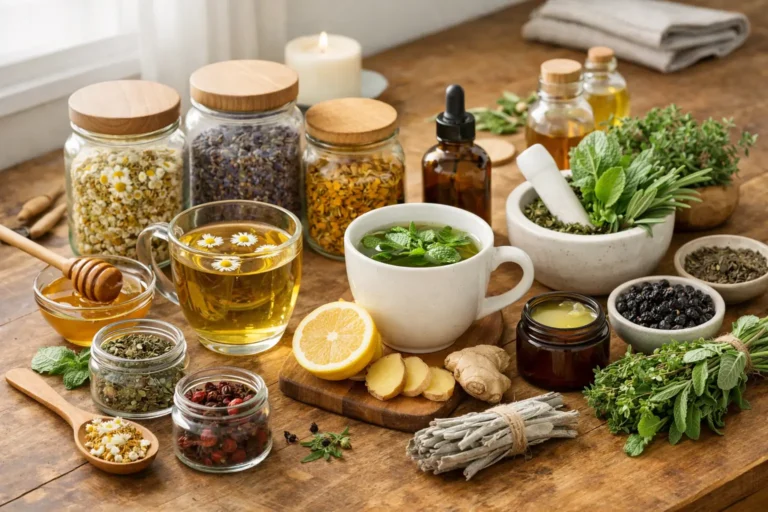
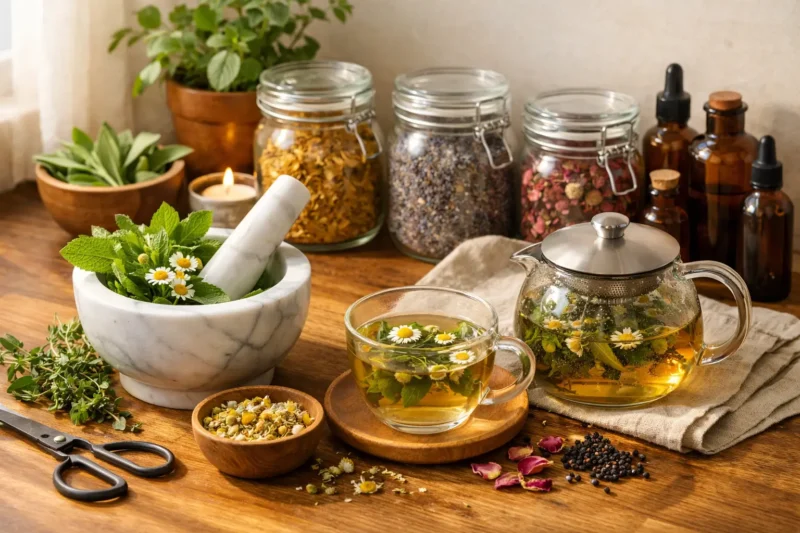
An infusion is a preparation in which suitable plant material, commonly leaves or flowers, is steeped in water. For most beginners, following the label on a food-grade herbal tea product is more predictable than improvising medicinal-strength recipes. Herbs should be selected for appropriate food-style use; not every botanical belongs in a tea.
- Wash your hands and use a clean kettle, cup, infuser, and strainer.
- Choose a labeled food-grade tea that is appropriate given your allergies, medicines, and other circumstances.
- Heat water and follow that product’s stated quantity, temperature, and steeping time.
- Cover the vessel when the directions call for it, then strain and allow it to cool.
- Treat the result as a beverage, not proof that the plant can prevent or cure an illness.
Chamomile tea is familiar, but chamomile can cause allergies in people sensitive to related plants. Peppermint can aggravate certain digestive conditions, and ginger can interact with some medications. Familiarity does not remove the need for checking ingredient-specific safety.
Decoctions: simmering certain roots and bark
A decoction generally uses controlled simmering for some tougher plant materials. Simmering can extract substances differently from steeping, but stronger extraction does not necessarily mean better outcomes or safety. Some roots and barks are unsuitable for self-treatment; heat does not make an unidentified or hazardous plant safe.
For a food-style ginger drink or other culinary use, rely on a verified ingredient and suitable recipe. Do not adapt medicinal claims about an unrelated botanical into an improvised simmering time, quantity, or dosage.
Tinctures: concentrated extracts with different risks
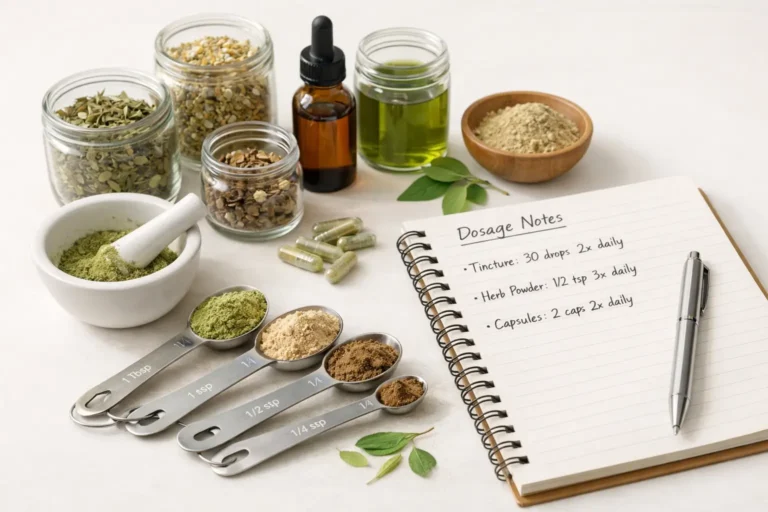
A tincture is commonly a liquid extract made with alcohol or another solvent. Concentration depends on the plant, part, solvent, proportions, preparation, and storage. Homemade batches can be difficult to standardize, which makes medical dosing unreliable. Concentrated products may be unsuitable for children, pregnancy, people taking medicines, or those with certain health conditions.
A tincture’s apparent strength is not proof of clinical effectiveness. Before using a commercial extract, check the exact ingredient, strength, serving information, interaction warnings, and evidence for the specific intended use. Avoid guessing concentrations or taking a tincture simply because the original herb is also used as food.
Infused oils, salves, and essential oils
An infused oil contains material extracted into a carrier oil. Its suitability for food or skin depends on the plant, process, and finished product; it is not interchangeable with a highly concentrated essential oil. Never ingest an essential oil solely because the source plant is edible.
Moisture in fresh herbs can create spoilage and contamination risks in homemade infused oils. A homemade oil or balm is not sterile and should not be relied on for an open wound, burn, or skin infection. Use appropriate medical-grade preparations and professional advice where wound treatment is needed.
Powders and capsules
Grinding or encapsulating a plant does not guarantee purity or safety. Capsules may make it easy to consume concentrated or repeated amounts without noticing. Some marketed supplements are standardized to specified constituents, but standardization is not proof that the product works or is appropriate for you.
For US dietary supplements, check the Supplement Facts panel, full ingredient list, serving size, manufacturer details, and warnings. The FDA explains that dietary supplements generally are not approved for safety and effectiveness before marketing. A claim that a supplement cures a disease needs particular scrutiny.
Cleanliness, labeling, and storage
Wash hands, equipment and food-preparation surfaces, and use clean food-safe containers. Avoid dipping wet or dirty utensils into dried herb supplies. Label homemade products with the ingredient, plant part when known, preparation date, and any other constituents. Store packaged ingredients according to their labels and keep preparations out of children’s reach.
There is no universal shelf life for a homemade remedy. Water-based drinks are perishable and should not be left at room temperature for long periods; food-safety guidance calls for prompt refrigeration of perishable foods. Oils can spoil and may pose risks when water is incorporated. The fact that a tincture contains alcohol does not establish indefinite stability. Discard mixtures with suspected contamination or uncertain storage history. See the CDC food-safety guidance for ordinary hygiene and refrigeration principles.
How to assess the evidence before using a remedy
Separate historical use, laboratory findings, and clinical effectiveness. A plant may have centuries of traditional use or interesting laboratory activity without a well-designed human trial showing that a specific preparation benefits a particular condition. Compare studies of the actual extract, dose and population rather than transferring results automatically to homemade tea or oil.
The NCCIH herb fact sheets summarize the research and cautions for individual botanicals. If a symptom is persistent, severe, or worsening—or an infection may be present—seek qualified care rather than substituting an unverified preparation for evaluation or treatment.
Six common mistakes that undermine a preparation
- Treating more concentrated extracts as automatically more effective.
- Using unidentified plants or plant parts.
- Assuming “natural” means free of side effects or medicine interactions.
- Combining many herbs or supplements without knowing overlapping ingredients.
- Keeping homemade teas and infused oils indefinitely without a validated storage method.
- Using a botanical product as a replacement for necessary medical treatment.
A practical learning path
Start with one clearly identified, food-grade ingredient and learn which preparation forms are appropriate. Check the label and a reliable plant-specific safety source. For ordinary beverages, use the product’s culinary directions, clean tools, and good storage habits. For concentrated extracts and claims about treating symptoms, obtain appropriate professional advice.
If you want a quick answer, begin with How Do You Prepare Herbal Remedies at Home?. The Herbal Medicine topic hub has related discussions of preparation, safety and research. For book-length educational context, explore The Herbal Remedies Encyclopedia; it is not a substitute for individualized healthcare.