Why Safety Matters in Herbal Medicine
One of the most common misconceptions is:
“If it’s natural, it’s safe.”
This belief leads to:
- overuse
- incorrect combinations
- ignoring interactions
- misuse of strong herbs
Herbs can:
- affect the body’s systems
- interact with medications
- influence hormones, digestion, and circulation
- cause side effects when misused
That doesn’t make herbs dangerous—it means they must be respected.
What “Dosage” Really Means
Dosage in herbal medicine is not just about “how much.”
It includes:
- amount taken
- frequency
- form of the herb
- duration of use
- individual sensitivity
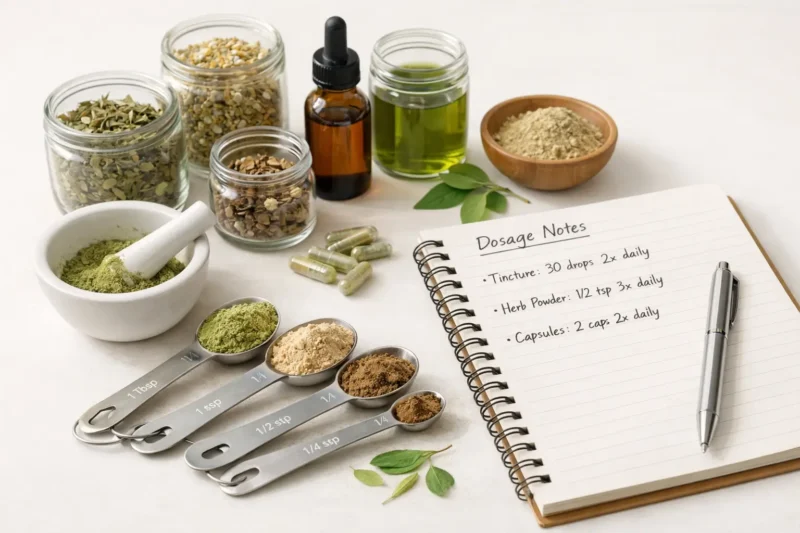
A teaspoon of dried herb in tea is very different from a concentrated extract.
Understanding this prevents one of the biggest beginner mistakes: treating all forms of herbs as equal.
Different Forms of Herbal Dosage
1. Herbal Tea (Infusion)
One of the safest starting points.
Characteristics:
- gentle
- slower absorption
- easier to control
Typical use:
- daily wellness
- mild support
2. Decoctions
Used for tougher plant materials like roots and bark.
Characteristics:
- stronger extraction
- requires simmering
3. Tinctures
Concentrated liquid extracts.
Characteristics:
- fast absorption
- more potent
- requires careful dosing
4. Capsules and Powders
Convenient but less intuitive.
Risk:
- easier to overuse
- harder to feel immediate feedback
5. Essential Oils (Important Warning)
Highly concentrated.
Must:
- be used cautiously
- not ingested casually
- often diluted
General Dosage Principles for Beginners
1. Start low
Always begin with a lower amount.
2. Increase gradually
Only if needed and appropriate.
3. Observe your body
Pay attention to:
- digestion
- energy
- mood
- sleep
4. Avoid stacking multiple herbs
Start with one or two only.
Factors That Affect Herbal Dosage
Body size and sensitivity
Age
Health condition
Medication use
Type of herb
Preparation method
No single dosage fits everyone.
Common Side Effects of Herbal Medicine
Even gentle herbs can cause effects.
Possible reactions include:
- digestive discomfort
- allergic reactions
- headaches
- dizziness
These are often mild but should not be ignored.
Herb–Drug Interactions (CRITICAL)
Some herbs can interact with medications.
Examples:
- blood-thinning effects
- blood pressure changes
- sedative effects
If taking medication, caution is essential.
Who Should Be Extra Careful
- pregnant or breastfeeding individuals
- people with chronic conditions
- those on medication
- children
- elderly individuals
Duration of Use — How Long Is Safe?
Short-term use:
- stronger herbs
- targeted support
Long-term use:
- gentle herbs
- daily wellness
Rotating herbs can help reduce dependency.
Signs You Are Using Herbs Incorrectly
- taking many herbs at once
- increasing dose without reason
- ignoring side effects
- using strong herbs daily
- expecting immediate results
Safe Herbal Routine for Beginners
Step 1: Choose one goal
Step 2: Select one herb
Step 3: Choose appropriate form
Step 4: Use consistently
Step 5: Monitor response
Storage and Quality Safety
Herb quality affects safety.
Check for:
- freshness
- proper storage
- reputable sourcing
Avoid:
- expired herbs
- poorly labeled products
Herbal Safety vs Fear
Safety does not mean avoiding herbs.
It means:
- using them wisely
- respecting their effects
- staying informed
Final Perspective
Herbal medicine becomes powerful when it is:
- simple
- consistent
- safe
Understanding dosage and safety turns herbal medicine from guesswork into a reliable part of your wellness routine.