
Carvacrol (Primary Active Compound)
- Powerful antibacterial and antifungal action
- Helps disrupt harmful microbes at the cellular level
- Supports immune defense against infections
- Considered the main driver of oregano oil’s antimicrobial strength
Oregano oil explained clearly—its antimicrobial strength, real-world uses, and how to use it safely without common mistakes.
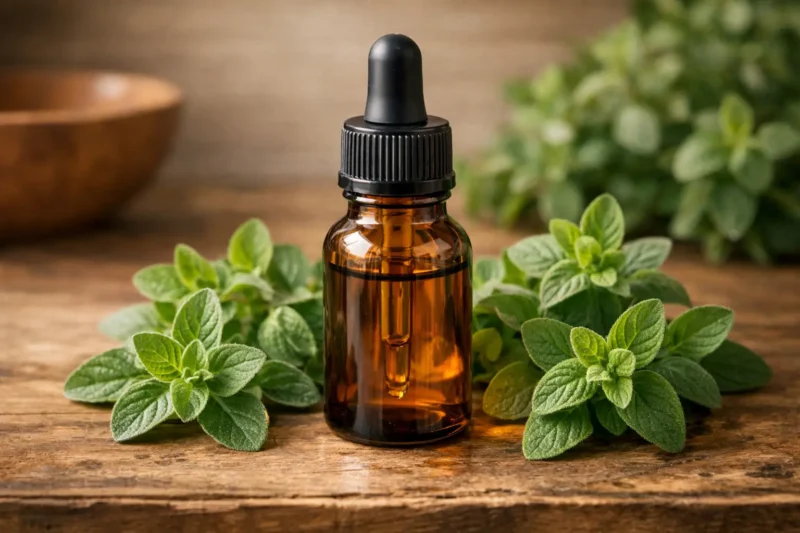
Oregano oil is a concentrated herbal extract derived from the leaves of Origanum vulgare, rich in compounds like carvacrol and thymol that support antimicrobial activity, immune function, and overall health.
Oregano oil is widely used as a natural antimicrobial, especially for supporting the body during early-stage infections, digestive imbalance, and immune challenges. It is often chosen by people looking for natural alternatives to support their health without immediately relying on pharmaceutical interventions.
If you’re considering oregano oil, it’s important to understand not just what it does, but when it actually helps and how to use it correctly. Used properly, it can be a powerful short-term tool. Used incorrectly, it can create unnecessary irritation or imbalance.
Use this map to move through the concept in a clear order: meaning, mechanism, use, and wider context.
Oregano oil is one of the most powerful herbal extracts used in natural medicine, known for its strong antimicrobial properties and its ability to support the body during infections, digestive imbalance, and immune challenges. Unlike culinary oregano, oregano oil is highly concentrated, which makes it significantly more potent and effective when used correctly.
Its growing popularity comes from its ability to bridge the gap between traditional herbal remedies and modern health concerns. Many people turn to oregano oil when looking for natural ways to support their body without immediately relying on pharmaceutical solutions.
The effectiveness of oregano oil comes from its active compounds, particularly carvacrol and thymol. These compounds are responsible for its antimicrobial effects and its ability to influence microbial balance in the body.
Carvacrol, in particular, has been widely studied for its role in disrupting harmful bacteria and supporting immune function. Instead of acting like a targeted pharmaceutical drug, oregano oil works more broadly, affecting multiple systems at once.
Oregano oil works through a combination of mechanisms:
This multi-layered action is what makes it effective in a variety of situations, from mild infections to digestive discomfort.
Oregano oil is not meant to be used casually or continuously. It is most effective when used with a clear purpose, typically for short-term support.
People often use it:
However, it is important to manage expectations. Oregano oil is not a cure-all, and its effectiveness depends on how and when it is used.
Because oregano oil is highly concentrated, improper use is one of the most common problems.
Key safety considerations include:
Responsible use is what separates beneficial outcomes from unwanted side effects.
Oregano oil is a powerful tool—but like all powerful tools, it must be used correctly.
Its real value lies not in its strength alone, but in how precisely it is used. When applied with understanding and intention, it becomes a reliable part of a natural health approach.
Oregano oil is not just a “natural antibiotic.” Its strength comes from supporting the body’s microbial balance—not indiscriminately eliminating bacteria. This distinction determines whether it helps or harms.
Use these connected pages for the next step.
Discover natural antibiotics in herbal medicine, including powerful…
Read next


The Herbal Remedies Encyclopedia is a comprehensive reference designed for anyone who wants to understand ...…
Explore booksWhen the overview is clear but practical application still matters, this deeper resource shows how the concept fits into a complete framework and how to use it well.
Oregano oil is most effective when used with intention—short-term, targeted, and with a clear understanding of its limits.