
Menthol
Menthol is the primary active compound in peppermint responsible for its cooling sensation and muscle-relaxing effects. It helps reduce spasms in the digestive tract, making peppermint effective for bloating and discomfort.
Peppermint explained clearly—how it supports digestion, relieves discomfort, and promotes calm in everyday use.
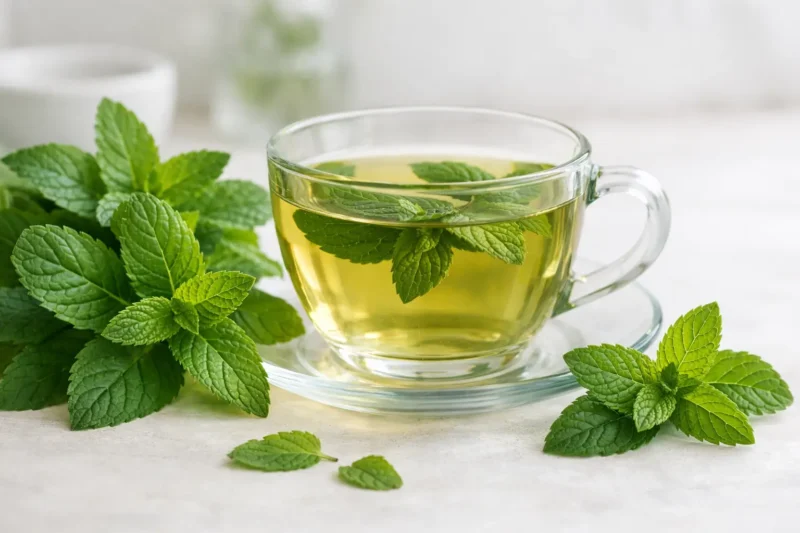
Peppermint is a medicinal herb derived from Mentha × piperita, commonly used to support digestion, relieve bloating, and promote a calming effect on the body.
Peppermint is one of the most commonly used herbs for digestive support. It is widely consumed as tea and used to relieve symptoms such as bloating, gas, and mild stomach discomfort.
If you’re considering peppermint, its strength lies in its fast-acting nature. Unlike herbs that work slowly over time, peppermint often provides noticeable relief shortly after use, making it a go-to remedy for immediate digestive issues.
Use this map to move through the concept in a clear order: meaning, mechanism, use, and wider context.
Peppermint is one of the most widely used medicinal herbs in the world, valued for its ability to support digestion and provide fast relief from discomfort. Derived from Mentha × piperita, it has been used for centuries in both traditional remedies and modern herbal medicine.
What makes peppermint unique is its ability to work quickly. Unlike herbs that build effects over time, peppermint often provides noticeable relief shortly after use, making it one of the most practical herbs for everyday problems.
Peppermint’s effectiveness comes from its active compounds, particularly menthol. These compounds help relax muscles in the digestive system, allowing gas and pressure to move more freely.
This is why peppermint is commonly used for:
Peppermint supports the body by:
These actions make it particularly useful for short-term relief.
Peppermint is best known for its role in digestion. It helps the body process food more comfortably and reduces common issues such as bloating and cramping.
It is often used:
One of peppermint’s biggest advantages is its speed. It can provide relief relatively quickly, making it a go-to option for immediate issues.
Peppermint also has a calming effect on the body. While not as strong as adaptogens, it helps reduce tension and promote a sense of ease.
Peppermint can be used in various forms:
Tea is the most common and safest option for regular use.
Peppermint is generally safe but should be used appropriately. Concentrated forms, especially essential oils, require caution.
Peppermint is one of the most practical herbs available—fast, accessible, and effective for everyday use.
Menthol is the primary active compound in peppermint responsible for its cooling sensation and muscle-relaxing effects. It helps reduce spasms in the digestive tract, making peppermint effective for bloating and discomfort.
Menthone supports peppermint’s digestive effects and contributes to its calming properties, helping reduce tension in the body.
Rosmarinic acid contributes antioxidant and anti-inflammatory properties, supporting overall digestive and immune health.
Flavonoids support circulation and contribute to peppermint’s broader calming and protective effects.
Peppermint works quickly for symptom relief, but it is not designed for deep, long-term system changes like adaptogenic herbs.
Use these connected pages for the next step.



The Herbal Antibiotics & Antivirals Handbook: Natural Remedies for Immune Support and Infection Defense If ...…
Explore booksWhen the overview is clear but practical application still matters, this deeper resource shows how the concept fits into a complete framework and how to use it well.
Peppermint is simple, fast, and effective—when used at the right moment.