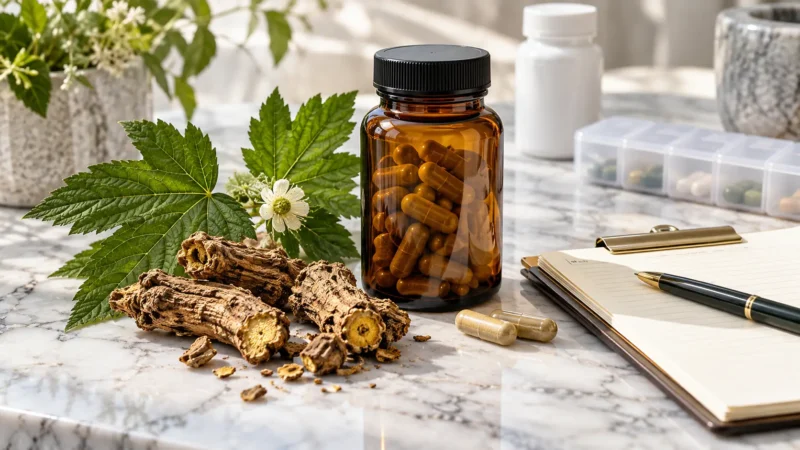

No. Herbal products should not be treated as general replacements for prescription antibiotics. Some plants and plant compounds show antimicrobial activity in laboratory studies, and some herbal preparations have traditional or limited human evidence for specific supportive uses. But that is not the same as proving that a product can reliably treat a diagnosed bacterial infection, reach the necessary tissues at an effective concentration, prevent complications, or perform as predictably as a prescribed antibiotic.
Can Herbal Antibiotics Replace Prescription Antibiotics?
As a general rule, no. Prescription antibiotics are standardized medicines selected for bacterial infections according to factors such as the likely organism, infection site, severity, allergies, kidney or liver function, pregnancy status, and local resistance patterns. The informal term “herbal antibiotic” covers a much broader and less standardized group: foods, teas, tinctures, capsules, extracts, essential oils, and isolated plant compounds.
That does not make every herbal product useless. Some may have legitimate symptom-support roles, traditional-use indications, or research value. The key point is that supportive evidence is not the same as replacement evidence.
Why Antimicrobial Activity Is Not the Same as Antibiotic Treatment
A laboratory result can show that an extract inhibits bacteria under controlled conditions. To become a reliable infection treatment, however, several additional questions have to be answered.
- Can a safe human dose achieve an effective concentration in the body?
- Does the active material reach the infected tissue?
- Is the formulation standardized enough to deliver a predictable exposure?
- Does it work against the actual organism causing the infection?
- Does it improve meaningful human outcomes such as recovery, bacterial clearance, or prevention of complications?
- Are interactions and adverse effects understood well enough for the intended patient?
Many herbal antimicrobial claims stop at the first step. That is why a strong test-tube effect cannot be translated automatically into “natural antibiotic” treatment advice.
Mayobook’s guide to how herbal antibiotics work explains this evidence ladder in more detail.
Where Herbal Products May Have a Supportive Role
Some herbal preparations may be useful for symptom support when the evidence, preparation, and person fit. Examples include selected products studied for uncomplicated cough, cold symptoms, or other narrow uses. In these cases, the intended outcome may be comfort, reduced symptom severity, or temporary support—not eradication of a bacterial pathogen.
Supportive use should still be product-specific. Tea, tincture, standardized extract, and essential oil can produce very different exposures. Combining herbs with prescription medicines is not automatically safe simply because the herb is “natural.”
When Prescription Antibiotics Are—and Are Not—Useful
Antibiotics treat bacterial infections; they do not treat ordinary viral infections. Most uncomplicated colds, for example, do not improve because an antibiotic was taken. Responsible antibiotic use therefore includes avoiding antibiotics when they are not indicated.
At the same time, stewardship does not mean avoiding antibiotics at all costs. When a bacterial infection genuinely requires treatment, using the appropriate antibiotic can prevent progression and complications. The decision depends on the clinical context rather than a preference for either natural or pharmaceutical treatment.
For a fuller comparison, see Herbal Antibiotics vs Antibiotics.
The Main Risk of Substitution Is Delayed Effective Treatment
The most important danger is not that every herbal product is directly toxic. It is that an ineffective substitute can create a false sense of security while an infection worsens.
That risk is especially important with pneumonia, kidney infection, spreading skin infection, severe dental infection, bloodstream infection, or illness in higher-risk people such as pregnant patients, very young children, frail older adults, or immunocompromised people. Symptoms can also be misleading: temporary pain relief does not necessarily mean the infection itself is resolving.
Seek prompt assessment for difficulty breathing, chest pain, confusion, severe dehydration, rapidly spreading redness or swelling, severe dental or facial swelling, urinary symptoms with fever or flank pain, persistent high fever, or rapid deterioration.
What to Do If You Are Considering Both Herbal and Prescription Treatment
If an antibiotic has been prescribed, do not stop it, shorten the course, change the dose, or replace it with a herbal product without discussing the change with the prescriber. If you want to use an herbal product at the same time, bring the exact product label to a pharmacist or clinician.
Useful information includes the herb, plant part, preparation, concentration, serving size, other ingredients, all medicines and supplements being used, allergies, pregnancy or breastfeeding status, kidney or liver disease, and the reason the product is being considered.
Mayobook’s evidence-focused answer to Do Herbal Antibiotics Work? provides additional context on what different evidence levels can and cannot establish.
Bottom Line
Herbal antimicrobials and prescription antibiotics are not interchangeable. A botanical product may have a supportive role in a specific context, but that role should be judged by the exact preparation and outcome studied. When effective antibiotic treatment is indicated, replacing it with an unproven herbal alternative can create more risk than benefit.
For broader context, see Mayobook’s Herbal Antibiotics resource and the Herbal Medicine topic hub.