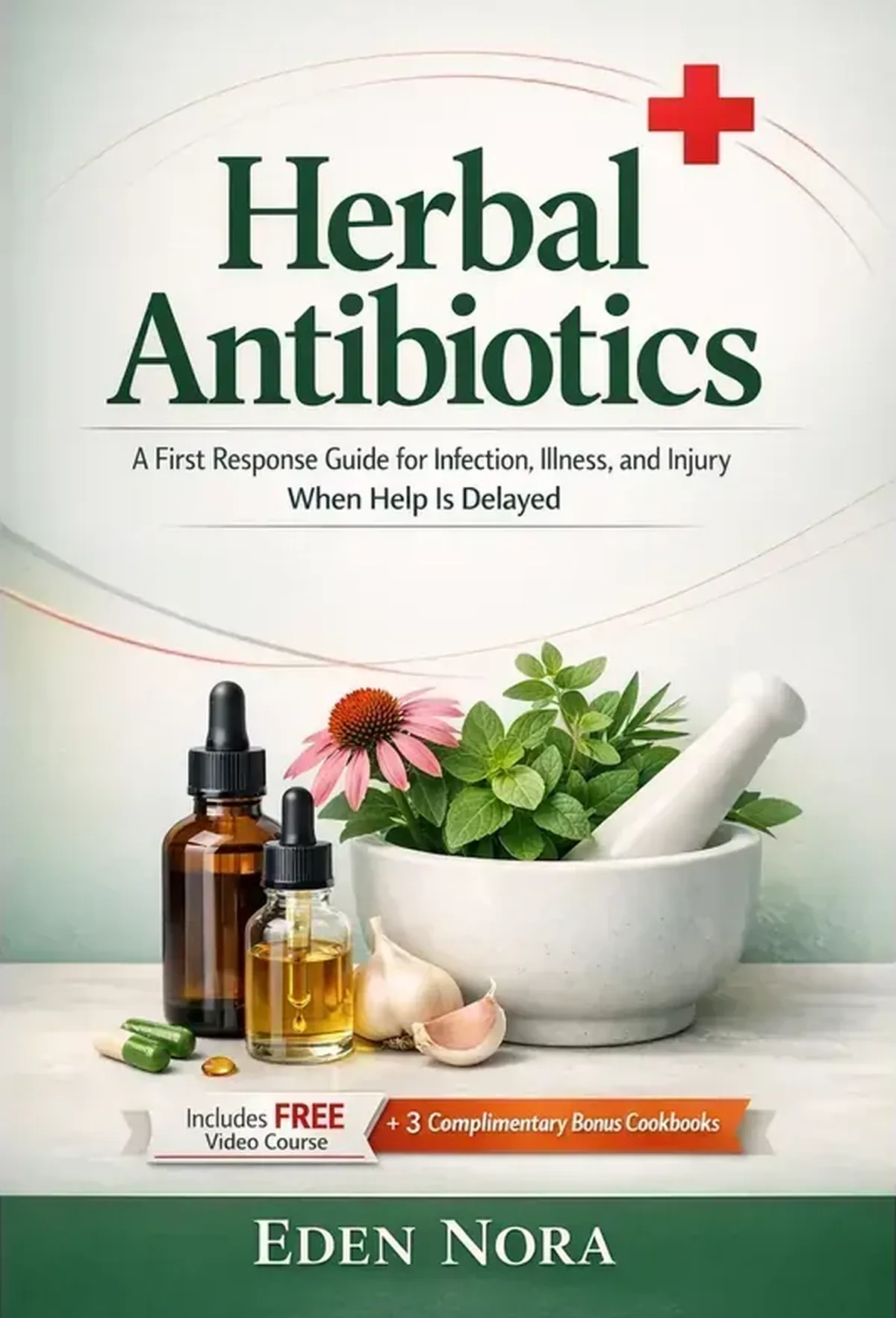
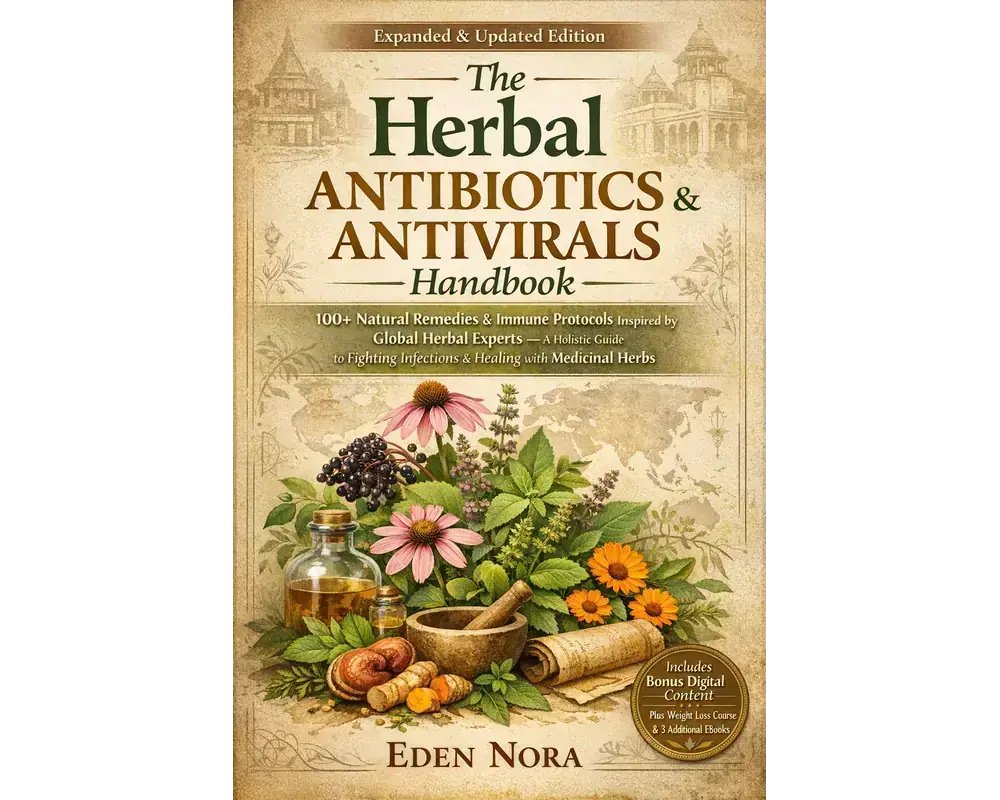
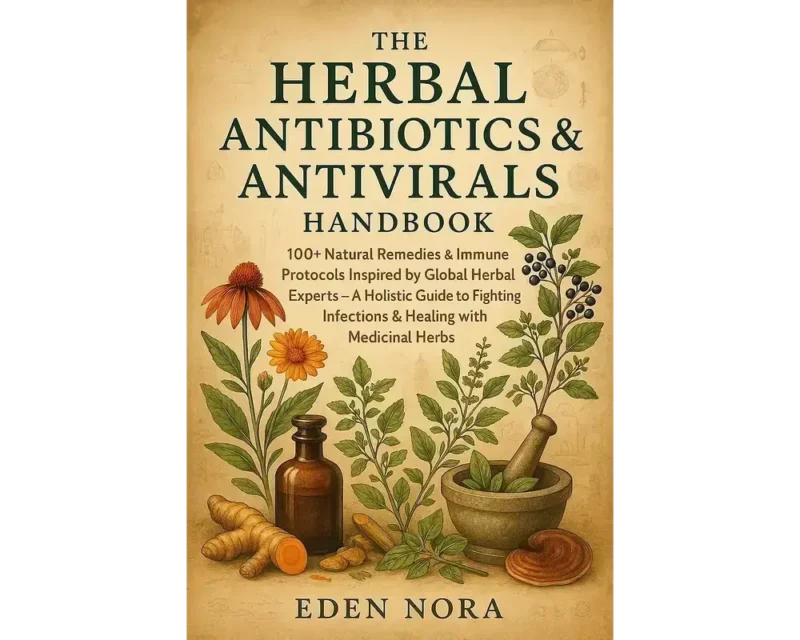
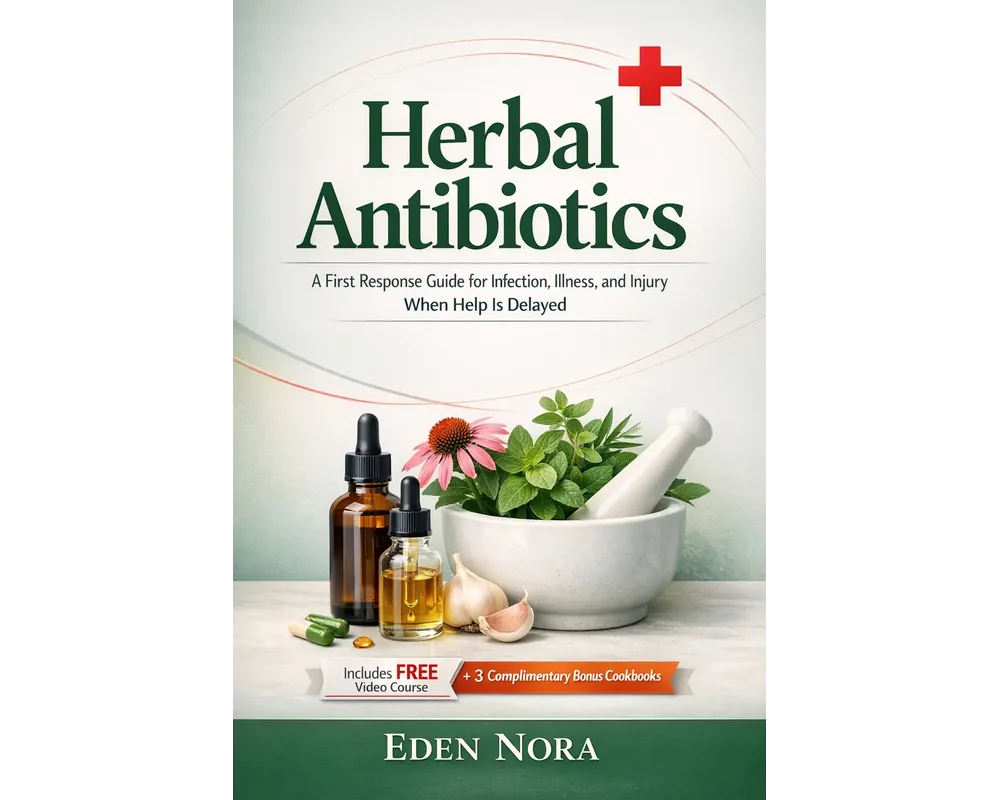
What can you learn from traditional medicinal plants without mistaking them for clinically proven antibiotics? Herbal Antibiotics: A First Response Guide for Infection, Illness, and Injury When Help Is Delayed is a beginner-oriented book about herbal traditions, common preparations, household preparedness and the safety questions that come with self-reliance. It is for readers who want an organized introduction—not a substitute for diagnosis or urgent care.
The word “antibiotics” in the title reflects a popular herbal-medicine topic. It should not be read as a promise that herbs cure bacterial infections. Laboratory findings about plant compounds do not establish that home preparations work like prescription medicines in people. The book is best approached as educational reading on how herbal remedies have been described and prepared, together with a realistic understanding of their limits.
What this herbal preparedness book covers
The guide introduces the traditional uses of plants often mentioned in herbal discussions, including garlic, oregano, echinacea and ginger. It explains common forms such as teas, tinctures, infused oils and salves so readers can distinguish a culinary herb, a mild preparation and a concentrated extract. Those forms are not interchangeable, and neither the preparation method nor a traditional reputation establishes clinical effectiveness.
Readers also explore how herbal learning can fit into a broader preparedness plan. That means knowing where reliable information comes from, identifying limits of self-care, keeping appropriate first-aid supplies, maintaining a way to contact medical services and recognizing when delaying assessment could make a health problem worse. Preparedness is strongest when medical readiness and informed choices come first.
Who this eBook is for
This book suits curious beginners, home-herb gardeners, homesteaders and readers interested in the history and practical vocabulary of medicinal plants. It is particularly useful for people who want a structured starting point instead of disconnected online claims. You do not need previous herbal-medicine experience to understand the concepts.
It is not an emergency treatment manual, a prescription, or a guarantee that herbs can manage wounds, urinary tract infections, pneumonia or other infections. If an infection is suspected—especially with fever, increasing pain, spreading redness or worsening symptoms—seek appropriate medical advice. Emergencies need urgent professional care.
How to interpret herbal antibiotic claims responsibly
Plants can contain biologically active constituents, yet three questions must stay separate: Has a plant been used traditionally? Has a particular extract shown an effect in a laboratory? Has that exact preparation been demonstrated to be safe and effective for a health condition in people? The answer to one question does not establish the others.
The U.S. Centers for Disease Control and Prevention explains that antibiotics treat certain bacterial infections, not viruses, and that appropriate treatment depends on the illness. The NCCIH herb fact sheets distinguish evidence from traditional use and describe potential side effects. The FDA's dietary supplement guidance clarifies why marketed supplements should not be assumed to have undergone premarket approval for safety and effectiveness.
Questions to ask before using any herbal product
Start with the exact botanical identity, the form and concentration, the product's ingredient information and any potential medicine interactions. If you are pregnant, breastfeeding, giving a product to a child, preparing for surgery or taking prescription medication, discuss concentrated herbal products with an appropriate health professional. Never ingest an essential oil simply because its plant is used in food.
For more specific questions, Mayobook's herb–prescription antibiotic interaction guide explains why combinations need individual review. Its natural antibiotics and UTI question and sinus infection question distinguish symptoms, evidence, and when professional care matters.
What makes this a useful starting point?
Rather than relying on a “strongest herb” ranking or promising quick cures, the eBook groups familiar herbal concepts into an approachable reading journey: understand the terminology, learn what different preparations mean, consider the role of traditional knowledge, and recognize the limits of home care. A reader can use those distinctions to ask better questions before selecting any herbal product.
Available format: this Mayobook listing currently offers an eBook for digital access. Confirm the displayed price and format options on the Product page before checkout. If you want educational reading on herbal preparedness with a safety-first frame, this guide offers a place to begin.