
Defining element
Stinging Nettle contains multiple naturally occurring plant constituents; composition varies by plant part and preparation.
A practical evidence-aware reference to Stinging Nettle (Urtica dioica).
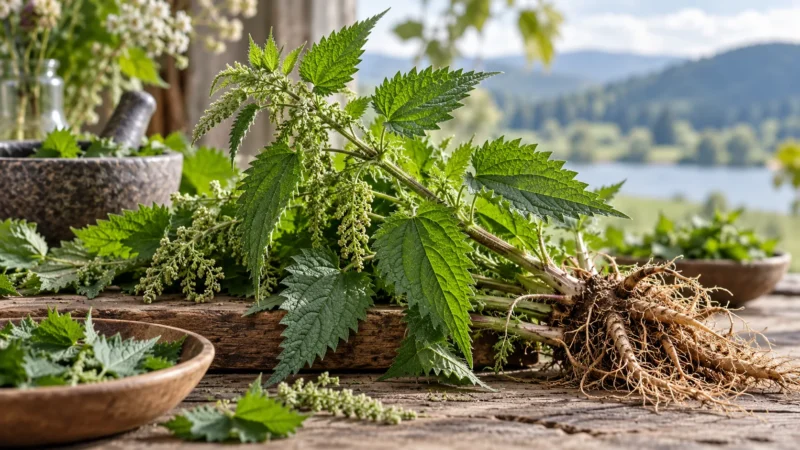
Stinging Nettle (Urtica dioica) is a medicinal plant commonly prepared from leaves and roots and used traditionally for urinary symptoms, joint discomfort and traditional nutritive use.
Traditional use is broader than the available clinical evidence. Preparation, plant part, concentration and individual health factors materially affect interpretation and safety.
Use this map to move through the concept in a clear order: meaning, mechanism, use, and wider context.
Stinging nettle (Urtica dioica) is better understood as two herbal products than as one. The leaf is eaten as a cooked green and brewed as tea, while the root appears in supplements aimed at urinary symptoms in men. These parts differ chemically and are studied for different purposes. Treating all nettle products as interchangeable is one of the easiest ways to misread the evidence.
The fresh leaves and stems carry hollow hairs that produce the familiar sting when they contact skin. Cooking, drying or other processing neutralizes that physical effect. Leaf products provide minerals, polyphenols and other plant compounds. Root extracts have a distinct constituent profile and dominate the research on lower urinary tract symptoms.
A label that says only “nettle extract” leaves an important question unanswered. The plant part should be stated explicitly because the therapeutic rationale changes with it.
Nettle leaf has been used as food, spring tonic and a traditional remedy for joint complaints. Root preparations are associated with urinary symptoms related to benign prostate enlargement. The two traditions should remain separate: evidence from a root extract cannot be used to claim that nettle tea treats prostate symptoms.
Modern wellness products also promote nettle for allergy, “detoxification” and blood sugar. Those claims have much less consistent human evidence and often rely on laboratory or traditional arguments rather than strong trials.
Clinical studies have investigated nettle root, and sometimes combination formulas, for lower urinary tract symptoms in men. Some preparations appear to improve symptom scores, but trial quality, formulation and comparator vary. Improvement in symptoms does not mean the herb rules out prostate cancer, fixes urinary obstruction or replaces evaluation of a new urinary problem.
Leaf products have smaller evidence bases for arthritis, allergy and metabolic outcomes. Laboratory anti-inflammatory findings can support hypotheses, but they do not demonstrate that drinking nettle tea produces the same effect in a person.
This difference illustrates a broader evidence lesson: an herb can have a plausible mechanism, a long traditional history and still lack a reliable estimate of real-world clinical benefit for a specific condition.
Young cooked leaves are food. Dried leaf is sold as tea and powder. Root appears in capsules, tinctures and extracts. The intended use should match the plant part. A prostate-oriented product that fails to identify root, or a leaf tea borrowing claims from root studies, is difficult to evaluate responsibly.
Fresh nettle is sometimes handled deliberately for the stinging sensation, but intentional skin exposure is not required to obtain the nutritional value of cooked leaves and can cause significant irritation.
Fresh plant contact produces burning, redness and itching. Oral preparations may cause stomach upset and can have mild effects on blood pressure, glucose or fluid balance. Whether those changes are clinically important depends on the individual and any medicines being used.
Mayobook’s Are There Side Effects of Herbal Medicine? offers a wider framework for judging adverse effects rather than assuming that a food-like herb is automatically harmless in concentrated form.
Diuretics, blood-pressure medicines and glucose-lowering medicines are practical reasons to ask for professional advice before using concentrated nettle. A mild herb effect can become more relevant when a prescription medicine pushes the same physiological system in the same direction.
The interaction literature is incomplete, so an unlisted combination is not automatically cleared. Multi-ingredient prostate or “detox” formulas introduce additional interaction questions beyond nettle itself.
Pregnancy and breastfeeding lack strong evidence for routine medicinal supplementation. People with kidney disease, fluid-balance problems or complex diabetes treatment should be cautious. Difficulty urinating, blood in urine, fever, flank pain or recurrent urinary symptoms deserve medical evaluation.
Start with the part: leaf or root. Then look for Urtica dioica, the amount per serving and any extraction information. For food or tea, clean processing matters. For root extracts, the product should make clear what is being concentrated.
Claims that one nettle product simultaneously treats allergies, arthritis, enlarged prostate, blood sugar and “detox” are a sign that distinct evidence streams are being collapsed into marketing.
Nettle becomes much easier to evaluate when leaf and root are treated as separate preparations. Food use, leaf tea and root extract have different roles and different evidence. Readers exploring other common botanicals can use What Are the Most Popular Medicinal Herbs? as a discovery guide without erasing those distinctions.
The practical takeaway is simple: identify the plant part before interpreting any claim. Without that information, both benefit and safety discussions become less precise. A root-extract trial cannot validate a leaf tea, and a long food history cannot automatically establish the safety of a high-dose extract.
Stinging Nettle contains multiple naturally occurring plant constituents; composition varies by plant part and preparation.
A named constituent or laboratory mechanism does not by itself establish a clinical benefit.
Evidence for one Stinging Nettle preparation or use should not be generalized to every product or health claim.
Use these connected pages for the next step.
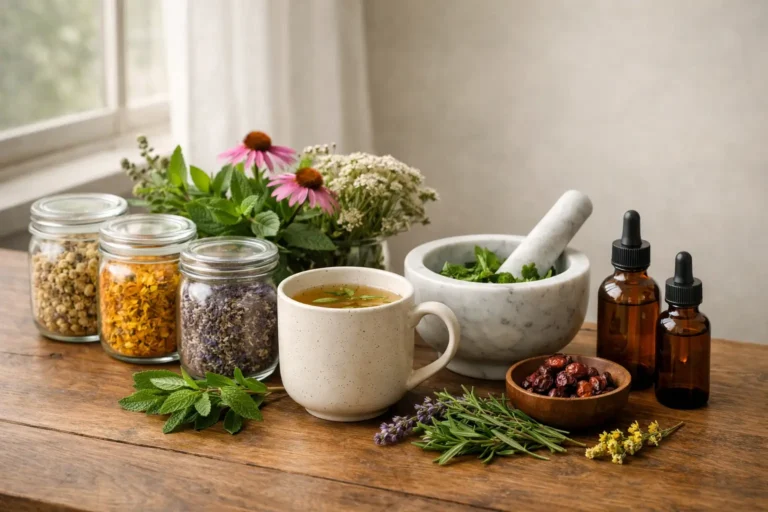
A practical, evidence-aware introduction to herbal medicine: preparations,…
Read next
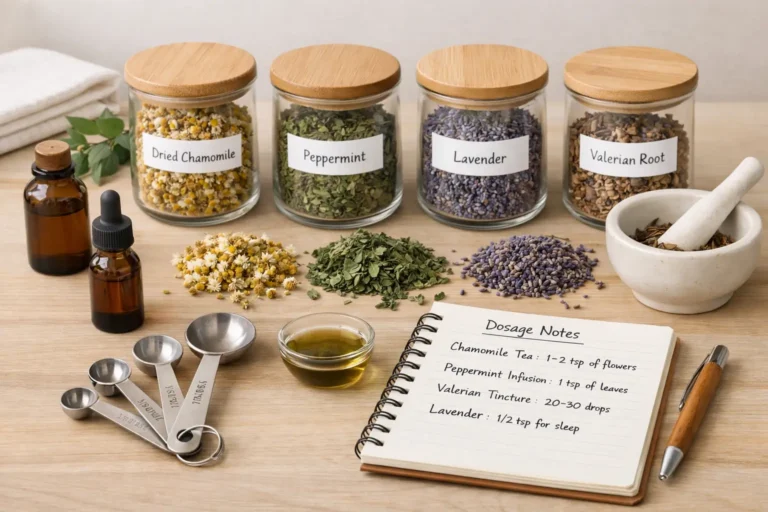
Stinging Nettle is best approached as a specific botanical preparation with evidence limits and safety considerations, not as a universal natural remedy.