For home practice, the safest useful question is not “How strongly can I stimulate the vagus?” It is “Which low-risk practice has reasonable evidence for the outcome I want, and can I do it without provoking a reflex or creating unnecessary strain?”
Three Very Different Meanings of “Vagus Nerve Stimulation”
1. Implanted clinical VNS. A surgically implanted system delivers electrical impulses to vagal pathways under medical supervision. It is used for specific clinical indications and requires individualized evaluation, device programming and follow-up.
2. Noninvasive or transcutaneous VNS. Some devices deliver electrical stimulation through the skin, often at anatomical sites intended to engage vagal afferents. Evidence, regulatory status, target condition and device design vary. A consumer device should not be assumed to have the same evidence or approval as a clinically established system simply because it uses the words “vagus nerve stimulation.”
3. Self-guided wellness practices. Breathing, humming, singing, gentle movement, meditation, relaxation, cold exposure and massage are sometimes described as natural VNS. That shorthand is imprecise. These practices may affect autonomic physiology or subjective state, but they are not equivalent to electrical VNS.
Low-Risk Option 1: Slow, Comfortable Breathing
Among common self-guided practices, slow comfortable breathing has one of the clearest evidence bases for changing vagally mediated heart-rate variability. A systematic review and meta-analysis found increases in vagally mediated HRV during voluntary slow breathing, immediately after a session and following repeated practice.
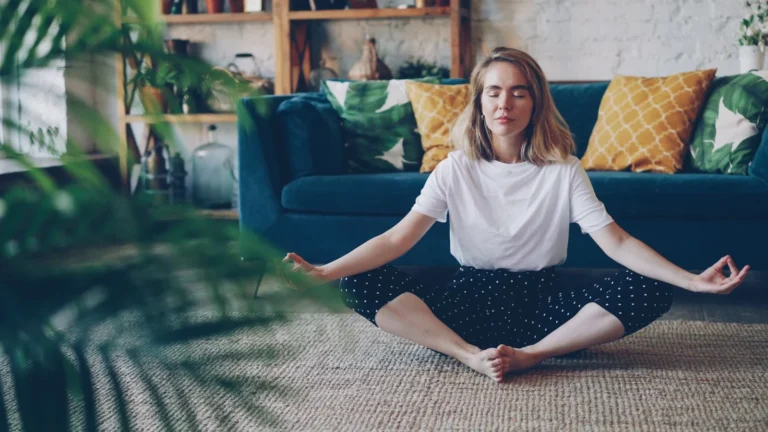
To keep the practice low risk, make the breathing slower rather than bigger. Sit or recline comfortably, observe your natural breath, then allow the rhythm to become slightly slower for a few minutes. If a longer exhale feels easy, it can be included, but no rigid ratio is required.
Return to ordinary breathing if you become lightheaded, tingly, air-hungry or distressed. Those symptoms can occur when people breathe too deeply while trying to breathe slowly. The target is ease, not an extreme respiratory effect.
Slow breathing can influence autonomic cardiovascular patterns. It cannot prove that your vagus nerve was damaged before practice or repaired afterward.
Low-Risk Option 2: Humming, Singing and Vocal Exhalation
Humming and other gentle vocal practices naturally organize exhalation. They can slow the respiratory cycle, produce vibration and give attention a simple sensory anchor. Small studies report changes in HRV during humming, but the evidence remains limited and does not establish a uniquely powerful direct vagus effect.
If you enjoy vocalization, use it gently: take an ordinary breath, hum or sing comfortably for part of the exhale, then return to normal breathing. There is no need to make the sound loud, hold the exhale to exhaustion or seek a dramatic vibration in the throat.
A useful way to frame humming is “a low-effort breathing and sound practice that may feel calming,” not “a proven way to switch on the vagus nerve.” That wording keeps the experience intact without overstating the mechanism.
Low-Risk Option 3: Gentle Movement, Relaxation and Routine
Movement and relaxation practices can support broader regulation even when the vagus nerve is not the only mechanism involved. Gentle walking, shoulder mobility, supported yoga, mindfulness, progressive muscle release and a consistent bedtime routine can change breathing, muscle tension, attention and perceived arousal.
These practices are often most useful when they solve a practical problem: helping you transition after a stressful task, reduce unnecessary muscular effort, or create a lower-arousal cue before bed. They do not need to produce a special sensation in the neck, chest or abdomen.
Consistency also matters more than novelty. A five-minute practice that you can repeat comfortably is generally more sensible than continually escalating toward more intense “vagus hacks.”
What About Cold Water, Massage and Ear Techniques?
Cold water: Facial cold exposure and the diving response can change heart rate and autonomic activity. That is real physiology. It does not establish that an ice bath permanently improves vagal tone or that stronger cold equals greater benefit. Extreme cold adds thermal and cardiovascular stress that may be inappropriate for some people.
Massage: Massage can promote relaxation and small studies have reported HRV changes. That does not prove that an ordinary massage physically “massages the vagus nerve.” Deep pressure over the side of the neck or carotid area is not a reasonable DIY technique.
Ear techniques: Some noninvasive VNS research targets auricular areas with electrical devices, but that should not be generalized to every ear massage, ear clip or consumer gadget. Device design, stimulation parameters, target anatomy and evidence all matter.
When a wellness claim jumps from “this changes a physiological signal” to “this directly stimulates the vagus and treats multiple conditions,” look for the missing evidence step.
Techniques You Should Not Improvise
Do not try to provoke a reflex by pressing deeply over the carotid area or side of the neck. Avoid forceful neck manipulation intended to “access” the vagus nerve. Important nerves and blood vessels run through the neck, and reflex-provoking maneuvers are not casual wellness exercises.
Do not use prolonged forceful breath-holding, straining or extreme respiratory challenges as a way to intensify vagal effects. These practices create cardiovascular and respiratory changes that differ from gentle slow breathing.
Do not assume that an extreme cold challenge is safer or more effective because a mild cold stimulus has measurable autonomic effects. Dose and context matter. People with significant cardiovascular conditions, arrhythmias, recurrent fainting or other health concerns should not treat intense cold exposure as a generic nervous-system exercise.
Finally, do not use a consumer electrical device on the neck or ear simply because it is marketed with vagus terminology. Verify what the device is intended for, what evidence supports it and whether professional guidance is recommended.
When VNS Is a Medical Treatment
Clinical vagus nerve stimulation belongs in healthcare. Implanted VNS systems are prescribed for specific indications and require medical evaluation, a procedure, programming and follow-up. Noninvasive medical VNS devices also have device-specific evidence, instructions and regulatory status.
That is fundamentally different from choosing a relaxation exercise. If someone is considering VNS for a medical condition, the relevant questions concern diagnosis, treatment options, eligibility, expected benefits, adverse effects and clinical monitoring—not which home hack feels most “vagal.”
Breathing or humming may still be useful wellness practices for a person receiving medical care, but they should not be presented as substitutes for prescribed treatment.
When Symptoms Need Evaluation Instead of More Stimulation
Symptoms such as fainting, persistent significant palpitations, chest pain, severe or unexplained shortness of breath, new neurological symptoms, major swallowing difficulty or severe dizziness should not be managed by repeatedly trying stronger vagus techniques. These symptoms have many possible causes and deserve appropriate evaluation.
Likewise, fatigue, anxiety, digestive discomfort and poor sleep are nonspecific. They cannot establish that your vagus nerve is “blocked,” underactive or damaged. A wellness routine may support comfort, but it should not become a substitute diagnosis.
Choose the Right Vagus Nerve Resource
If you want a low-risk home starting point, use the dedicated slow-breathing guide. If you are deciding whether humming, massage or cold water deserves a place in your routine, review each technique on its own evidence and safety. If you want to know which popular exercises have the strongest support, use the evidence-ranked guide.
If your question is about an implanted or noninvasive electrical device, use the clinical VNS explainer. Keeping these categories separate makes the whole subject easier: medical VNS is medical treatment; everyday practices are self-care tools whose benefits should be judged on their own evidence.
For Mayobook’s broader practical framework, see Vagus Nerve Exercises. For broader movement and body-transformation resources, browse the Fitness, Weight Loss & Body Transformation topic hub.