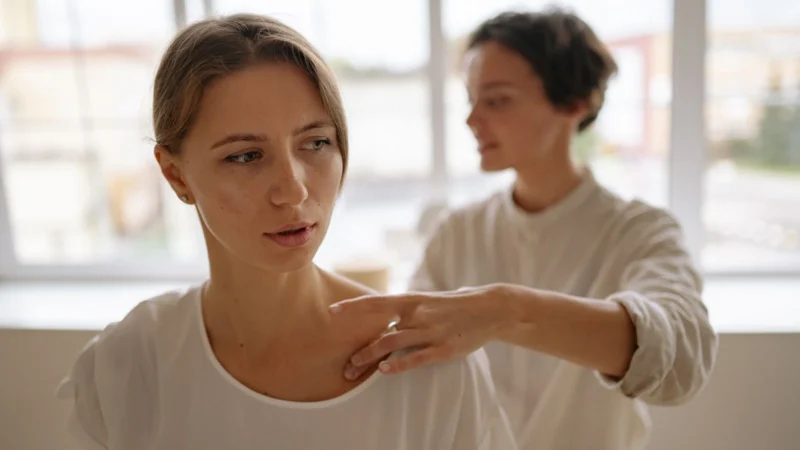
Does Vagus Nerve Massage Work?
Massage may help relaxation, but the claim that you can directly “massage the vagus nerve” at home is oversimplified. Studies of massage have reported changes in heart-rate variability and other autonomic measures, yet those findings do not prove that the benefit came from physically manipulating the vagus nerve itself.
That distinction matters because gentle massage of ordinary muscles is very different from pressing deeply into the side of the neck in an attempt to trigger a cardiovascular reflex.
Why “Massaging the Vagus Nerve” Is an Oversimplification
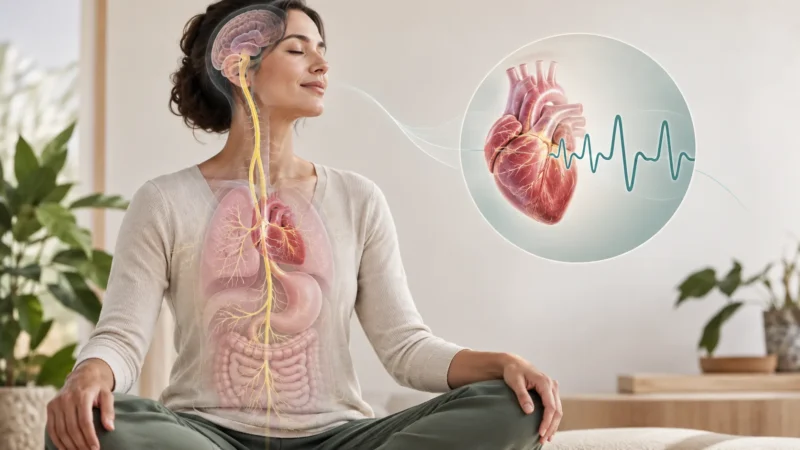
The vagus nerve is cranial nerve X. It travels from the brainstem through the neck and branches through the chest and abdomen, participating in sensory, motor and parasympathetic functions. Much of that pathway is not something a person can safely or specifically access with ordinary self-massage.
A massage can still change breathing, muscle tension, comfort and perceived stress. Those effects can influence autonomic physiology indirectly. But “I feel relaxed after massage” and “I directly manipulated my vagus nerve” are not the same scientific claim.
What Massage and HRV Research Actually Shows
Small randomized research has found autonomic changes after massage, including changes in HRV measures. Such findings support the idea that massage can affect broader autonomic state. They do not isolate the vagus nerve as the sole pathway and do not establish a special “vagus massage” technique.
Massage studies also vary in body area, duration, pressure, population and outcome. A finding from one massage protocol should not be generalized into a universal instruction to massage any location thought to be near the vagus nerve.
Ear, Neck and Abdominal “Vagus Massage” Claims
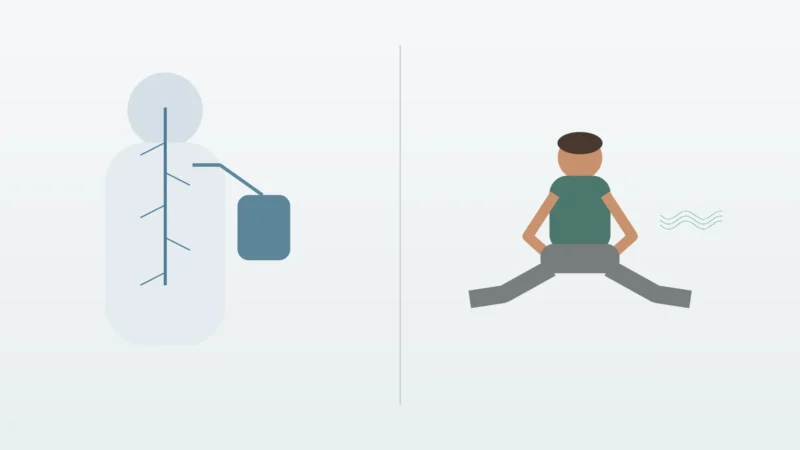
Online instructions sometimes target the ear, side of the neck or abdomen. Gentle touch in these areas may feel soothing, but the evidence for a precise manual vagus-stimulation effect is limited. Auricular VNS research uses controlled electrical stimulation at specific sites; it should not be equated with rubbing the ear.
Similarly, abdominal massage may affect comfort or gastrointestinal sensations, but that does not prove direct manipulation of vagal fibers. The safest approach is to describe ordinary massage by what it actually does—touch, pressure, muscle relaxation and sensory input—rather than claiming direct nerve access.
Why the Side of the Neck Deserves Extra Caution
Important blood vessels, nerves and reflex-sensitive structures are located in the neck. Do not use deep pressure over the carotid area or attempt to provoke a reflex in order to “activate” the vagus nerve. Forceful neck manipulation is not a casual wellness technique.
If a social-media method depends on finding a pulse, pressing until you feel a strong internal response or creating dizziness, that is a reason to stop—not evidence that the technique is working.
Lower-Risk Ways to Support Relaxation
If relaxation is the goal, you do not need to target the vagus nerve manually. Comfortable slow breathing has a stronger physiological evidence base for changing vagally mediated HRV. Gentle shoulder or upper-back massage can be enjoyed as ordinary massage. Soft humming, meditation or supported relaxation may also be useful if they feel comfortable.
The best method is the one that lowers effort without provoking symptoms or requiring aggressive anatomy-based maneuvers.
When Neck Symptoms Need Evaluation
Do not repeatedly self-massage unexplained neck pain, swelling or neurological symptoms in an attempt to fix the vagus nerve. Persistent swallowing difficulty, major voice changes, fainting, severe dizziness, weakness, numbness, chest pain or significant palpitations deserve appropriate evaluation.
These symptoms have many possible causes. A vagus-themed explanation should not delay proper assessment.
Common Questions About Vagus Nerve Massage
Most useful questions come back to the same boundary: ordinary massage may promote relaxation, but evidence does not establish a special pressure point that reliably improves vagal tone. Longer or harder massage is not necessarily more effective, and a wearable HRV change does not prove direct nerve manipulation.
Massage vs. Other Vagus Techniques
Choose massage if you enjoy massage and it helps reduce muscular tension. Choose slow breathing if you want a practice with clearer evidence for vagally mediated HRV. Read the clinical VNS explainer if your question is about electrical stimulation. These approaches should not be treated as interchangeable versions of one treatment.
For Mayobook’s broader self-guided framework, see Vagus Nerve Exercises.