
Vagus Nerve Stimulation: Clinical VNS, Noninvasive Methods, and Wellness Claims
Clinical vagus nerve stimulation uses electrical stimulation delivered by a medical device. Learn how implanted and noninvasive VNS differ, why evidence and regulatory status vary, and why breathing or humming should not be described as equivalent to medical VNS.
Keep Learning—Listen Free
Short, practical audiobooks for your next step.

Friedrich Nietzsche: What “God Is Dead” Really Means — And How to Create Meaning | Full Audiobook
Friedrich Nietzsche, “God is dead,” Nietzsche philosophy, nihilism, existentialism, the meaning of…

High Agency: How to Become the Person Who Always Finds a Way | Full Audiobook
High agency is the psychology of becoming resourceful, taking initiative, and creating…

How to Find Your Purpose When You Feel Lost: Build a Life That Actually Means Something
Learn how to find your purpose when you feel lost, discover what…

How to Be Happy Alone Without Feeling Lonely: The Psychology of Emotional Independence
Learn how to be happy alone without feeling lonely and build emotional…

How to Stay Unbothered When People Disrespect You: The Psychology of Unshakable Self-Respect
How to deal with disrespect without losing your peace, confidence, or self-respect…

How to Learn Anything: Self-Education in the Age of AI | Full Audiobook
How to learn anything, become self-educated, and think for yourself in the…

Perimenopause Symptoms: Hormones, Weight Gain, Sleep & Brain Fog | Full Audiobook
Perimenopause symptoms, hormones, weight gain, sleep problems, and brain fog are explained…

Investing for Beginners: Stock Market, Index Funds & Building Wealth | Full Audiobook
Investing for beginners, stock market basics, index funds, ETFs, diversification, compound growth,…

Personal Finance for Beginners: Budgeting, Money Management & Financial Literacy | Full Audiobook
Personal finance for beginners, budgeting, money management, and financial literacy explained in…
What Is Vagus Nerve Stimulation (VNS)?
Vagus nerve stimulation (VNS) is a medical and technological term for delivering electrical stimulation to vagal pathways. In its most established form, an implanted pulse generator sends programmed electrical impulses through a lead associated with the vagus nerve. Noninvasive systems attempt to stimulate vagal pathways through the skin without an implanted generator.
This clinical meaning is important because wellness content often uses “vagus nerve stimulation” for breathing, humming, cold water or massage. Those practices may influence autonomic physiology, but they are not the same intervention as electrical VNS and should not be assumed to have the same evidence, indications or risks.
Implanted VNS: How It Works
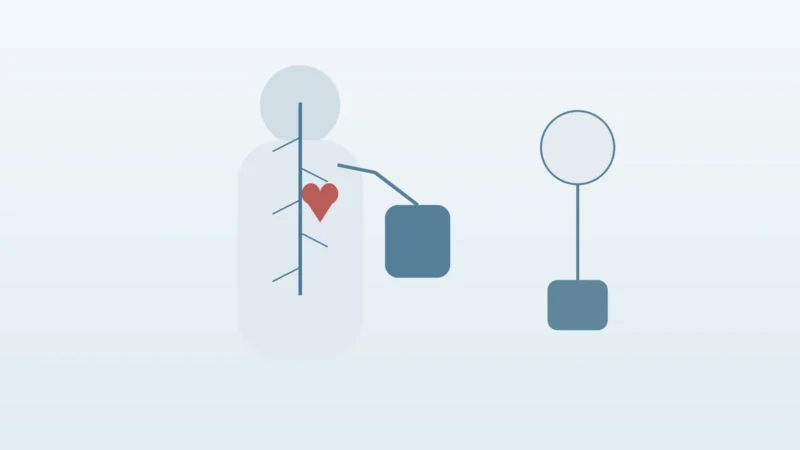
An implanted VNS system generally includes a pulse generator placed under the skin and a lead that delivers electrical stimulation to the vagus nerve. The device is programmed by a clinical team. It operates according to prescribed stimulation settings rather than relying on the person to perform an exercise.
This overview is intentionally non-procedural. Implantation, programming and follow-up are medical processes that require trained clinicians. The important reader distinction is that VNS is a device-based neuromodulation treatment, not simply a technique for “calming the nervous system.”
Why Clinicians Use VNS
Implanted VNS has established regulatory history for specific neurological and psychiatric indications. In the United States, VNS systems have FDA approvals that include certain uses in epilepsy and treatment-resistant depression, with exact labeling depending on device and indication.
That does not mean VNS is appropriate for every person with seizures, depression or another condition being studied. Clinical use depends on diagnosis, prior treatment, device labeling, contraindications, expected benefit, risk and specialist assessment.
VNS is also researched in additional conditions, but research interest should not be confused with an approved indication. A study showing a biological effect is different from regulatory authorization and routine clinical practice.
Noninvasive VNS and taVNS
Noninvasive VNS refers broadly to devices that aim to engage vagal pathways without surgical implantation. Some stimulate through the neck; others use transcutaneous auricular vagus nerve stimulation (taVNS), targeting ear regions supplied in part by vagal sensory fibers.
These approaches are not one uniform technology. Electrode location, waveform, intensity, dosing, target population and intended use vary. Some devices have specific regulatory clearances or authorizations; others remain research tools or consumer products. Evidence for one system should not automatically be transferred to another.
This is also why an ear clip sold online should not be assumed to reproduce the effects of a device studied in a controlled clinical trial. The word “noninvasive” describes the absence of implantation; it does not guarantee effectiveness or make professional guidance unnecessary.
What the Evidence Looks Like Across VNS Methods
The evidence base is strongest where a specific device has been studied for a defined clinical population and has an established regulatory indication. Implanted VNS has decades of clinical research and post-market experience, but expected benefit varies by condition and individual.
Noninvasive VNS and taVNS have active research programs across neurological, psychiatric, inflammatory and autonomic questions. Results are promising in some contexts and inconsistent or preliminary in others. Differences between studies make broad statements such as “taVNS works for the nervous system” scientifically unhelpful.
A careful reader should ask four questions: Which device was studied? In what population? What outcome was measured? Was the finding replicated and clinically meaningful? Those questions prevent a small mechanistic study from being converted into a broad wellness promise.
Side Effects, Risks and Medical Oversight
Electrical VNS can produce device- and stimulation-related adverse effects. With implanted systems, commonly described effects can include voice changes or hoarseness, throat sensations, cough and other stimulation-related symptoms. Implantation itself carries procedural risks that clinicians discuss before treatment.
Noninvasive devices avoid implantation but are not automatically risk-free or appropriate for everyone. Device instructions, contraindications, placement and the person's medical context matter.
For these reasons, medical VNS is not a DIY upgrade to a breathing practice. Clinical evaluation helps determine whether the treatment fits the condition, whether another option is preferable, and how therapy should be monitored.
Why Breathing, Humming and Cold Water Are Not the Same as Clinical VNS
Slow breathing can change vagally mediated HRV through normal cardiorespiratory physiology. Humming can alter vocal exhalation and may change HRV in small studies. Cold facial exposure can evoke a diving response with autonomic effects. These are genuine physiological phenomena.
But none of them delivers the same programmed electrical stimulation as an implanted VNS system. Calling every calming practice “natural VNS” blurs mechanism, evidence and risk. It can also encourage readers to think a home exercise substitutes for a medical treatment when that has not been established.
The more accurate language is that some self-guided practices may influence autonomic regulation. That claim can be evaluated on its own evidence without borrowing the clinical credibility of VNS.
Clinical VNS vs. Self-Guided Vagus Practices
If the goal is treatment of a diagnosed condition for which VNS is being considered, the decision belongs in a clinical conversation. The relevant questions involve diagnosis, previous treatments, device indication, expected benefit, risks and follow-up.
If the goal is everyday relaxation or learning to slow breathing, a self-guided practice is a different category. It may be useful without being medical VNS. The two approaches can coexist conceptually, but they should not be compared as though they are interchangeable doses of the same therapy.
Related Vagus Nerve Questions
Readers interested in practical self-care can explore slow breathing, gentle bedtime routines, humming, meditation and evidence-ranked vagus exercises separately. Those resources focus on what home practices can reasonably do and where claims become exaggerated.
Readers interested in medical treatment should keep the term VNS precise: a device-based neuromodulation approach whose evidence, regulatory status and risks depend on the particular system and clinical use.
For Mayobook’s broader self-guided framework, see Vagus Nerve Exercises.
Want the complete system?
Explore the full book for a deeper, structured guide.
Vagus Nerve Exercises
Vagus Nerve Exercises 30 Daily Techniques to Relax Your Body, Improve Sleep, and Ease Stress Naturally Does your body feel constantly tense, overstimulated, exhausted,…
View the BookMore in Health & Wellness
View category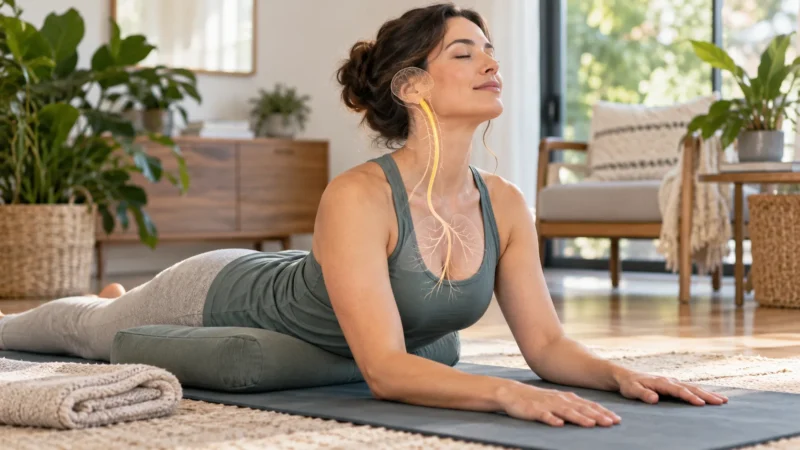
Vagus Nerve Yoga: What the Trend Means and What the Evidence Supports
“Vagus nerve yoga” is a wellness label, not a standardized medical protocol. Here is what the trend usually includes, what yoga and breathing research can reasonably support, and how to try a gentle sequence without overclaiming direct vagus stimulation.

Vagus Nerve Meditation: What It Is, How It May Help, and Evidence Limits
“Vagus nerve meditation” usually combines mindfulness, breathing and relaxation rather than a distinct clinical method. Learn what the evidence says, try a grounded 10-minute practice and understand why “vagus reset” claims go too far.
Keep exploring

Fitness, Weight Loss & Body Transformation
See the wider Mayobook topic hub with guides, answers, comparisons, and books.
Explore the topic
How to Stimulate the Vagus Nerve Safely: What Helps and What’s Hype
Go deeper with a longer structured guide connected to this topic.
View guide