Does Cold Water Stimulate the Vagus Nerve?
Cold water can trigger autonomic responses that include vagal-associated changes in heart rate, especially when the face is cooled, but “cold water stimulates the vagus nerve” is an oversimplification. The best-known mechanism is the diving response, a coordinated physiological reaction to facial cooling and breath-related conditions.
This acute response does not prove that splashing cold water on the face permanently increases vagal tone, treats anxiety or “resets” the nervous system. Mild facial cooling and a full-body ice bath are also very different exposures.
The Diving Reflex and Autonomic Response
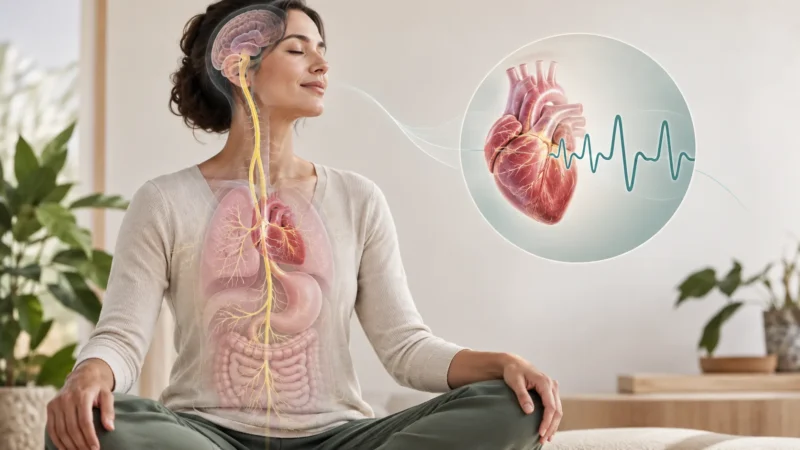
The mammalian diving response helps conserve oxygen during submersion. Facial cold receptors contribute to a reflex pattern that can include slowing of heart rate and changes in blood-vessel tone. Parasympathetic vagal activity is part of the cardiac response, while other autonomic pathways are active at the same time.
That last point is important: cold does not simply switch the body into “rest and digest.” It can simultaneously create stress responses and cardiovascular changes. The physiology is coordinated, not a one-direction vagus switch.
What the Evidence Supports—and What It Does Not
A systematic review and meta-analysis of the diving response found effects on HRV consistent with increased parasympathetic cardiac influence under studied conditions. This supports the idea that facial cold exposure can alter vagally related cardiac dynamics.
It does not establish that routine cold exposure improves long-term vagal health, treats a medical condition or produces a durable nervous-system reset. Acute physiological change and long-term clinical benefit are different evidence questions.
Individual responses also vary with water temperature, exposure area, breathing, fitness, medications, health status and context.
Cool Water Is Not the Same as an Ice Bath
A cool washcloth or brief face splash creates a much smaller thermal challenge than immersing the body in ice-cold water. As cold intensity and body exposure increase, so do thermal stress and cardiovascular demands.
It is therefore incorrect to reason that if mild cold has a measurable autonomic effect, extreme cold must be more therapeutic. Stronger exposure can mean stronger stress, not greater wellness benefit.
This page does not provide an ice-bath protocol because extreme cold is not necessary to explore low-risk relaxation, and it may be inappropriate for some people.
Who Should Be Especially Cautious With Cold Exposure
People with significant cardiovascular disease, known heart-rhythm problems, recurrent fainting, severe cold intolerance or other major health concerns should be especially cautious with deliberate cold exposure and may need individualized medical guidance.
Stop if cold exposure causes chest pain, faintness, severe shortness of breath, confusion, significant palpitations or other concerning symptoms. Do not use cold as a way to self-treat an arrhythmia or provoke a strong reflex.
Lower-Risk Ways to Downshift
If cold feels stressful rather than calming, skip it. Comfortable slow breathing has a clearer evidence base for changing vagally mediated HRV and does not require a temperature challenge. Gentle movement, humming, supported relaxation or a quiet bedtime routine may also be better aligned with the goal of downshifting.
A wellness method should not need to feel punishing in order to count.
Why “Cold Water Resets the Vagus Nerve” Is Too Strong
The autonomic nervous system continuously adapts to breathing, temperature, activity, posture, emotion and environment. A brief cold stimulus can shift physiology, but there is no discrete reset button that leaves the system permanently recalibrated afterward.
Use precise language: cold facial exposure can evoke a diving response and alter autonomic cardiac measures. That statement is more accurate than promising that cold water fixes vagus nerve dysfunction.
Common Questions About Cold Water and the Vagus Nerve
A face splash, cool shower and ice bath should not be grouped as one dose. Duration and intensity matter, but there is no universal “vagus protocol.” Cold immediately before bed may feel stimulating to some people rather than calming. Heart-rate changes during cold exposure should not be treated as a self-diagnostic test.
Cold Water vs. Other Vagus Practices
Cold belongs in the “real physiology, uncertain wellness payoff” category. Slow breathing has stronger practical evidence for low-risk autonomic regulation. Humming may be a comfortable optional add-on. Clinical VNS is a separate medical intervention. Choose the method whose risk and evidence match the actual goal rather than the most dramatic technique.
For Mayobook’s broader self-guided framework, see Vagus Nerve Exercises.