When a Protein Smoothie Can Be Useful on a GLP-1
| Situation | Smoothie can help when… | Consider solid food when… |
|---|---|---|
| Low appetite | A small liquid portion feels easier to manage | You can comfortably eat a normal protein-rich meal |
| Busy morning | You need a fast breakfast with measurable ingredients | You have time for yogurt, eggs, tofu or another breakfast |
| Food aversion | Mild flavors and cold texture are more appealing | You want more chew, texture and variety |
| Post-workout convenience | A portable option helps you meet a planned nutrition goal | A meal is available soon and fits your needs |
For broader protein context, see Mayobook’s Protein on GLP-1 reference.
The Small-Volume High-Protein Smoothie Formula
Large smoothies often become large because every “healthy” ingredient is added at once. A better formula is to choose one item from each category and stop when the drink reaches a volume you can comfortably manage. A compact smoothie might contain 3/4 cup Greek yogurt, 1/2 cup berries and enough milk to blend; it does not need two fruits, nut butter, oats, chia and a full cup of ice at the same time.
| Component | Examples | Practical role |
|---|---|---|
| Protein base | Greek yogurt, cottage cheese, soy milk, silken tofu, protein powder | Main protein contribution |
| Liquid | Milk, soy milk, water, unsweetened almond milk | Controls thickness and volume |
| Fruit or vegetable | Berries, banana, mango, spinach, cooked pumpkin | Flavor, micronutrients, fiber |
| Fiber or texture | Oats, chia, ground flax | Adds body; use modest amounts if volume matters |
| Flavor | Cocoa, cinnamon, vanilla, ginger, lemon | Creates variety without a long ingredient list |
How Much Protein Should a Smoothie Contain? Use a Range, Not a Magic Number
Searches for a “30 g protein smoothie” are common, but a single target is not appropriate for everyone. A smoothie containing roughly 20–30 g can be a substantial protein serving for many adults, yet total daily needs depend on body size, activity, age, energy intake, medical conditions and clinical guidance. If you have kidney disease or another condition that changes protein recommendations, use your clinician’s target rather than internet formulas.
Also look at what the smoothie replaces. A 20 g smoothie used as a small breakfast is different from a 20 g drink added on top of three complete meals. Protein is most useful when considered within the whole eating pattern rather than treated as a score to maximize.
High-Protein GLP-1 Breakfast Smoothies
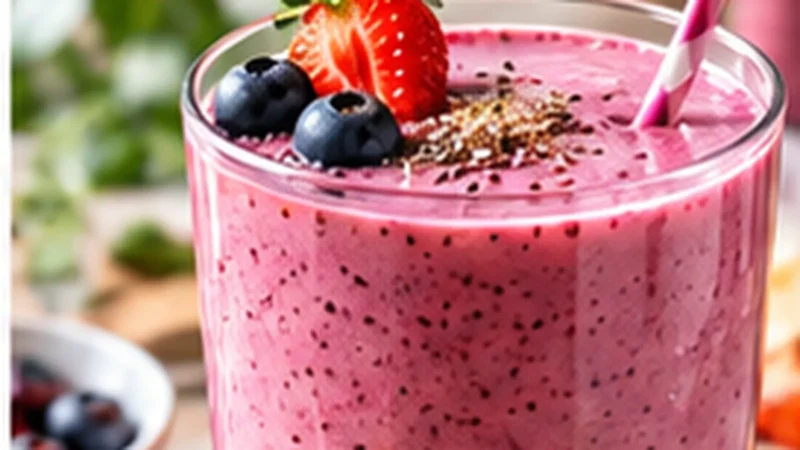
Berry Greek Yogurt Smoothie
Blend 3/4 cup plain Greek yogurt, 1/2 cup frozen berries, 1/2 cup milk or soy milk, cinnamon and ice. Add water a tablespoon at a time if you prefer a thinner drink. Depending on the yogurt and milk, this often lands around 20–25 g protein.
Banana-Cocoa Cottage Cheese Shake
Blend 3/4 cup cottage cheese, half a small banana, 1 teaspoon cocoa, vanilla and 1/2 cup milk. Cottage cheese disappears into a creamy texture when blended well. If the sweetness is too much, reduce the banana and add ice.
Tofu-Mango Breakfast Smoothie
Blend 6 ounces silken tofu, 1/2 cup mango, 3/4 cup fortified soy milk and a squeeze of lime. This gives a dairy-free route with a mild texture and a useful combination of soy protein sources.
Oat-and-Yogurt Cinnamon Smoothie
Blend 3/4 cup Greek yogurt, 2 tablespoons oats, 1/2 cup milk, cinnamon and a few slices of pear. Keep the oat portion small if a very thick smoothie feels too filling.
Peach-Vanilla Kefir Smoothie
Blend 3/4 cup plain kefir, 1/2 cup Greek yogurt, 1/2 cup frozen peaches and vanilla. This makes a tangy, drinkable smoothie that is less thick than many cottage-cheese or frozen-banana versions.
Mocha Tofu Shake
Blend 6 ounces silken tofu with 3/4 cup fortified soy milk, 1 teaspoon cocoa, decaffeinated coffee or espresso powder to taste, and ice. If caffeine bothers you or conflicts with your clinician’s advice, leave the coffee out and use vanilla or cinnamon instead.
Simple Smoothies for Low-Appetite or Food-Averse Days
When many foods sound unappealing, complexity can make a smoothie worse. Start with three or four ingredients. Mild options include vanilla yogurt with frozen peaches, soy milk with banana and cinnamon, or cottage cheese with berries. If smell is the issue, cold ingredients and a covered cup may feel more manageable than a hot meal.
Temperature and texture can be adjusted too. Use less frozen fruit for a thinner drink, blend longer for a silkier texture, or make half a recipe if a full glass feels intimidating. If highly sweet flavors are unpleasant, plain yogurt, tart berries, cocoa, citrus and cinnamon can make the drink more neutral.
These are practical adjustments, not treatments for nausea or other medication effects. Persistent vomiting, dehydration, severe abdominal symptoms or inability to eat adequately should be discussed with a clinician.
Protein Powder, Greek Yogurt, Cottage Cheese or Soy: Choosing a Protein Base
| Protein base | Strengths | Watch for |
|---|---|---|
| Greek yogurt | Creamy, substantial protein, easy to pair with fruit | Dairy intolerance; flavored varieties may contain more added sugar |
| Cottage cheese | High protein, blends very smoothly | Sodium varies; dairy tolerance |
| Fortified soy milk or tofu | Dairy-free complete protein source | Soy allergy; choose fortified products when possible |
| Protein powder | Compact and measurable | Sweeteners, allergens, serving size, cost and personal tolerance |
You do not need protein powder to make a high-protein smoothie. Whole-food bases can work very well; powder is useful when you need a compact way to increase protein. If you use a powder, compare products by the actual serving size, protein content and ingredient list rather than slogans such as “lean,” “clean” or “GLP-1 friendly.”
Fiber, Added Sugar and Hydration: What Changes the Smoothie Experience
Whole fruit contributes fiber and flavor; fruit juice can add sweetness quickly without the same fiber. Chia, flax and oats can increase fiber, but they also make a smoothie thicker and sometimes much more filling. Add them gradually. A smoothie also contributes fluid, but it should not be the only way you hydrate throughout the day.
“Sugar-free” is not automatically better. Some products use sugar alcohols or intense sweeteners that people tolerate differently. Check the label and choose based on the whole product, not one front-of-package claim.
If a Smoothie Feels Too Sweet, Too Thick or Too Filling
| Problem | Adjustment |
|---|---|
| Too sweet | Reduce banana or juice, use berries, choose plain yogurt, add cocoa or cinnamon |
| Too thick | Add water or milk gradually; reduce oats, chia or frozen fruit |
| Too large | Use a smaller liquid base and one fruit rather than several add-ins |
| Protein powder taste dominates | Use a half serving with yogurt or soy milk, or switch to a food-based protein |
| Very cold is unappealing | Use refrigerated rather than frozen fruit and less ice |
Prepare Smoothies Safely
Wash produce, keep dairy and other perishable ingredients refrigerated, and refrigerate a prepared smoothie promptly if you are not drinking it immediately. USDA food-safety guidance advises keeping cold perishable foods at 40°F or below and limiting time in the temperature “danger zone.” See USDA FSIS guidance. For best texture, most smoothies are still better blended close to when you plan to drink them.
Smoothies as One Tool in a Bigger High-Protein Eating Pattern
A smoothie is most useful when it solves a real problem: low appetite, portability, time or a temporary preference for softer foods. It does not need to replace meals that you can comfortably eat. Rotate smoothies with yogurt bowls, small hot meals, no-cook plates, soups, eggs, tofu, fish, poultry, beans and other foods that fit your preferences.
If you are relying on liquid nutrition for most meals because solid food is consistently difficult, that is a reason to check in with your care team. The goal is not to “win” at protein shakes; it is to maintain a sustainable, varied eating pattern that supports your health.
For a broader collection of protein-forward meals, see the GLP-1 High Protein Cookbook for Weight Loss. Mayobook’s Fitness, Weight Loss & Body Transformation topic hub also brings together related evidence-aware resources.