The most effective herbs for natural healing are those that consistently support the body’s core systems—especially inflammation control, immune function, digestion, and stress balance. While hundreds of herbs are used in traditional medicine, only a select group has remained widely trusted across cultures and increasingly supported by modern research.
These herbs are not “magic cures.” Their real strength lies in how they support the body over time, helping it respond better to stress, illness, and imbalance.
To understand which herbs are truly effective, it helps to look at both their traditional use and their functional role in the body.
What Makes an Herb “Effective” for Healing?
Not all herbs are equal.
An effective healing herb typically has:
1. Broad Functional Benefits
It supports multiple systems—not just one symptom.
2. Consistent Traditional Use
It has been used reliably across generations.
3. Practical Accessibility
It can be used regularly in real life—not just occasionally.
4. Safety at Appropriate Use
It can be used without extreme risk when handled correctly.
The Most Effective Herbs for Natural Healing
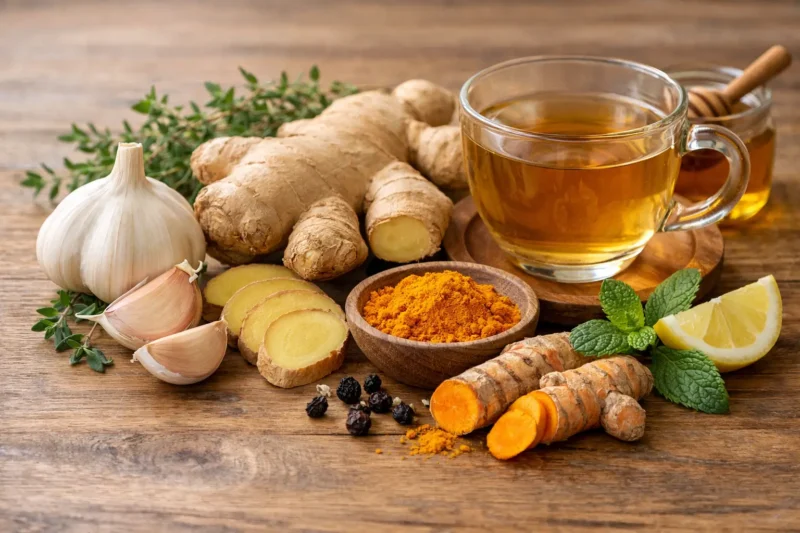
1. Turmeric — The Inflammation Regulator
Turmeric stands out as one of the most powerful herbs due to its ability to support inflammation balance.
Why it matters:
Chronic inflammation is linked to many long-term health issues.
How it helps:
- Supports joint comfort
- Helps regulate inflammatory response
- Supports long-term wellness
Best use:
- added to food
- taken as tea or supplement
2. Ginger — The Digestive and Circulatory Support
Ginger is one of the most versatile herbs in natural medicine.
Benefits:
- supports digestion
- reduces nausea
- promotes circulation
Why it’s effective:
It works quickly and is easy to use daily.
3. Garlic — The Immune Defender
Garlic is one of the strongest everyday immune-supporting herbs.
Benefits:
- supports immune response
- traditionally used for infection defense
- supports heart health
Best use:
- raw or lightly cooked
- incorporated into daily meals
4. Echinacea — The Immune Activator
Echinacea is commonly used during early signs of illness.
Benefits:
- supports immune activation
- commonly used for colds
Important:
Best used short-term, not continuously.
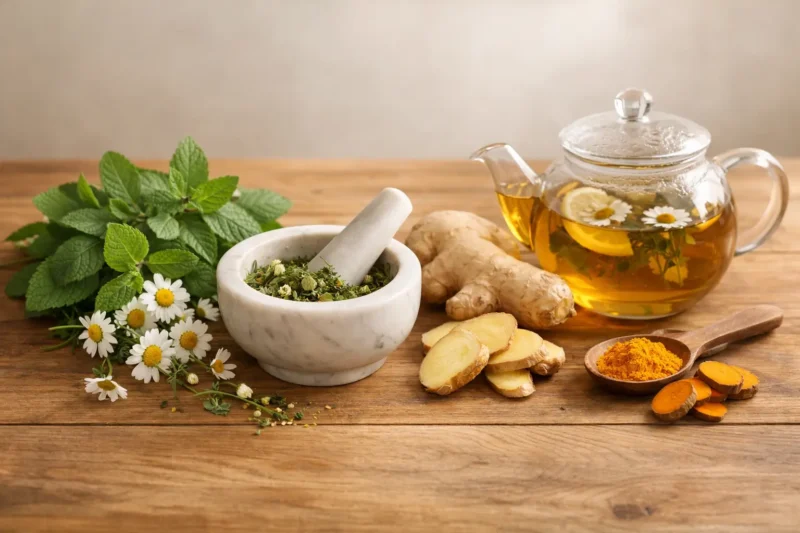
5. Chamomile — The Nervous System Support
Chamomile is not “strong” in the traditional sense—but it is extremely effective.
Benefits:
- promotes relaxation
- supports sleep
- reduces stress impact
Why it matters:
Stress weakens overall health—this is where chamomile shines.
6. Peppermint — The Digestive Relief Herb
Peppermint is one of the most practical herbs for everyday use.
Benefits:
- relieves bloating
- supports digestion
- provides quick comfort
Why These Herbs Work So Well Together
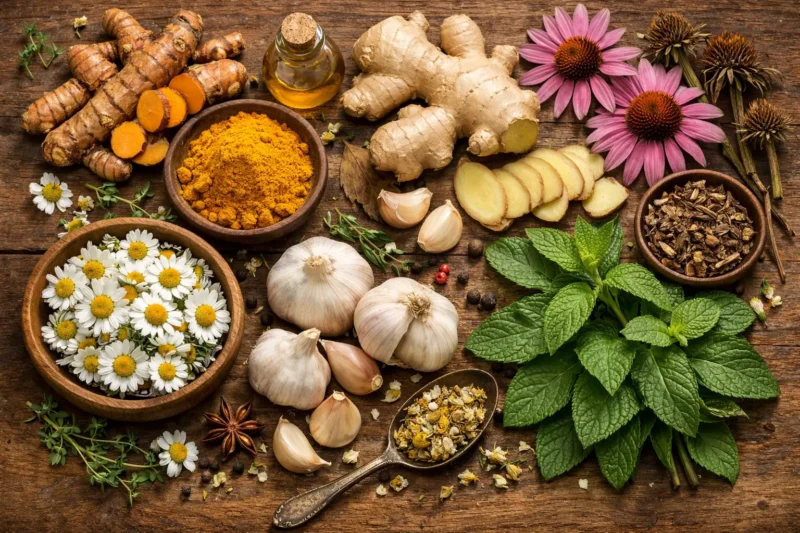
Each of these herbs targets a core system:
- Turmeric → inflammation
- Ginger → digestion + circulation
- Garlic → immunity
- Echinacea → immune response
- Chamomile → nervous system
- Peppermint → digestion
Together, they cover the most common health concerns.
How to Choose the Right Herb for Your Needs
For inflammation:
Turmeric, ginger
For immunity:
Garlic, echinacea
For stress:
Chamomile
For digestion:
Peppermint, ginger
How to Use These Herbs Effectively
1. Start simple
Use one or two herbs.
2. Be consistent
Daily use is more effective than occasional use.
3. Choose the right form
- tea → gentle
- tincture → stronger
- food → daily support
Common Mistakes People Make
- using too many herbs at once
- expecting instant results
- ignoring dosage
- choosing herbs randomly
Safety Considerations
Even effective herbs must be used carefully.
- strong herbs should not be overused
- interactions are possible
- quality matters
Final Perspective
The most effective herbs are not rare or complicated.
They are:
- simple
- reliable
- consistent
Used correctly, they become part of a sustainable approach to health.