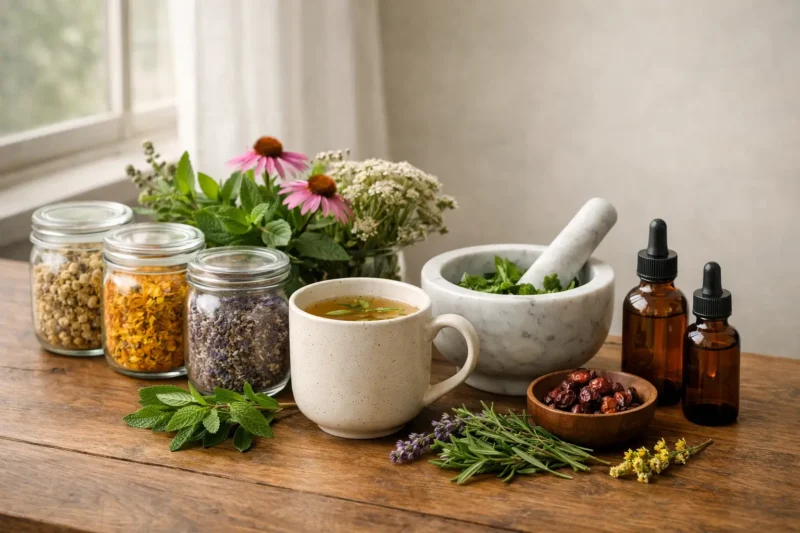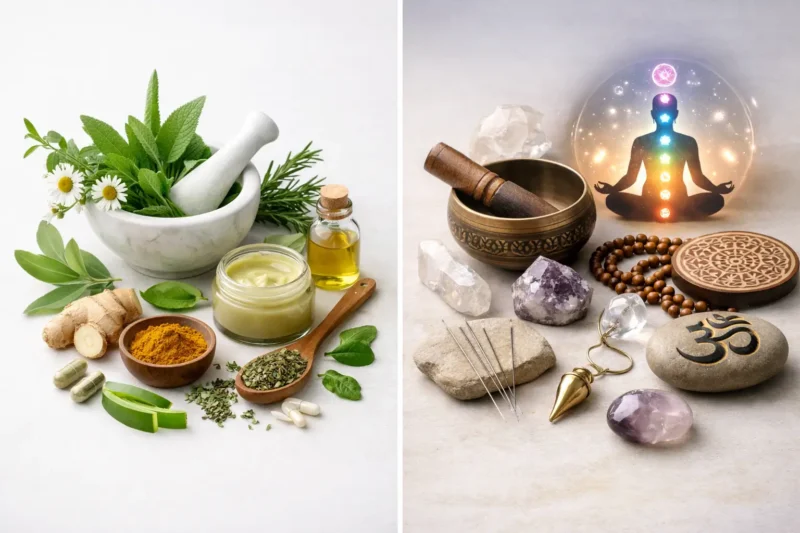
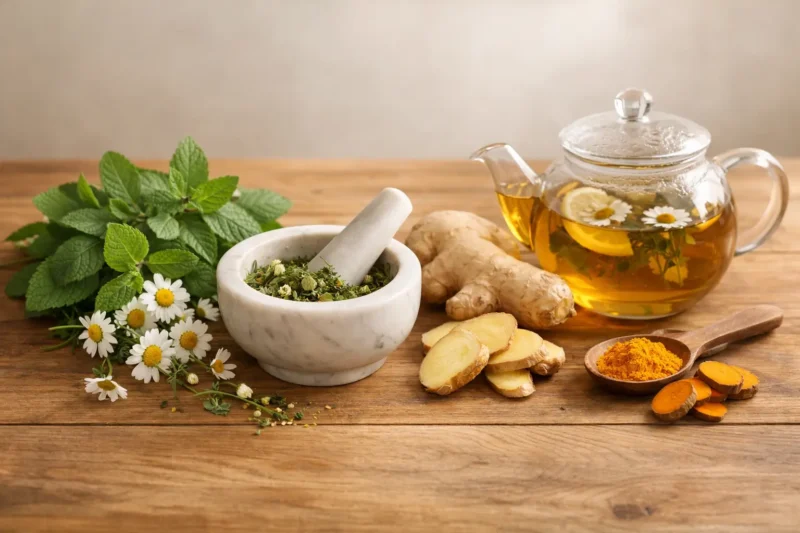
Herbal medicine is the practice of using plants and plant-based substances to support health, prevent illness, and promote overall wellbeing. It includes remedies made from leaves, roots, flowers, seeds, and bark, prepared in forms such as teas, tinctures, powders, and oils.
Unlike modern pharmaceuticals, which are often designed to target specific symptoms quickly, herbal medicine typically works by supporting the body’s natural systems over time. It is one of the oldest forms of healthcare in the world and continues to be widely used today for both everyday wellness and complementary support.
Understanding herbal medicine begins with recognizing that it is not just about taking herbs—it is about how those herbs interact with the body and how they are used consistently and safely.
The Meaning of Herbal Medicine
At its core, herbal medicine refers to the use of natural plant materials for healing and health support.
These plants are often called:
- medicinal herbs
- healing plants
- botanical remedies
Different parts of a plant can be used depending on the purpose:
- leaves (e.g., peppermint)
- roots (e.g., ginger, turmeric)
- flowers (e.g., chamomile)
- seeds and bark
Herbal medicine exists in many traditions across the world, including traditional Chinese medicine, Ayurveda, and Western herbalism. While the systems differ, they all share the same foundation—plants can support the body in meaningful ways.
How Herbal Medicine Works
Herbal medicine works by interacting with the body’s natural processes rather than overriding them.
Key mechanisms include:
1. Supporting Body Systems
Some herbs help support digestion, circulation, or the nervous system.
2. Regulating Immune Response
Certain herbs are used to support immune balance rather than overstimulation.
3. Reducing Inflammation
Some herbs are associated with helping the body manage inflammation.
4. Promoting Balance
Herbal medicine often focuses on restoring balance rather than forcing change.
This is why herbal medicine is often described as a supportive system, not a quick-fix solution.
Common Forms of Herbal Medicine
Herbal medicine is used in several forms, each affecting how the herb works.
Herbal Teas (Infusions)
- made by steeping herbs in hot water
- gentle and beginner-friendly
Decoctions
- used for roots and harder plant parts
- simmered for stronger extraction
Tinctures
- concentrated liquid extracts
- faster absorption
Powders and Capsules
- convenient but less interactive
Oils and Salves
- used for skin and topical application
The preparation method plays a major role in how effective an herb is.
Benefits of Herbal Medicine
People turn to herbal medicine for several reasons.
1. Natural Approach
Many prefer plant-based options for everyday health support.
2. Preventive Support
Herbs are often used before problems become severe.
3. Gentle Action
Many herbs are milder compared to pharmaceutical drugs.
4. Holistic Effect
Herbal medicine often considers the whole body, not just symptoms.
Limitations of Herbal Medicine
Understanding limitations is essential for trust and safety.
Herbal medicine is not ideal for:
- severe infections
- emergency conditions
- advanced medical issues
In these cases, professional medical care is necessary.
Herbs work best for:
- mild conditions
- long-term support
- daily wellness
Herbal Medicine vs Modern Medicine
Herbal and modern medicine are often compared, but they serve different roles.
Herbal Medicine:
- gradual
- supportive
- holistic
Modern Medicine:
- fast-acting
- targeted
- essential for critical care
The most effective approach is often a balanced one.
Is Herbal Medicine Safe?
Herbal medicine can be safe when used correctly, but it is not risk-free.
Important considerations:
- dosage matters
- interactions can occur
- some herbs are stronger than others
Beginners should:
- start with gentle herbs
- avoid combining too many
- learn basic safety principles
Common Examples of Herbal Medicine
Many herbal remedies are already part of daily life.
Examples:
- ginger for digestion
- chamomile for relaxation
- peppermint for bloating
- turmeric for inflammation support
- garlic for immune support
These familiar herbs make herbal medicine accessible.
How Beginners Should Approach Herbal Medicine
Starting herbal medicine does not require complexity.
Step-by-step approach:
- Choose one goal (e.g., digestion, sleep)
- Select one herb
- Use a simple preparation (tea)
- Observe your body
- Adjust gradually
Consistency matters more than variety.
Common Misconceptions About Herbal Medicine
“Natural means safe”
Not always true—dosage and context matter.
“Herbs work instantly”
Most herbs work gradually.
“More is better”
Overuse can reduce effectiveness or cause issues.
Why Herbal Medicine Is Still Popular Today
Despite modern advances, herbal medicine remains widely used because it offers:
- accessibility
- simplicity
- long history of use
- integration into daily life
It allows people to take a more active role in their health.
Final Perspective
Herbal medicine is not about replacing modern healthcare—it is about expanding your understanding of how to support your body naturally.
Used wisely, it becomes:
- practical
- sustainable
- effective over time
The key is not knowing many herbs—but knowing how to use a few well.