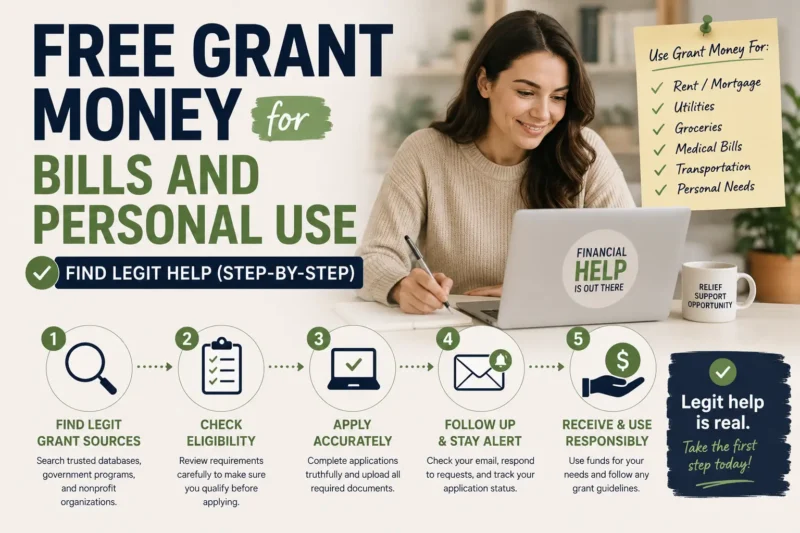
For bills assistance, you may see programs that pay a vendor directly or reimburse specific expenses. For personal use, support may be limited to approved categories such as emergency essentials, transportation for medical needs, or short-term stabilization. If a site doesn’t explain the purpose, the payment method, or the sponsor, treat it as a red flag and move on.
Where confusion usually starts: eligibility and “guarantees”
Many applicants assume that if they’re struggling financially, they’ll qualify for everything. In reality, eligibility often depends on residency, household size, income range, age, disability status, veteran status, or the type of bill. Checking eligibility early prevents wasted time and reduces the chance you’ll be scammed by someone claiming guaranteed approval.
Also watch for language like “we can get you approved” or “you’re already selected.” Legitimate programs don’t select people through vague marketing. They explain criteria, timelines, and how decisions are made. If the listing can’t answer those basics, it’s not a solid grant application path.
The signs that matter most: legit programs follow a process
A legitimate opportunity usually has clear ownership and a consistent application process. You’ll typically find a real organization name, a working contact method, and a description of how funds are awarded. On the application page, you should see required fields, privacy information, and instructions for what happens next.
Here are practical signals that a program is more likely to be legitimate:
It names a sponsor (agency or nonprofit) and provides a verifiable website.
It states eligibility criteria and what the funds can be used for.
It describes timelines and whether you’ll be contacted for additional information.
It does not charge a fee to apply.
It uses standard submission methods (secure portal or clear email/contact instructions) without pressuring you.
If you’re unsure, you can usually confirm by searching the organization name plus “program” or “assistance.” Scammers often disappear, rename, or route applicants to pay elsewhere.
How to respond without pressure when you’re stressed
When you’re behind, it’s easy to feel rushed. Scammers count on that. A safer approach is to slow down just enough to verify.
Before you submit anything, take a moment to do three quick checks:
Check the payment rules: if there’s any upfront fee, stop.
Check the data request: avoid sharing unnecessary sensitive information (like full bank login credentials).
Check the clarity: if the program can’t explain what it’s offering and how it works, don’t proceed.
If the listing pressures you—“act now,” “pay to secure,” or “we need access today”—step back. It’s okay to pause your search and focus on one trusted local resource first. You’ll still be taking action, just with better safety.
How to prepare your documents so applications go faster
A strong grant application isn’t about writing a perfect essay. It’s about giving reviewers what they need to confirm eligibility and understand urgency. Most people can prepare with a simple, organized set of documents.
Start with a folder that includes:
Identification and proof of address.
Income verification (pay stubs, benefit letters, or other documentation).
A basic household summary (who lives with you).
Bill details: who you owe, the amount, and the due date.
If you’re applying for bills assistance, include a short explanation of why the bill is urgent (for example, shutoff notice, overdue status, or a deadline). If you’re seeking personal support, focus on the approved use category described by the program. Don’t stretch the purpose—match it.
When you’re missing documents, don’t panic. Many programs accept alternative proof or allow you to explain the situation. The key is to be honest and consistent.
How to submit a grant application that reviewers can trust
Reviewers are busy. They look for completeness, clarity, and match to eligibility. Small mistakes can cause delays or denials.
Use this practical checklist before you hit submit:
You filled every required field.
Your household numbers match across forms.
Your dates are consistent.
Your explanation matches the purpose (bills assistance versus personal use category).
You included any requested attachments.
You saved a confirmation or screenshot for your records.
If the program allows it, keep your message short and factual. For example, you can state your situation, list the bill types, and explain the deadline. Avoid emotional pleading that contradicts the information you provide. Clear and consistent is more persuasive than dramatic.
Common mistakes to avoid when looking for money free online
The internet is full of leads, but not all of them are safe. Here are frequent missteps that derail people looking for free grant money for bills and personal use.
First, people apply to everything at once. Broad applications often fail because they don’t match eligibility. Instead, choose a small number of targeted options and apply with care.
Second, applicants pay for “application help.” Legitimate nonprofits and agencies typically don’t charge upfront fees to apply to public or community assistance. If you see a fee, treat it as a stop sign.
Third, people share too much personal information. You may be asked for documentation, but you should never be asked for unnecessary access or credentials. If a form asks for remote control of your device or full banking login, it’s not a normal grant application.
Fourth, applicants ignore timelines and follow-up instructions. Some programs review monthly; others have short windows. If you miss the deadline, you may lose your chance.
Fifth, people trust vague claims. “Guaranteed approval” and “instant money” are not how legitimate assistance works. Even if you qualify, review takes time. Your job is to find legitimate sources and submit responsibly.
Advanced tips for stronger results (without burning out)
If you’ve applied before and felt stuck, you can improve your odds by refining your approach rather than applying harder.
One improvement is to create a “need statement” template. Keep it consistent, but adjust the bill details for each program. A good template includes: what you need, why it’s urgent, and how it connects to the program’s allowed use category.
Another is to prioritize programs that align with your urgency. If your shutoff date is soon, focus on bills assistance programs first. If your deadline is medical or housing-related, apply to programs that explicitly cover those categories.
Consider using a local support layer. Community action agencies, housing counselors, and established nonprofits can often direct you to the right grant application or alternative help. Even when you don’t get a grant, these connections can lead to payment arrangements or emergency assistance.
Finally, track your applications. Keep a simple log of program name, date submitted, and any follow-up. This helps you avoid duplicate submissions and makes it easier to respond if the program requests additional documents.
How to avoid scams when using money free app or money free online listings
Scammers adapt quickly, including through money free app and money free online listings. The safest method is to treat any listing that doesn’t clearly identify the sponsor as unverified.
Use these scam-avoidance guardrails:
Do not pay to apply.
Do not provide remote access to your device.
Do not share full banking credentials.
Do not trust “guaranteed” or “selected” language.
Verify the organization’s website and contact information.
Avoid links that shorten or hide the real destination.
If you’re unsure, you can often find the same program on the sponsor’s own website. That’s the version you should use.
When to ask for more help (and what to say)
Sometimes you need human support—especially if you’re overwhelmed or have complex circumstances. It’s appropriate to ask for help if you can’t locate eligibility criteria, if your documentation feels incomplete, or if you’re dealing with multiple urgent bills.
When you reach out to a local nonprofit or counselor, be ready to share:
What bills are due and when.
What assistance you’re seeking (bills assistance and/or approved personal support category).
Your basic household situation.
Any documentation you already have.
You can also ask for guidance on the grant application process and what alternatives exist if you’re not eligible. A good helper will explain options clearly and won’t pressure you into paying.
Final thoughts: move forward with a safer plan
Finding free grant money for bills and personal use is possible, but it requires a legitimacy-first approach. Focus on eligibility, apply through verified sources, and keep your grant application accurate and complete. When you follow a process, you reduce wasted time and protect yourself from scams that target stressed people.
If you don’t get approved right away, don’t treat it as a dead end. Use the backup plan, keep a simple application log, and combine grant application efforts with local resources and hardship options. Small, consistent actions can help you regain control—one bill and one verified step at a time.