Herbs that boost the immune system work by supporting the body’s natural defense mechanisms, helping it respond more effectively to infections, regulate inflammation, and maintain overall balance. While no herb can instantly “boost” immunity in a dramatic way, certain herbs are widely used because they consistently support immune function when used correctly and over time.
The idea of boosting the immune system is often misunderstood. The immune system is complex, and its strength depends on balance—not overstimulation. Herbal medicine focuses on supporting that balance using plant-based compounds that interact with the body’s natural processes.
How the Immune System Works (Simplified)
Before choosing herbs, it helps to understand what the immune system does.
It:
- identifies harmful pathogens
- responds to infections
- regulates inflammation
- protects the body from recurring threats
A healthy immune system is not just “strong”—it is balanced and responsive.
How Herbs Support Immune Function
Herbs do not act like synthetic immune stimulants.
Instead, they:
- support immune signaling
- regulate inflammatory responses
- enhance the body’s ability to recover
- improve resilience over time
This is why herbal immune support is often gradual but sustainable.
The Most Effective Herbs for Immune Support
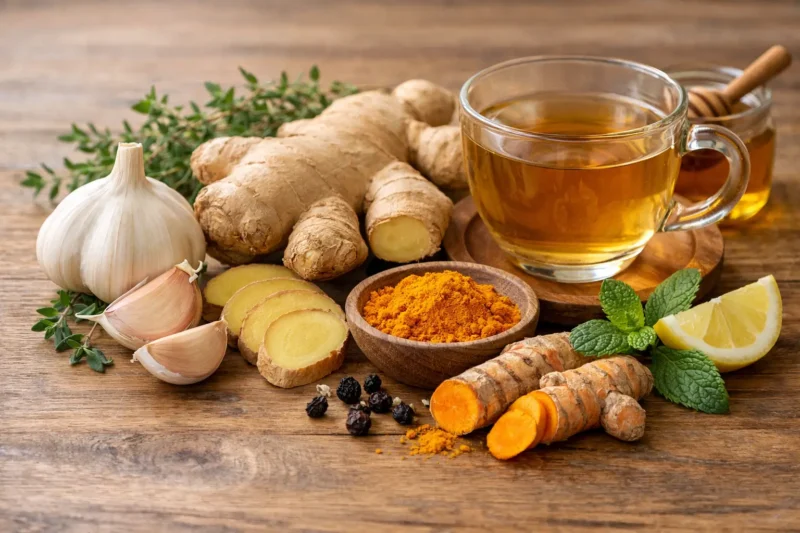
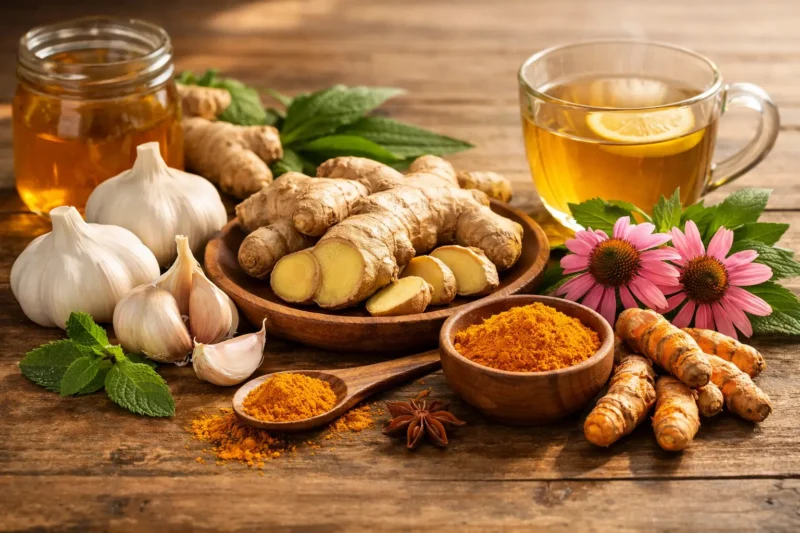
1. Garlic — The Everyday Immune Defender
Garlic is one of the most widely used herbs for immune support.
Benefits:
- supports natural defense mechanisms
- commonly used during illness
- part of daily preventive routines
Best use:
- raw or lightly cooked
- consistent daily use
2. Ginger — Warming and Supportive
Ginger supports both immunity and overall body function.
Benefits:
- supports circulation
- helps during cold symptoms
- supports digestion
3. Turmeric — Inflammation Balance
Turmeric plays a key role in immune health through inflammation regulation.
Benefits:
- supports long-term immune balance
- associated with chronic health support
4. Echinacea — Immune Activation
Echinacea is often used during early signs of illness.
Benefits:
- supports immune response
- commonly used short-term
5. Elderberry — Seasonal Immune Support
Elderberry is widely used for seasonal immune health.
Benefits:
- supports defense during cold and flu
- often used as syrup
Daily vs Short-Term Immune Herbs
Daily support:
- garlic
- turmeric
- ginger
Short-term use:
- echinacea
- elderberry
Understanding this difference improves effectiveness.
How to Use Immune Herbs Effectively
1. Consistency matters
Regular use is more effective than occasional use.
2. Match herb to situation
Use different herbs for different needs.
3. Use proper preparation
Tea, food, or tincture depending on herb.
4. Avoid overuse
Too much can reduce effectiveness.
Lifestyle Still Matters
Herbs cannot replace:
- good sleep
- proper nutrition
- stress management
- physical activity
They support—but do not replace—these foundations.
Common Mistakes
- expecting instant results
- using too many herbs at once
- ignoring dosage
- relying only on herbs
When to Be Careful
Use caution if:
- taking medications
- pregnant or breastfeeding
- dealing with chronic illness
Final Perspective
The best herbs for immune support are not extreme or complicated.
They are:
- simple
- consistent
- well-matched to your needs
That is what makes them effective.