
Dating Meaning in Relationship Psychology: Why It Feels Ambiguous (and How to Read It)
“Dating” can mean anything from casual getting-to-know to an actual relationship. Learn the psychology behind the ambiguity and how to spot consistent emotional signals.

Keep Learning—Listen Free
Short, practical audiobooks for your next step.

How to Stop Living on Autopilot (Before Life Passes You By)
Have you ever reached the end of a day and wondered where…

The Psychology of Self-Sabotage (Why You Keep Holding Yourself Back)
Why do you keep getting in your own way... even when you…

Why You Never Feel Good Enough (And How to Change It)
Do you ever feel like no matter how much you achieve... it's…

The Biggest Lie About Self Improvement (And Why You’re Still Stuck)
What if the biggest obstacle to self improvement isn't a lack of…

10 Things You Must Stop Doing to Improve Your Life | Self Improvement Tips
Why do so many people feel stuck—even when they're trying to improve…

How to Become the Best Version of Yourself | 10 Self Improvement Tips
Becoming the best version of yourself isn't about changing everything overnight—it's about…

10 Tiny Habits That Will Change Your Life Forever
What if changing your life didn't require a massive breakthrough—but just a…

Biblical Submission Explained | What the Bible Really Says About Marriage
What does the Bible really teach about submission in marriage? Few biblical…

The Psychology of the Man Child | Why Some Men Never Grow Up
Have you ever wondered why some adults seem to struggle with responsibility,…
If you’ve ever thought, “Are we actually dating… or is this just a label,” you’re not alone. In dating meaning in relationship psychology, ambiguity usually isn’t random—it reflects how someone manages closeness, risk, and commitment. Some people use “dating” as a low-pressure bridge; others use it to keep options open without saying so directly. And when cues are mixed, it’s easy to overthink every text, interpret silence as meaning, and start wondering whether you’re asking for too much.
What follows is a practical way to read “dating” beyond the word itself. You’ll learn what the label often signals emotionally, how attachment-style patterns can show up in behavior, and how to ask for clarity without forcing a fight. The aim is simple: help you understand what’s happening, protect your emotional needs, and decide what to do next.
Why “dating” stays vague
The word “dating” can function like a psychological placeholder. When someone says they’re dating, they may be communicating a general willingness to spend time together without naming the exact level of exclusivity, emotional investment, or future direction.
From a psychology lens, vagueness often shows up when a person is balancing two needs: connection and self-protection. Naming something clearly can raise the stakes. Once you label it, you may feel obligated to define boundaries, show up consistently, or make decisions. If someone isn’t ready (or doesn’t want) to commit to those expectations, “dating” becomes a comfortable middle ground.
There’s also a social factor. Modern dating scripts are less uniform than they used to be. People may have learned that labels are negotiable or that calling something “dating” avoids conflict while still allowing intimacy to develop. The result is that you can be emotionally engaged while the label remains intentionally non-specific.
What it can signal emotionally (not just romantically)
Different emotional goals can hide under the same label. “Dating” might mean curiosity and openness. It might also mean testing compatibility while keeping vulnerability at a safer distance. It can even reflect how comfortable someone feels with consistency.
Instead of trying to decode a single phrase, look for the emotional pattern behind the behavior. Is the person warm and attentive, then suddenly unavailable when things get real? That can suggest fear of closeness or difficulty sustaining effort. Is the person steady, responsive, and increasingly transparent? That often indicates they’re comfortable building a relationship structure.
In many cases, the psychology isn’t about whether someone “likes you enough.” It’s about whether they can handle the responsibilities that come with liking someone—time, reliability, and honest communication. When those responsibilities feel threatening, people may keep the relationship in a category that feels safer to them.
Attachment-style clues you can actually observe
Attachment theory isn’t a diagnosis tool, but it can help you interpret patterns and reduce confusion. A person with an anxious attachment style may pursue closeness, worry about losing you, and seek frequent reassurance. Their “dating” label might come with intensity—lots of texting, quick emotional bonding, and strong statements early on.
A person with an avoidant attachment style may like the idea of connection but struggle with clarity and commitment. Their “dating” label might stay vague. Plans may be inconsistent. Important conversations may be delayed. They might also retreat when you ask for a definition, not because you’re wrong, but because specificity increases perceived pressure.
Secure attachment patterns tend to show up as coherence. The person can talk about the relationship without spiraling or shutting down, and their actions usually match their words. If you’re trying to interpret dating meaning in relationship, focus less on what they say they want and more on whether they can hold steady communication over time.
What “what does dating mean to a guy psychology” often gets wrong
It’s tempting to search for a universal “guy psychology” answer, but the more useful question is: what does this person’s behavior suggest about how they handle closeness and risk?
Some men (and many women) treat dating as a series of low-commitment interactions. That can be a preference, not necessarily a deception. Others use it as a boundary strategy: they want the benefits of connection while keeping the escape route open if it becomes emotionally demanding.
A common misunderstanding is assuming that dating someone automatically equals boyfriend and girlfriend. Sometimes it does, especially in communities or friend groups where labels are used early. Other times, it’s a stage. The key is to notice whether the person gradually increases clarity—like introducing you to more parts of their life, making plans consistently, or discussing exclusivity.
If you find yourself repeatedly asking where you stand, that’s data. Psychology aside, persistent ambiguity can be a sign that the person isn’t willing to meet you at the level of clarity you need.
The signs that you’re in a real relationship stage
You don’t need a label to know something is real, but you do need evidence of mutual investment. Signs often include consistency, proactive communication, and respect for your time.
Consistency: They show up in agreed ways, not only when it’s convenient.
Proactive communication: They check in without you always chasing.
Respect for your time: They plan ahead and follow through.
Emotional availability: They can talk about feelings, not just logistics.
Integration: You're included in normal life moments—social plans, future talk, and shared routines.
In contrast, if “I'm dating someone” meaning is being used to avoid definition, you may see patterns like last-minute plans, vague future language, or a tendency to redirect when exclusivity comes up.
To be fair, early stages can be messy. People can be nervous, busy, or still figuring themselves out. The difference is whether the ambiguity decreases over time. If clarity never arrives, it may not be a timing issue.
How to ask for clarity without turning it into pressure
Clarity conversations don’t have to be confrontational. The goal is to understand the level of commitment and exclusivity you’re both aiming for.
Start with your observation and your needs, not accusations. For example: “I’ve really enjoyed getting to know you, and I’m realizing I need more clarity about where this is going. How do you see what we’re doing?”
Then listen for coherence. Do they answer directly, or do they dodge with generic statements like “we’ll see”? Do they acknowledge your feelings and propose next steps?
If they say they’re “just dating,” you can ask what that means specifically: “Does that include exclusivity?” “Are you seeing other people?” “What would make it feel more like a relationship for you?”
If they avoid specifics, consider whether that matches your values. You don’t have to accept a dynamic that leaves you anxious or guessing. A respectful boundary might sound like: “I care about you, and I also need a clearer pace. If we’re not on the same page, I’d rather know now.”
When ambiguity is a red flag (and when it’s just early)
Early dating can involve uncertainty, especially if either person is coming from a breakup, rebuilding trust, or moving slowly by choice. In those cases, ambiguity is often accompanied by kind communication, willingness to talk, and improving consistency.
Ambiguity becomes more concerning when it’s paired with emotional inconsistency, secrecy, or repeated deflection. Examples include disappearing and reappearing without accountability, avoiding meeting friends or discussing future plans entirely, keeping you in the dark about other connections, and framing your questions as “too much” or “needy” rather than addressing them.
If you’re unsure, check your own body and behavior. Are you constantly monitoring their messages? Are you shrinking your needs to keep the connection? That doesn’t mean you’re wrong. It means the current structure isn’t meeting your emotional safety requirements.
If you notice a pattern of being pulled in and pushed away, slow down and reduce chasing. Look for evidence of stability: consistent communication, honest answers, and a willingness to define the relationship when it matters to you. And if the situation starts to take a toll on your self-esteem, consider talking with a trusted friend or therapist. You deserve support that helps you make sense of what you’re feeling without blaming yourself.
The takeaway is that “dating” isn’t a verdict. It’s a stage label that can mean many things. The psychology behind the ambiguity usually shows up in behavior: how consistent someone is, how they respond to clarity, and whether they can build something steady with you.
More in Relationships & Communication
View category
What Does Dating Mean to a Guy (Psychology)? Signals of Serious vs Casual
Dating can mean many things, and guys often signal it indirectly. Learn the psychology behind his behavior, common misreads, and how to clarify without pressure.

Dating Meaning in Relationship Psychology: What “Dating” Usually Signals Emotionally
Dating meaning in relationship psychology isn’t just labels. It’s often a mix of intent, attachment patterns, and emotional pacing—so you can interpret actions more clearly.

Money Pic: What Money Imagery Signals About Your Money Mindset
Wondering what a money pic really means? This behavioral guide explains how money imagery affects motivation, spending choices, and goal setting—without guilt or hype.

Keep exploring

Dating, Relationships & Social Skills
See the wider Mayobook topic hub with guides, answers, comparisons, and books.
Explore the topic
How to Go From Dating to Boyfriend & Girlfriend: A Step-by-Step Exclusivity Plan
Go deeper with a longer structured guide connected to this topic.
View guide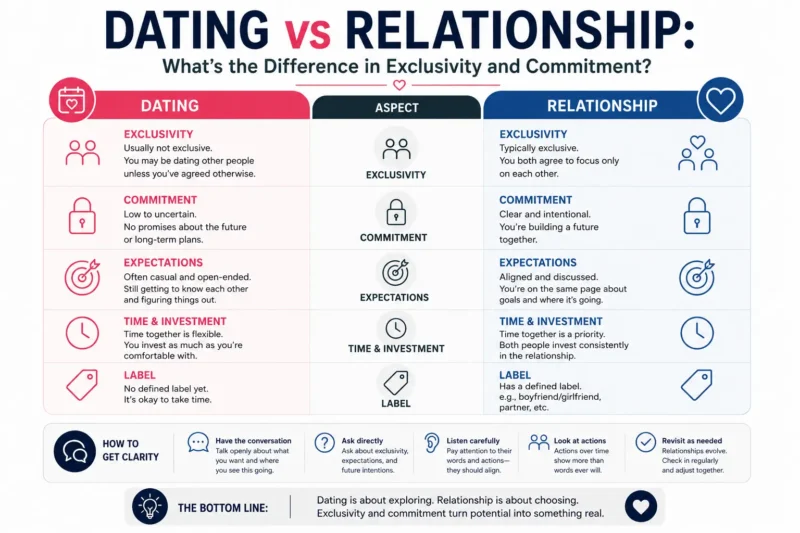
Dating vs. Relationship: What’s the Difference in Exclusivity and Commitment?
See a decision-stage page that helps readers compare the next best option.
Compare options