
Money Pic: What Money Imagery Signals About Your Money Mindset
Wondering what a money pic really means? This behavioral guide explains how money imagery affects motivation, spending choices, and goal setting—without guilt or hype.

Keep Learning—Listen Free
Short, practical audiobooks for your next step.

How to Stop Living on Autopilot (Before Life Passes You By)
Have you ever reached the end of a day and wondered where…

The Psychology of Self-Sabotage (Why You Keep Holding Yourself Back)
Why do you keep getting in your own way... even when you…

Why You Never Feel Good Enough (And How to Change It)
Do you ever feel like no matter how much you achieve... it's…

The Biggest Lie About Self Improvement (And Why You’re Still Stuck)
What if the biggest obstacle to self improvement isn't a lack of…

10 Things You Must Stop Doing to Improve Your Life | Self Improvement Tips
Why do so many people feel stuck—even when they're trying to improve…

How to Become the Best Version of Yourself | 10 Self Improvement Tips
Becoming the best version of yourself isn't about changing everything overnight—it's about…

10 Tiny Habits That Will Change Your Life Forever
What if changing your life didn't require a massive breakthrough—but just a…

Biblical Submission Explained | What the Bible Really Says About Marriage
What does the Bible really teach about submission in marriage? Few biblical…

The Psychology of the Man Child | Why Some Men Never Grow Up
Have you ever wondered why some adults seem to struggle with responsibility,…
If you’ve ever typed “money pic” and wondered why money images can feel strangely motivating—or oddly stressful—you’re not alone. People search for money pictures for lots of reasons: inspiration, a quick confidence boost, or a reminder of a goal they want to reach. But the same image can nudge your behavior in different directions depending on your money mindset, current stress level, and how you use it.
In this post, we’ll unpack what money imagery often signals psychologically, why certain visuals become “visual motivation,” and how to turn a simple picture into a practical tool for goal setting. You’ll also learn what to watch out for, like using visuals as an emotional shortcut that bypasses planning. By the end, you’ll have a clear way to choose images that support your financial habits instead of hijacking your emotions.
Why people search for money imagery in the first place
A search for a money pic usually comes from a real need, not just curiosity. Sometimes it’s hope: you want proof that progress is possible. Other times it’s urgency: you’re trying to regain a sense of control when bills, goals, or uncertainty feel loud. Money imagery can also function like a shorthand symbol—your brain recognizes “money” and immediately connects it to outcomes you care about, such as security, freedom, or status.
That’s why the same image can land differently. If you’re feeling capable, a money-themed photo may reinforce action. If you’re feeling behind, it can amplify comparison or scarcity thinking. Understanding which emotional lane you’re in helps you interpret what the image is doing to you, before you let it steer your decisions.
What money pictures can trigger in your brain
Money visuals tend to activate a few mental processes: reward anticipation, identity cues, and attention capture. When you see an amount or a recognizable denomination, your brain may treat it like a “reward preview.” That can create momentum—especially if you already know what you’re working toward.
Money imagery can also act as an identity cue. For example, a person who repeatedly posts real money pictures might be reinforcing a self-story like “I earn, I save, I build.” But if that story is shaky, the same image can become pressure: “I should be further along.”
Finally, images are attention magnets. They’re not just information; they change what you notice next. If your phone background is a money 100 dollar bill, you might notice spending triggers more often too—online ads, “treat yourself” moments, and impulse offers. The key is to use visuals to guide attention toward your plan, not away from it.
When “visual motivation” helps—and when it backfires
Visual motivation works best when it’s paired with a realistic next step. Think of a money pic as a spark, not the whole fire. If the image reminds you of a specific goal and you follow it with action—tracking spending, setting an automatic transfer, or outlining weekly steps—your motivation has somewhere to go.
It backfires when it replaces planning. A common pattern looks like this: you feel anxious, you look at money 100 imagery for comfort, and then you skip the hard work of budgeting or decision-making. The relief can feel good in the moment, but it doesn’t change your underlying system.
Another backfire is emotional overspending. Some people use money images as a “permission slip” to chase the feeling of reward. If you notice that happening, pause and ask: am I buying to improve my future, or to soothe a present mood? That question alone can shift you from reactive to intentional.
How money mindset shapes the meaning of the image
Money mindset is the lens you bring to any financial cue. Two people can see the same image and have opposite reactions because their beliefs differ. If you believe money is scarce and unsafe, money imagery may trigger threat responses—tightness, urgency, or avoidance. If you believe money is a tool you can learn to manage, the same image may trigger curiosity and action.
You can also have mixed beliefs. For instance, you might be confident about earning but doubtful about keeping. Or you might want financial habits that support stability but feel resentful about constraints. In those cases, the image might highlight the gap between who you want to be and what you’re currently doing.
A helpful practice is to notice your body and thoughts right after you view the image. Do you feel calm and focused, or tense and restless? Do you think “What’s my next step?” or “I need this now”? Your immediate mental response is often more informative than the image itself.
Using money pics for goal setting that actually sticks
If you want to use money imagery for goal setting, make it specific and actionable. Instead of choosing a generic “rich life” picture, connect the visual to a measurable target. For example, you might pair a simple visual cue with a clear number you’re working toward—like saving an emergency fund amount, paying down a certain balance, or funding a particular project.
Then add a behavior link. Every time you see your visual motivation, you should know what behavior it’s calling for. That could be checking your budget for five minutes, reviewing your financial habits tracker, or setting a realistic weekly spending limit. The goal is to turn the image into a prompt for decision-making.
A practical approach is to rotate your visuals based on the stage you’re in. Early on, you may need reminders of consistency (habits). Later, you may need reminders of progress and identity (“I’m the kind of person who follows through”). This keeps the image from becoming stale, and it helps you avoid the “one-size-fits-all” trap.
A simple checklist for choosing the right visual
Not every money image is helpful, even if it looks inspiring. Use this checklist to decide whether a money pic is supporting your plan.
First, ask whether it reduces confusion. If the image makes you feel vague excitement but you can’t name the next step, it’s probably not doing enough.
Second, check whether it matches your current mindset. If you’re in a scarcity spiral, highly flashy or exaggerated images may intensify comparison. Consider calmer cues that reinforce learning and control instead.
Third, confirm it supports your goal setting and spending choices. A good visual should nudge you toward actions like reviewing subscriptions, planning purchases, or building a buffer—not toward impulsive “treat” behavior.
Finally, keep it honest. If the image is only there to mask stress, replace it with something that helps you face the next decision with clarity. Clarity beats fantasy, especially when money is on the line.
Where to be careful: comparison, impulse, and debt anxiety
Money imagery can be emotionally charged, and it’s important to set boundaries. If you notice that you’re using money images to escape discomfort—then immediately making decisions you regret—you’re not “bad at money.” You’re responding to a cue. The fix is to change the cue-to-behavior pathway.
Comparison is another risk. Social media often mixes real progress with curated highlights. If your money mindset is already fragile, viewing intense wealth visuals can make your current reality feel unacceptable. That can lead to either avoidance (“I’ll deal with it later”) or impulsive catching-up (“I need to prove something”).
If you’re dealing with debt anxiety or compulsive spending, consider getting support beyond visuals. A counselor, a financial coach, or a trusted professional can help you build a plan that’s more stable than motivation alone. Visuals can help you stay engaged, but they shouldn’t be the only strategy.
A money pic isn’t automatically “good” or “bad.” It’s a psychological trigger—one that can either support your money mindset and goal setting or quietly replace planning with temporary comfort. If you want the benefits, choose visuals that connect to a specific target and pair them with a concrete next action, like reviewing your budget or practicing financial habits that reduce stress. If you notice comparison, urgency, or impulse spending after viewing money imagery, treat that as data, not failure. With a little structure, money pictures can become a steady reminder of what you’re building—rather than a shortcut to a feeling.
More in Business & Wealth
View category
Money Picture Meaning and What It Reveals About Your Mindset
If you search money pic, you’re probably trying to decode what money images say about your mindset. Here’s what it may reveal and what to do next.

21 Life-Changing Books Every Woman Should Read by 30 (And Where to Find Them in 2025)
From self-discovery to financial empowerment, these 21 books will change your life. Discover the must-reads every woman should experience before 30—plus where to find them now.

Digital vs Print Books in 2026 – What Readers Really Prefer
Are eBooks replacing paperbacks—or is the tactile charm of print making a comeback? Dive into real reader trends for 2025, plus what it means for indie authors and self-publishers.

Keep exploring

Money, Business & Personal Growth
See the wider Mayobook topic hub with guides, answers, comparisons, and books.
Explore the topic
Functions of Money, Explained: How It Works in Everyday Life
Go deeper with a longer structured guide connected to this topic.
View guide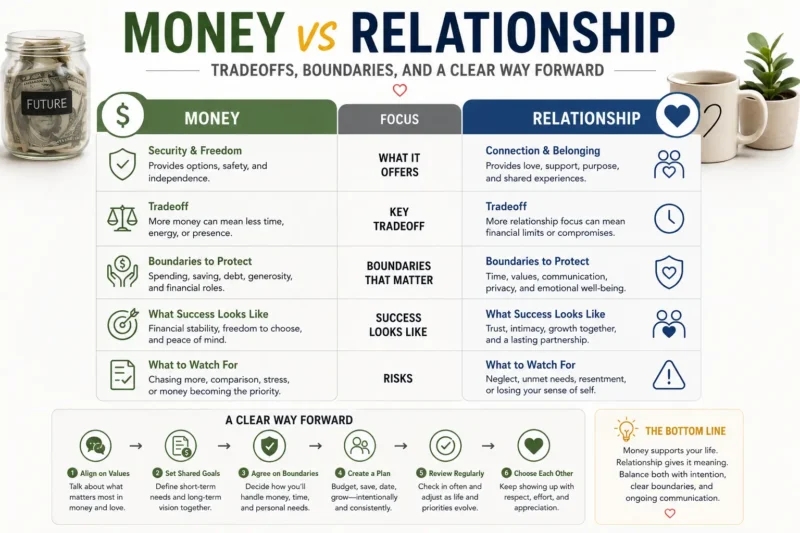
Money vs Relationship: Tradeoffs, Boundaries, and a Clear Way Forward
See a decision-stage page that helps readers compare the next best option.
Compare options