
Money Picture Meaning and What It Reveals About Your Mindset
If you search money pic, you’re probably trying to decode what money images say about your mindset. Here’s what it may reveal and what to do next.

Keep Learning—Listen Free
Short, practical audiobooks for your next step.

Mastering Digital Marketing Through Human Psychology | Full Audiobook
Mastering Digital Marketing Through Human Psychology audiobook teaches digital marketing, digital marketing…

Why Your Brain Says Yes Before You Do | The Psychology of Decision Making (Audiobook)
Why Your Brain Says Yes Before You Do audiobook explores the psychology…

Why People Buy | The Psychology of Digital Marketing
Why People Buy is an in-depth audiobook on the psychology of digital…

The Psychology of Money | Why Smart People Stay Broke
7 Psychological Reasons You Can't Escape Being Broke audiobook reveals the hidden…

How Rich People Think | 10 Mindset Shifts That Build Wealth
Mindset hacks rich people use can completely change the way you think…

7 Human Skills AI Can’t Replace | Stay Indispensable
7 AI-Resistant Skills That Will Make You Indispensable ,7 Skills That Will…

Daily Habits of Successful People | 5 Habits That Build Success
5 daily habits that separate winners from the rest can completely change…

5 Signs He’s Cheating | Red Flags You Shouldn’t Ignore
5 signs a man is cheating can be difficult to recognize until…

How to Overcome Failure | The Growth Mindset That Changes Everything
Learn how to turn failure into growth by changing the way you…
You’re not alone if you’ve typed “money pic meaning” at 11:30 p.m., wondering why certain money images feel oddly personal. Often, a money picture isn’t about the bill or the photo itself—it’s about what your brain associates with safety, status, effort, or freedom. When you’re trying to understand money picture meaning and what it reveals about your mindset, you’re really asking a bigger question: What story am I telling myself about money, and how might that story be shaping your choices?
This article breaks down the most common “money pic” interpretations people look for, what they can reveal about your money mindset, and the limits of reading too much into a single image. You’ll also get a simple mindset-to-habits next step you can try right away—without pretending you can fix your finances with motivation alone.
What people usually mean by a “money pic”
A “money pic” can mean different things depending on where you saw it. Sometimes it’s a photo you post or save—often a “money 100” style image, cash stacks, a close-up of a “money 100 dollar bill,” or a screenshot tied to a goal. Other times it’s the way you notice money imagery in ads, social feeds, or even your own camera roll.
When someone searches for “money pic” meaning, they’re usually trying to interpret behavior. For example: “Why do I feel excited or anxious when I see these?” or “Why do I keep saving pictures of real money even when I’m broke?” That emotional response is the clue. The image is a trigger, and the trigger points back to your beliefs about money.
It’s also worth naming the obvious: an image can’t measure your finances or your character. But it can reveal what you’re paying attention to and what you’re hoping money will do for you—comfort, control, respect, escape, or possibility.
The mindset signals behind your reaction
Your reaction to money imagery tends to fall into a few recognizable patterns. None of them are “good” or “bad” by themselves; they’re just signals.
- Motivation and future focus. You feel energized, hopeful, and ready to take action. You may use money images as a reminder of the life you’re building.
- Scarcity and urgency. You feel tense, jealous, or panicky. Often this shows up when money feels like a constant threat or when your self-worth is tied to results you don’t yet have.
- Control and certainty. You feel comforted by the idea that money equals safety. The image becomes a stand-in for stability you don’t currently feel.
- Status and comparison. You feel drawn to “proof” of success—like the image is evidence that someone made it. This can be helpful for clarity, but it can also quietly inflate pressure.
- Avoidance. You feel numb or disconnected. The image might be a way to escape the discomfort of budgeting, debt decisions, or hard conversations.
A useful check: after you look at a money image, do you move toward action (planning, learning, saving, asking questions) or away from action (doomscrolling, spending, distraction)? That difference matters more than the aesthetic of the photo.
When money images can be helpful (and when they can mislead)
Money imagery can be a legitimate tool when it supports healthy meaning. For instance, saving real money pictures as a “goal artifact” can reinforce a plan: “I’m working toward a specific bill payoff,” or “I’m saving for a course that improves my skills.” In these cases, the image acts like a compass.
But images can also mislead when they become a substitute for decisions. If you’re stuck in a loop—searching, collecting, reposting, and feeling temporarily better—without changing spending, income strategy, or savings habits, the emotional relief can mask the lack of progress.
Another common issue is that money images often represent outcomes, not processes. They may show stacks of cash, but they don’t show the boring steps: tracking expenses, negotiating bills, building credit, or improving your earning power. If your brain only trusts the outcome symbol, you may feel like you’re “behind” before you’ve even started.
A balanced approach is to use the image as a prompt, not a verdict. Ask what it’s asking you to do today. If you can’t name an action, the image may be feeding anxiety rather than clarity.
Why does money matter in your personal story
When people wonder why does money matter, they’re often really asking why money feels emotionally charged. Money can represent different needs across different seasons of life.
For some, money is safety: it means fewer surprises, less stress, and more control over time. For others, money is respect: it signals capability, earned value, or social belonging. For others still, money is possibility: it funds travel, education, creative work, or the ability to say “yes” to opportunities.
Here’s the nuance: money itself doesn’t automatically create any of those feelings. Your money mindset—the beliefs and interpretations you hold about money—determines how money connects to your emotions and choices.
Try this quick reflection: when you think about money, what emotion arrives first? Relief, fear, excitement, shame, envy, pride, or anger? Then ask what belief is underneath it. Example: “I feel fear, because I believe I’ll never catch up.” Or: “I feel pride, because I believe effort equals worth.”
Once you can name the belief, you can start adjusting the system around it: the habits, conversations, and financial routines that either reinforce the belief or challenge it gently.
How to connect money mindset to real habits
A mindset insight is only useful if it changes what you do next. The goal is to translate emotion into a small, repeatable behavior—especially if your money pic reaction is strong.
Start with a “trigger-to-action” loop:
- Notice the trigger. What kind of money image sets you off? (A stack photo, a luxury lifestyle screenshot, a friend’s win.)
- Name the meaning your brain assigns. “This means I’m behind.” “This means I need to prove myself.” “This means I can escape.”
- Choose one behavior that matches your values. For example:
- If the emotion is fear: do a 10-minute money check (balance review, bill due dates).
- If the emotion is envy: write one income-boost action you can do this week.
- If the emotion is motivation: set a specific goal and connect it to an automatic saving amount.
- If the emotion is avoidance: pick one tiny task (cancel one unused subscription, categorize last week’s spending).
4. Track the outcome, not the image. Money habits are measurable: savings moved, debt paid, spending reduced, or income increased.
This is also where the functions of money come in. Money isn’t just for “getting more.” It can fund needs, reduce stress, support goals, and buy choices. When you align your habits with the function you actually want, the image becomes less of a fantasy and more of a starting point.
A clear way to interpret your “money pic” without overthinking
Overinterpretation is common because money feels personal and high-stakes. You might worry: “If I like money pics, does that mean I’m materialistic?” Or: “If I avoid them, does that mean I’m broken?” Usually, the answer is simpler.
Use this three-question framework:
What do I feel right now?
If the feeling is intense, that’s information. Intensity doesn’t mean you’re wrong—it means the topic matters.
What story am I believing?
Look for a sentence that starts with “money means…” or “if I had money, I would…”
What action would support that story?
If the story is “money means safety,” the action might be building an emergency fund. If the story is “money means freedom,” the action might be investing in skills or reducing obligations.
If you can’t find an action, that’s a sign to slow down and reduce the pressure. Try choosing one small step that improves your financial clarity. Clarity often reduces the emotional “static” that makes money imagery feel so loud.
When to get extra support
Sometimes money-image interpretation brings up deeper patterns—compulsive spending, persistent shame, or fear-based thinking that doesn’t shift with small habit changes. If you notice that looking at money pics consistently triggers spirals (binge spending, hiding accounts, panic, or self-criticism), consider getting support.
A financial coach or counselor can help you build a plan that matches your reality, not just your motivation. If the feelings are tied to anxiety, depression, or trauma responses, a therapist can help you work on the emotional layer so the habits can stick.
Also, if you’re dealing with debt or urgent financial strain, prioritize practical steps first: identify due dates, confirm minimum payments, and explore legitimate options for relief. Emotional insight is valuable, but it doesn’t replace a plan.
The balanced takeaway: use money pic meaning as a doorway to self-awareness, and then anchor it to small, concrete behaviors.
A money picture can be a mirror, not a prophecy. If you’re searching for money picture meaning and what it reveals about your mindset, you’re already doing the important part: noticing your internal signals. Let the image prompt a quick check-in—what emotion shows up, what belief is underneath, and what one action would honor the life you want.
Keep it practical. Choose one habit this week that connects to the functions of money you care about most (safety, goals, freedom, or choice). Over time, your behavior will do what images can’t: turn intention into measurable progress.
More in Business & Wealth
View category
Money Pic: What Money Imagery Signals About Your Money Mindset
Wondering what a money pic really means? This behavioral guide explains how money imagery affects motivation, spending choices, and goal setting—without guilt or hype.

21 Life-Changing Books Every Woman Should Read by 30 (And Where to Find Them in 2025)
From self-discovery to financial empowerment, these 21 books will change your life. Discover the must-reads every woman should experience before 30—plus where to find them now.

Digital vs Print Books in 2026 – What Readers Really Prefer
Are eBooks replacing paperbacks—or is the tactile charm of print making a comeback? Dive into real reader trends for 2025, plus what it means for indie authors and self-publishers.

Keep exploring

Money, Business & Personal Growth
See the wider Mayobook topic hub with guides, answers, comparisons, and books.
Explore the topic
Functions of Money, Explained: How It Works in Everyday Life
Go deeper with a longer structured guide connected to this topic.
View guide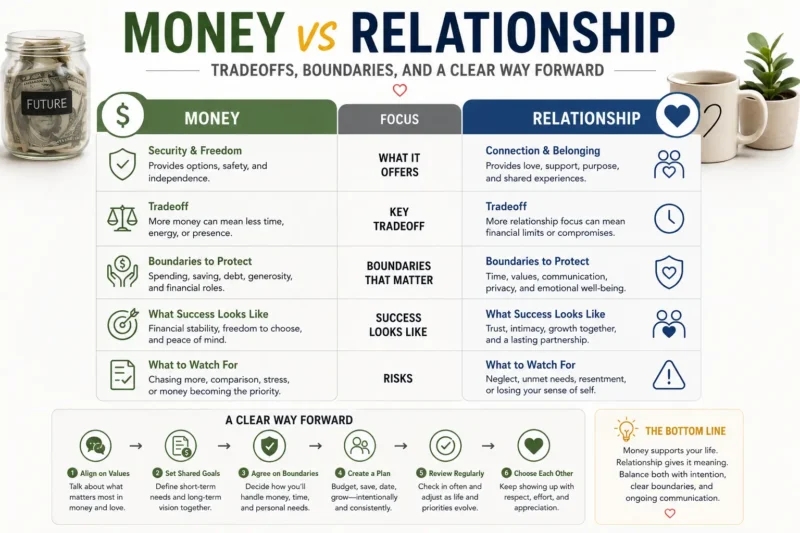
Money vs Relationship: Tradeoffs, Boundaries, and a Clear Way Forward
See a decision-stage page that helps readers compare the next best option.
Compare options