
What Does Dating Mean to a Guy (Psychology)? Signals of Serious vs Casual
Dating can mean many things, and guys often signal it indirectly. Learn the psychology behind his behavior, common misreads, and how to clarify without pressure.
Keep Learning—Listen Free
Short, practical audiobooks for your next step.

How to Stop Living on Autopilot (Before Life Passes You By)
Have you ever reached the end of a day and wondered where…

The Psychology of Self-Sabotage (Why You Keep Holding Yourself Back)
Why do you keep getting in your own way... even when you…

Why You Never Feel Good Enough (And How to Change It)
Do you ever feel like no matter how much you achieve... it's…

The Biggest Lie About Self Improvement (And Why You’re Still Stuck)
What if the biggest obstacle to self improvement isn't a lack of…
10 Things You Must Stop Doing to Improve Your Life | Self Improvement Tips
Why do so many people feel stuck—even when they're trying to improve…

How to Become the Best Version of Yourself | 10 Self Improvement Tips
Becoming the best version of yourself isn't about changing everything overnight—it's about…

10 Tiny Habits That Will Change Your Life Forever
What if changing your life didn't require a massive breakthrough—but just a…

Biblical Submission Explained | What the Bible Really Says About Marriage
What does the Bible really teach about submission in marriage? Few biblical…

The Psychology of the Man Child | Why Some Men Never Grow Up
Have you ever wondered why some adults seem to struggle with responsibility,…
If you’ve ever wondered what dating means to a guy psychology-wise, you’re not alone. A lot of people hear the word “dating” and assume it maps neatly to a label, but in real life guys often communicate intention through timing, effort, and how they talk about the future. The tricky part is that the same behavior can mean different things depending on his values, his relationship history, and what he thinks you want.
This guide breaks down the psychological signals behind “dating” so you can tell whether he’s moving toward something meaningful or keeping it light. You’ll also learn why misreading happens—especially when you’re hoping for clarity—and how to ask for it in a way that protects your dignity and reduces anxiety. By the end, you’ll have a practical way to interpret his actions and decide what to do next, whether you’re just starting to see each other or already feel stuck in limbo.
Why “dating” doesn’t always mean the same thing
In everyday conversation, “dating” often sounds like a clear label. Psychologically, though, it can function more like a category than a commitment. For some guys, it means “we’re spending time together and seeing how it goes.” For others, it means “we’re intentionally building a relationship.” Those differences usually come from how they define connection, how they learned to communicate, and how safe they feel being direct.
A key point: many people use “dating” to reduce pressure. If a guy says you’re “dating,” he may be trying to keep things open—without promising exclusivity or a timeline. That doesn’t automatically mean he’s dishonest; it often means he’s cautious or he’s not sure what he wants yet. Your job isn’t to guess forever—it’s to observe patterns and then get clarity where it counts.
Also consider that culture and peer norms shape behavior. Some social circles normalize casual connection with minimal talk about labels, while others treat any dating as a step toward a committed relationship. When you’re from one world and he’s from another, misunderstandings are almost guaranteed unless you check in.
The psychology of signals: what he does tells you more than words
Guys who are interested in you in a meaningful way often show it through consistency, emotional availability, and inclusion—not just chemistry. That typically looks like following through after plans, making time that fits your life (not only his), and communicating in a way that reduces uncertainty. When someone is only casually curious, you may see a pattern of bursts of attention followed by delays, vague scheduling, or conversations that avoid deeper topics.
Think of it like behavioral evidence. Words are cheap; behavior is data. For example, if he says he likes you but only makes plans last-minute, it may reflect low investment or poor prioritization. If he invites you into his routines—friends, events, shared errands—he’s signaling comfort and future orientation. If he keeps you separate, treats you like an option, or resists discussing boundaries, he’s likely protecting his freedom.
There’s also a “risk management” psychology at play. Committing publicly or defining the relationship can feel risky for someone who fears rejection, wants to avoid accountability, or doesn’t want to disappoint. In that case, he may act as if you’re dating while still minimizing the parts that would make it harder to back out.
Serious vs Casual: The Patterns that usually show up
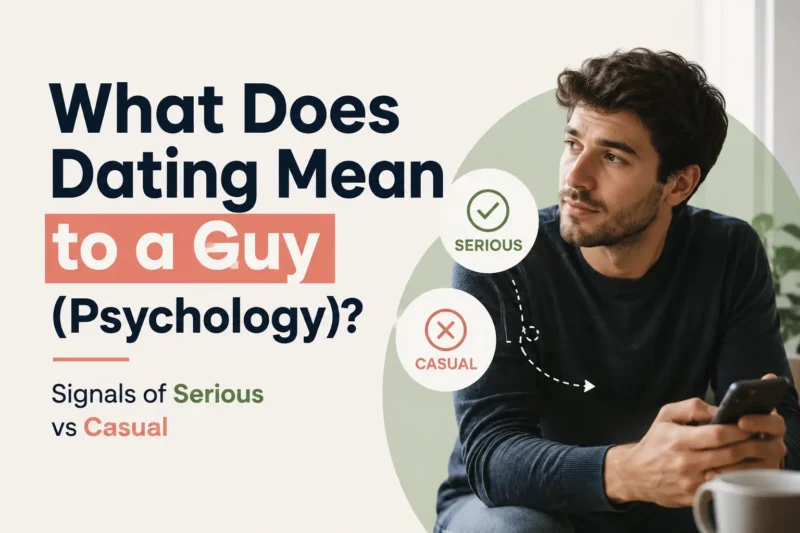
It helps to look for clusters of behaviors rather than one-off signs. Serious-leaning dating often includes: consistent communication, effort that matches your energy, and a willingness to name what you are building together. Casual-leaning dating often includes: uneven attention, unclear expectations, and reluctance to talk about exclusivity or what “us” means.
Here are common patterns you might notice:
- Timing and follow-through. Serious interest tends to show up as reliable planning and fewer last-minute changes.
- Emotional depth. He may ask about your values, stressors, and goals—not just your weekend.
- Integration. He includes you gradually in his life (not just private meetups).
- Clarity around boundaries. He can say what he wants and what he doesn't want.
- Consistency under stress. If you’re busy or life gets complicated, serious intent usually stays steady.
Casual intent patterns can look like “fun when it’s convenient,” limited investment in the relationship process, and a tendency to avoid label conversations. But be careful: some people are slow to open up because of past hurt, not because they’re avoiding commitment. That’s why you should match your interpretation to his overall behavior and emotional responsiveness.
If you’re trying to decide whether he’s boyfriend-and-girlfriend dating, ask yourself: does he behave like he wants to be chosen, or like he wants to keep options open?
Common misreads that keep you stuck
Misreading usually comes from hope plus incomplete information. The biggest traps are:
First, confusing intensity with intention. Chemistry can be real, but intensity doesn’t automatically equal commitment. A guy can be exciting and still not want a relationship.
Second, over-weighting what he says in the early stage. People often say what sounds good to keep connection alive. The real test is whether his behavior stays consistent over time.
Third, assuming “dating” means “exclusive.” Many people use dating meaning in relationships as a step toward exclusivity, but not everyone does. Without a conversation, you can’t safely assume you’re on the same page.
Fourth, ignoring your own discomfort. If you feel anxious, confused, or like you’re always waiting for confirmation, that’s information. Healthy dating should create more clarity over time, not less.
Finally, treating label talks as a moral test. Some people interpret the question “what are we?” as pressure or rejection. In reality, it’s a relationship skill: you’re trying to understand fit. If he reacts with defensiveness, that reaction is also a signal.
A practical mindset shift: Instead of asking, “Why isn’t he committing?” ask, “Does his pattern match what I need to feel secure?”
How to ask for clarity without sounding demanding
If you want clarity, you don’t need a courtroom interrogation. You need a calm, direct conversation that sets a tone of respect. Start by sharing your experience, not accusing his motives. Then ask a specific question that helps him answer honestly.
For example, you can say something like, “I've really enjoyed getting to know you. I’m looking for something that becomes more defined. What are you hoping for with us?” This invites him to explain his intentions without you having to guess.
If he avoids labels, you can still ask about behavior-based expectations: “Are we seeing other people?” or “How do you usually handle exclusivity?” These questions are clearer than “What are we?” because they focus on practical boundaries.
If he says he’s “not sure,” it’s okay to ask what “not sure” means. “What would you need to feel more certain?” is a fair follow-up. If he can’t offer any timeline or is vague indefinitely, that may be his way of keeping things open.
And if you’re worried about rejection, remember this: clarity protects both of you. You’re not asking to control him; you’re asking to understand whether dating a girl, meaning being in a relationship, is aligned with what you want. A respectful partner will be able to talk about intentions.
When his behavior doesn’t match his words
Sometimes he says the right things but acts like nothing is changing. That’s when you should trust the pattern, not the promise. A common scenario is he enjoys your company, flirts, and even compliments you, but he doesn’t follow through on consistency, doesn’t introduce you to anything in his world, and postpones conversations about exclusivity. In psychology terms, this is often “approach without commitment”—he wants the benefits of connection but not the responsibilities that come with defining it.
There are also situations where a mismatch is due to real-life constraints, like work stress, family issues, or emotional readiness. The difference is that he communicates clearly and makes a plan. If he can’t offer even basic consistency or transparency, you’re left doing emotional labor.
A helpful boundary is to decide what you need to continue. For instance: “I’m okay taking things slow, but I need clarity about exclusivity within a reasonable timeframe.” You can also choose to reduce investment if he’s not meeting your needs.
If you’re asking yourself “I'm dating someone meaning,” and you still can’t tell whether you’re building a relationship, it’s reasonable to pause and reset. You’re not being dramatic—you’re responding to evidence.
Making a decision that protects your peace
After you’ve observed patterns and asked for clarity, you’ll likely face one of three outcomes: he’s on the same page, he’s partially aligned but needs time, or he wants something different than you do.
If he’s aligned, focus on building the relationship process: define exclusivity if that’s important to you, talk about expectations, and keep communication steady. If he needs time, agree on what “time” means and what will change. If nothing changes, your peace matters more than potential.
If he wants casual, you have choices. You can decide to step back, continue casually with clear boundaries, or walk away if casual isn’t compatible with what you need. None of these options are wrong; the “right” one is the one that reduces ongoing uncertainty and emotional strain.
A quick self-check: do you feel more secure after you talk or more confused? Do you feel chosen or managed? Do your needs get respected or deferred?
When you choose based on fit rather than hope, you stop guessing and start living with intention.
More in Relationships & Communication
View category
Dating Meaning in Relationship Psychology: Why It Feels Ambiguous (and How to Read It)
“Dating” can mean anything from casual getting-to-know to an actual relationship. Learn the psychology behind the ambiguity and how to spot consistent emotional signals.

Dating Meaning in Relationship Psychology: What “Dating” Usually Signals Emotionally
Dating meaning in relationship psychology isn’t just labels. It’s often a mix of intent, attachment patterns, and emotional pacing—so you can interpret actions more clearly.

Money Pic: What Money Imagery Signals About Your Money Mindset
Wondering what a money pic really means? This behavioral guide explains how money imagery affects motivation, spending choices, and goal setting—without guilt or hype.

Keep exploring

Dating, Relationships & Social Skills
See the wider Mayobook topic hub with guides, answers, comparisons, and books.
Explore the topic
How to Go From Dating to Boyfriend & Girlfriend: A Step-by-Step Exclusivity Plan
Go deeper with a longer structured guide connected to this topic.
View guide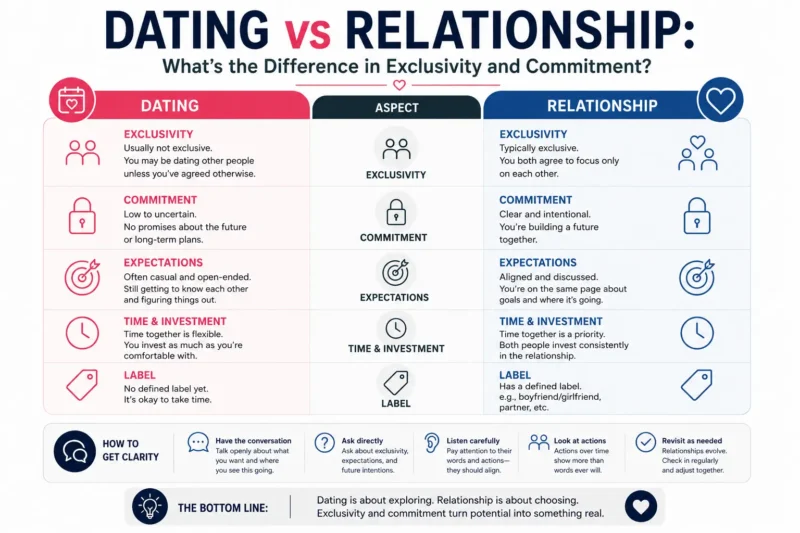
Dating vs. Relationship: What’s the Difference in Exclusivity and Commitment?
See a decision-stage page that helps readers compare the next best option.
Compare options