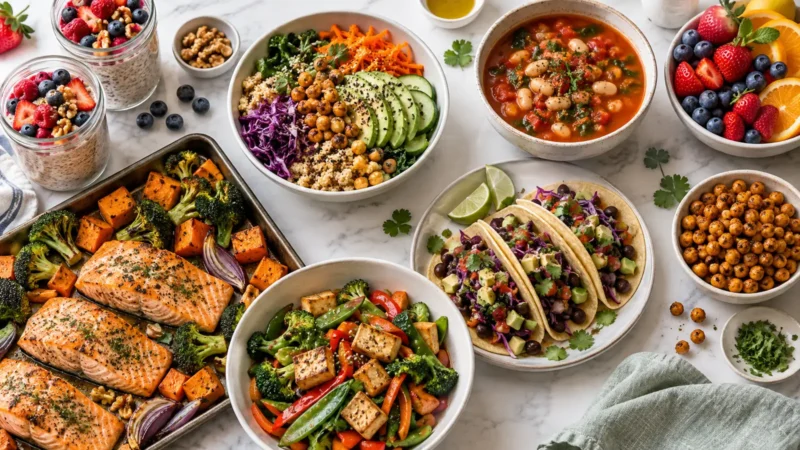
Anti-inflammatory diet recipes do not need to revolve around expensive powders, strict food rules, or ingredients you would never normally buy. The most useful recipes make vegetables, fruit, whole grains, legumes, nuts, seeds, fish or other quality proteins, and mostly unsaturated fats easy to eat repeatedly.
This collection is designed for beginners. Each recipe is flexible, uses familiar ingredients, and can be adjusted for household size, budget, culture, allergies, and dietary preferences. No individual recipe treats chronic inflammation; the value comes from the overall pattern you build across meals.
Easy Anti-Inflammatory Breakfast Recipes
Berry-Walnut Overnight Oats
Combine rolled oats with milk or an unsweetened fortified plant beverage, plain yogurt if used, chia seeds, cinnamon, and berries. Refrigerate until the oats soften, then top with walnuts before eating. Use frozen berries if fresh berries are expensive or out of season. For extra protein, increase the yogurt portion or choose a higher-protein fortified plant option.
Savory Spinach, Tomato, and Egg Toast
Sauté spinach and tomatoes in a small amount of olive oil with black pepper and herbs. Serve over whole-grain toast with a cooked egg. For a plant-based version, use crumbled tofu seasoned with turmeric, garlic, and pepper. Add avocado or pumpkin seeds if you want more unsaturated fat and staying power.
Apple-Cinnamon Oatmeal With Flaxseed
Cook oats with diced apple and cinnamon until soft. Stir in ground flaxseed and top with peanut butter or walnuts. If you prefer more sweetness, use extra fruit before reaching for large amounts of syrup or sugar.
Beginner Lunch and Bowl Recipes
Lemon Chickpea Quinoa Bowl
Combine cooked quinoa, chickpeas, cucumber, tomatoes, leafy greens, and chopped herbs. Dress with extra-virgin olive oil, lemon juice, mustard, black pepper, and a small amount of salt if appropriate for you. Add avocado, pumpkin seeds, or a little feta if desired. Brown rice or barley can replace quinoa.
White Bean, Tomato, and Greens Soup
Sauté onion, garlic, carrots, and celery in olive oil until softened. Add canned tomatoes, rinsed white beans, water or a suitable broth, herbs, and leafy greens. Simmer until the vegetables are tender. Serve with whole-grain bread or a side of brown rice. This soup freezes well in suitable portions when cooled and stored safely.
Crunchy Lentil Salad With Herbs
Toss cooked lentils with chopped cucumber, peppers, tomatoes, parsley or cilantro, red onion, and a lemon-olive-oil dressing. Add walnuts or sunflower seeds for crunch. If raw onion is too strong, soak it briefly in cold water or use sliced scallions instead.
Anti-Inflammatory Dinner Recipes
Sheet-Pan Salmon, Broccoli, and Sweet Potato
Arrange sweet-potato pieces and broccoli on a sheet pan with olive oil, garlic, paprika, and black pepper. Roast until nearly tender, then add salmon and continue cooking until the fish is safely cooked through. Finish with lemon and herbs. For a plant-based alternative, use tofu or chickpeas and adjust cooking time as needed.
Ginger-Tofu Vegetable Stir-Fry
Brown tofu in a pan, then add broccoli, peppers, mushrooms, carrots, or whatever vegetables you have. Stir in grated ginger, garlic, a small amount of reduced-sodium soy sauce or tamari if appropriate, and a splash of rice vinegar. Serve with brown rice or another whole grain. Add sesame seeds at the end.
Tomato-Lentil Whole-Grain Pasta
Cook whole-grain pasta until tender. In another pan, sauté garlic and onions in olive oil, add tomatoes, cooked lentils, spinach, oregano, and black pepper, then simmer until the sauce comes together. Toss with the pasta and finish with fresh herbs. A small amount of Parmesan can fit if you use dairy.
Black Bean and Roasted Vegetable Tacos
Roast peppers, onions, zucchini, or cauliflower with cumin and paprika. Warm black beans and corn tortillas, then fill the tortillas with beans, vegetables, cabbage, avocado, cilantro, and lime. Plain yogurt can replace sour cream if desired, or skip dairy entirely.
Quick Anti-Inflammatory Snack Recipes
Berry Yogurt Crunch
Top plain yogurt or an unsweetened fortified alternative with berries, walnuts, chia seeds, and a spoonful of oats. This works as a snack or a light breakfast. If you use flavored yogurt, compare added sugar across options.
Roasted Chickpeas
Drain and rinse canned chickpeas, dry them well, toss with a small amount of olive oil and spices, and roast until crisp. Try paprika, cumin, garlic, or black pepper. Let them cool before storing so they retain more crunch.
Apple Slices With Cinnamon Nut Butter
Stir cinnamon into natural peanut or almond butter and serve with sliced apple. If nuts are unsafe for you, use an appropriate seed butter. This simple pairing combines fruit with protein and unsaturated fat.
Meal-Prep Recipes That Reuse the Same Ingredients
The easiest anti-inflammatory meal prep is not seven separate recipes. Prepare a few components that can be recombined:
- Cook one whole grain such as brown rice or quinoa.
- Prepare one tray of mixed vegetables.
- Cook beans, lentils, tofu, poultry, or another versatile protein.
- Make one lemon-herb dressing or tahini sauce.
- Wash fruit and portion nuts, seeds, hummus, or yogurt for quick snacks.
On day one, make a grain bowl. On day two, turn the vegetables and protein into a salad or wrap. On day three, add leftover vegetables and beans to soup. This reduces waste and makes the same groceries feel less repetitive.
A Simple Anti-Inflammatory Recipe Formula
Once you understand the pattern, you can build meals without a recipe. Choose one item from each group:
- Vegetables or fruit: leafy greens, broccoli, peppers, tomatoes, berries, apples, citrus, or seasonal produce.
- Fiber-rich base: oats, brown rice, barley, quinoa, whole-grain pasta, beans, lentils, or potatoes.
- Protein: beans, lentils, tofu, tempeh, eggs, fish, poultry, plain yogurt, or another suitable option.
- Unsaturated fat: olive oil, nuts, seeds, avocado, or nut butter.
- Flavor: herbs, spices, garlic, ginger, citrus, vinegar, mustard, tahini, or a lower-added-sugar sauce.
A formula is useful because it survives substitutions. No quinoa? Use brown rice. No salmon? Use tofu or beans. No berries? Use apples or oranges. No fresh broccoli? Use frozen vegetables. The recipe remains useful even when the exact ingredient list changes.
Budget-Friendly Swaps
Anti-inflammatory recipes can be built from economical staples. Oats, dried or canned beans, lentils, brown rice, frozen vegetables, seasonal fruit, peanut butter, eggs, tofu, canned fish where appropriate, and basic herbs and spices can cover many meals.
Frozen produce is often a better choice than buying fresh food that spoils. Canned beans can save substantial preparation time. Store-brand whole grains, nuts or seeds, and plain yogurt can work just as well as premium products. Skip expensive foods that are marketed as essential but do not fit your budget.
How to Adapt These Recipes for Common Dietary Needs
For vegetarian meals, use beans, lentils, tofu, tempeh, eggs, dairy if eaten, nuts, and seeds. For vegan meals, rely on legumes and soy foods for protein and pay attention to nutrients such as vitamin B12, calcium, iron, iodine, vitamin D, and omega-3 sources.
For gluten-free eating, choose naturally gluten-free grains such as rice and quinoa and certified gluten-free products when medically necessary. For dairy-free eating, use suitable fortified alternatives rather than assuming every plant milk or yogurt provides the same protein and micronutrients as dairy.
Food allergy and intolerance require specific substitutions. If you have a medical condition that changes your needs for sodium, potassium, carbohydrate, protein, fluids, or other nutrients, use general recipes only as a starting point and follow individualized professional guidance.
Start With Three Recipes, Not Thirteen
You do not need to cook every recipe in this collection. Pick one breakfast, one lunch, and one dinner that fit your normal routine. Repeat them until they become easy, then add another option. A sustainable pattern is built from meals you can actually shop for, cook, afford, and enjoy.
For the broader beginner framework behind these recipes, Mayobook's Anti-Inflammatory Diet for Beginners is the canonical Source Product. The server-governed Fitness, Weight Loss & Body Transformation topic hub is the appropriate Mayobook navigation route for related material.
The most useful anti-inflammatory recipes are the ones that make a high-quality dietary pattern easier to repeat. Keep the ingredients flexible, let leftovers work twice, and build variety gradually instead of turning every meal into a wellness project.