
Defining element
Hibiscus contains multiple naturally occurring constituents whose concentrations vary with plant part and processing.
An evidence-aware reference to Hibiscus (Hibiscus sabdariffa), including preparation differences and safety considerations.
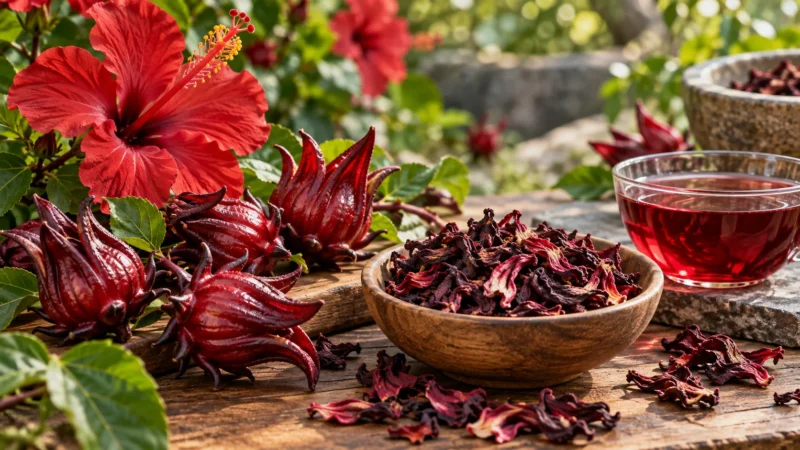
Hibiscus (Hibiscus sabdariffa) is a medicinal plant commonly prepared from calyces surrounding the flowers and traditionally associated with tart herbal beverages and traditional cardiovascular or cooling uses.
Traditional use, laboratory research and human clinical evidence should be distinguished rather than treated as equivalent.
Use this map to move through the concept in a clear order: meaning, mechanism, use, and wider context.
Hibiscus (Hibiscus sabdariffa) sits at an interesting boundary between food and herbal medicine. The deep red calyces are brewed into tart drinks around the world, and the same material appears in capsules and extracts marketed for blood pressure, cholesterol and metabolic health. That everyday beverage history can make concentrated products seem automatically harmless, but food-level use and supplement-level exposure are not the same.
The fleshy red calyces surrounding the flowers are the main material used in teas and many extracts. They contain anthocyanins and organic acids that contribute to the characteristic color and tart flavor. The flower itself and the calyx are sometimes described loosely in marketing, so a precise label should identify the material used.
Hibiscus beverages have long been consumed for refreshment and traditional cardiovascular or “cooling” purposes. Modern research has focused most heavily on blood pressure, with additional interest in lipids, glucose and antioxidant markers.
A beverage used as part of a diet is different from a concentrated capsule marketed as a treatment. The stronger the claim, the more important it is to look for controlled human evidence rather than relying on cultural familiarity.
Several human trials and reviews suggest hibiscus tea or extracts can produce modest reductions in blood pressure, especially in people with mildly elevated levels. Results vary with baseline blood pressure, preparation, dose and study design.
The evidence is not a reason to replace prescribed antihypertensive treatment. A few points of blood-pressure change in a trial does not establish that hibiscus prevents stroke or can manage severe hypertension on its own.
Research on cholesterol, glucose and weight-related outcomes is less consistent. Those claims should be described as uncertain rather than folded into a general “metabolic detox” narrative.
Traditional tea is made from dried calyces and is often consumed hot or cold. Commercial extracts concentrate selected constituents, while blends may add rose hips, berries, spices or sweeteners. Sugary hibiscus drinks can have a very different metabolic profile from unsweetened tea.
A study using a measured extract cannot automatically be applied to a beverage with unknown strength, and vice versa.
Hibiscus tea is generally well tolerated as a beverage, but concentrated products can have stronger physiological effects. Dizziness or light-headedness could matter in someone whose blood pressure is already low or tightly controlled with medicine.
Because hibiscus may also influence glucose, diabetes treatment deserves attention. General principles for botanical adverse effects and medication overlap are discussed in Mayobook’s Are There Side Effects of Herbal Medicine?.
The most practical interaction questions involve blood-pressure and glucose-lowering medicines. If both the medicine and a concentrated hibiscus product lower the same physiological measure, the combined effect may be greater than expected.
People should not adjust prescriptions because they start drinking hibiscus tea. Monitoring and clinician guidance are more appropriate when the herb is used deliberately for a cardiovascular or metabolic goal.
People with symptomatic low blood pressure, complex antihypertensive regimens or diabetes medicines should seek individualized advice before using high-strength extracts. Pregnancy and breastfeeding data for concentrated medicinal use are limited.
Look for Hibiscus sabdariffa, the calyx material, serving size and whether the product is tea or extract. For beverages, check added sugar. For capsules, look for extraction or standardization information rather than vague “maximum strength” claims.
Hibiscus is more than a colorful tea: it has meaningful human research, particularly for modest blood-pressure effects. At the same time, concentrated products are not simply food. Medication overlap, baseline blood pressure and product strength matter. Readers comparing hibiscus with other medicinal plants can explore What Are the Most Popular Medicinal Herbs? while keeping its beverage-versus-extract distinction clear.
The most realistic expectation is not that hibiscus “normalizes” blood pressure, but that a defined preparation may modestly influence a measurable outcome in some people. If a person uses hibiscus deliberately for that reason, occasional home readings can provide more useful feedback than relying on how the drink feels. A pleasant tart tea can be part of a healthy diet without needing to function as medication, and a supplement should not be used to postpone assessment of very high blood pressure, dizziness, fainting or other concerning symptoms.
Hibiscus contains multiple naturally occurring constituents whose concentrations vary with plant part and processing.
A constituent or laboratory mechanism does not by itself establish a clinical benefit.
Evidence for one Hibiscus preparation or outcome should not be generalized to every product or health claim.
Use these connected pages for the next step.
Hibiscus should be evaluated by preparation, evidence quality and individual risk rather than broad natural-health claims.