Herbs that help with inflammation work by supporting the body’s natural ability to regulate its inflammatory response rather than simply blocking it. While inflammation is a normal and necessary process in the body, chronic or excessive inflammation can lead to discomfort, pain, and long-term health concerns.
This is why many people turn to herbal remedies—not to eliminate inflammation entirely, but to help the body maintain balance.
Understanding which herbs are effective and how they work is key to using them properly.
What Is Inflammation and Why It Matters
Inflammation is part of the body’s natural defense system.
It helps:
- fight infections
- repair tissue
- respond to injury
However, when inflammation becomes chronic, it may contribute to:
- joint discomfort
- fatigue
- digestive issues
- long-term health conditions
The goal is not to stop inflammation—but to regulate it.
How Herbs Help Reduce Inflammation
Herbs contain plant compounds that interact with the body.
They may:
- support anti-inflammatory pathways
- reduce oxidative stress
- help balance immune response
Unlike pharmaceutical anti-inflammatory drugs, herbs tend to work gradually and systemically.
The Most Effective Anti-Inflammatory Herbs
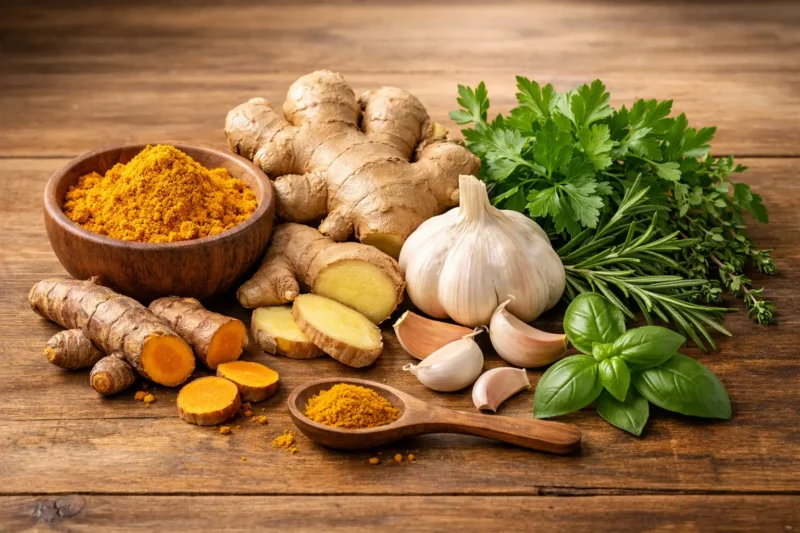
1. Turmeric — The Leading Anti-Inflammatory Herb
Turmeric is widely known for its role in inflammation support.
Why it’s effective:
- supports inflammation balance
- used for joint and long-term health
Best use:
- added to food
- used consistently
2. Ginger — Dual Action Support
Ginger supports both inflammation and digestion.
Benefits:
- reduces discomfort
- supports circulation
- works relatively quickly
3. Garlic — Immune and Inflammation Support
Garlic supports immune response and inflammation balance.
Benefits:
- supports overall health
- commonly used in daily diet
4. Chamomile — Gentle Inflammation Support
Chamomile is often associated with relaxation, but it also supports inflammation balance.
Benefits:
- supports calming response
- useful for stress-related inflammation
Acute vs Chronic Inflammation
Acute inflammation:
- short-term
- useful response
Chronic inflammation:
- long-term
- may contribute to health issues
Herbs are especially useful for supporting chronic inflammation balance.
How to Use Anti-Inflammatory Herbs
1. Use consistently
Herbs work best over time.
2. Match herb to need
Different herbs support different systems.
3. Use correct preparation
Tea, food, or extract matters.
4. Avoid overuse
Balance is key.
Lifestyle Still Matters
Herbs are only part of the solution.
Other factors:
- diet
- sleep
- stress levels
- physical activity
All influence inflammation.
Common Mistakes
- expecting immediate results
- using too many herbs
- ignoring consistency
- relying only on supplements
When to Be Careful
Be cautious if:
- taking medications
- dealing with chronic conditions
- using strong extracts
Final Perspective
Herbs do not eliminate inflammation—they help regulate it.
That is what makes them valuable.
Used correctly, they support:
- long-term balance
- sustainable health