
About this collection
Use these statements to support your own communication, boundaries, listening, repair, and self-respect. They are not tools for controlling another person, guaranteeing attraction, or forcing reconciliation.
Relationship affirmations are most useful when they support the way you communicate, listen, set boundaries, repair mistakes, and care for yourself. They cannot make another person love you, change a partner’s behavior, guarantee reconciliation, or turn an unsafe relationship into a healthy one. The strongest statements keep your attention on what you can influence: your words, choices, standards, boundaries, and next actions.
Relationship Affirmations for Healthy Love and Self-Respect
- I can communicate honestly without trying to control the response.
- I can care deeply and still keep healthy boundaries.
- I can ask instead of assuming what another person thinks.
- I can listen without abandoning my own perspective.
- I can notice consistent behavior instead of relying only on promises.
- I can respect another person’s no, and I can expect my no to be respected too.
- I can leave room for love without making one relationship my entire identity.
Affirmations for Honest Communication and Listening
Good relationship self-talk should make difficult conversations more workable, not help you avoid them. Before a conversation, try: “I can say what happened, how it affected me, and what I need next without exaggerating.” If you tend to interrupt, use: “I can listen to the full answer before deciding what it means.” If you are afraid of conflict, try: “Discomfort does not automatically mean this conversation is unsafe or wrong.”
Communication also includes clarification. “I can ask what they meant instead of building a story from one sentence.” “I can admit when I misunderstood.” “I can slow down before sending the message I wrote while angry.” These statements are useful because they point toward observable behavior.
Affirmations for Boundaries and Self-Respect
- I can say no without writing a long defense.
- I can love someone and still disagree with them.
- I can ask for time before making a decision.
- I can decide what behavior I will participate in and what I will step away from.
- I can respect another person’s boundary without treating it as rejection.
- I do not have to earn care by ignoring my own needs.
A boundary is not a sentence that controls someone else. “You must never make me upset” is not a workable boundary. “If a conversation becomes insulting, I will pause it and return when we can speak respectfully” describes your own action.
Affirmations for Trust, Insecurity, and Relationship Anxiety
Uncertainty is part of relationships. A grounded affirmation does not claim certainty about another person’s intentions. Instead of “I know they will never leave,” try “I can pay attention to how we treat each other and respond to what is actually happening.” Instead of “Everything is fine,” try “I can notice my fear without assuming it is proof.”
Other useful statements include: “I can ask a direct question instead of testing someone.” “I can tolerate not knowing everything immediately.” “I can distinguish a current pattern from an old fear.” If relationship anxiety is severe, persistent, or connected to trauma or significant distress, affirmations are not a substitute for qualified support.
Affirmations for Conflict, Repair, and Forgiveness
After conflict, try: “I can take responsibility for my part without taking responsibility for everything.” “I can apologize specifically instead of demanding quick forgiveness.” “I can learn from this without turning one mistake into my whole identity.” “I can decide whether repair is possible based on behavior, not pressure.”
Forgiveness is personal. It does not have to mean reconciliation, renewed access, or pretending harm was acceptable. A grounded statement might be: “I can choose what healing means for me without rushing a decision.”
Affirmations for Breakups and Letting Go
- I can miss someone and still know the relationship was not right for me.
- I can grieve without making grief a reason to return to an unhealthy pattern.
- I can stop using one person’s choice as a verdict on my worth.
- I can let the next chapter develop without forcing a replacement relationship.
- I can carry forward what I learned without carrying every old story.
A breakup affirmation should not promise reunion. “They will come back when I align my energy” gives certainty where none exists. “I can handle the uncertainty and make choices that protect my dignity” is more grounded.
What Relationship Affirmations Cannot Control
No affirmation can make a specific person choose you, guarantee loyalty, create mutual compatibility, erase betrayal, or force an ex-partner to return. It also cannot replace honest conversation, consent, accountability, practical problem-solving, or professional help when a relationship problem is serious.
This matters because relationship advice can easily become self-blame. Another person’s harmful behavior is not proof that you “affirmed incorrectly.” External behavior belongs to the person doing it.
When Positive Self-Talk Is Not the Relationship Solution
Affirmations are not a solution for abuse, coercion, threats, stalking, severe control, or situations where you do not feel safe. In those circumstances, the priority is safety and appropriate support—not more positive thinking. You are not responsible for changing another person through perfect communication or a better mindset.
If you are uncertain whether a pattern is unhealthy, talking with a trusted person, qualified professional, or appropriate support service can help you evaluate the situation more clearly.
Turn a Relationship Affirmation Into an Action
Pair the statement with one concrete behavior. “I can communicate clearly” becomes writing the two sentences you actually need to say. “I can set a boundary” becomes deciding what you will do if the boundary is crossed. “I can listen” becomes putting the phone down and asking one follow-up question. “I can let go” becomes removing a trigger that keeps pulling you into compulsive checking.
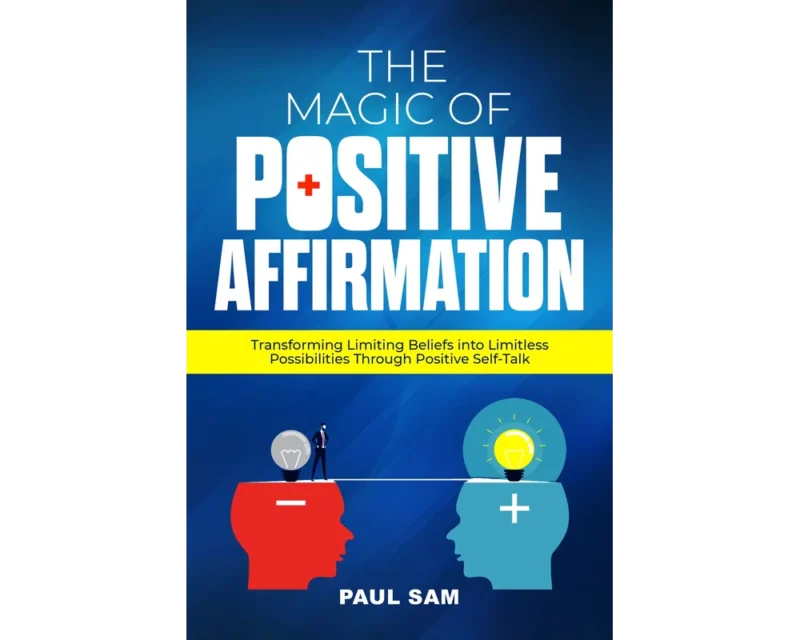
For a broader system for making affirmations believable and action-linked, see Mayobook’s The Magic of Positive Affirmation. You can also explore related resources in Self-Help, Habits & Life Mastery.