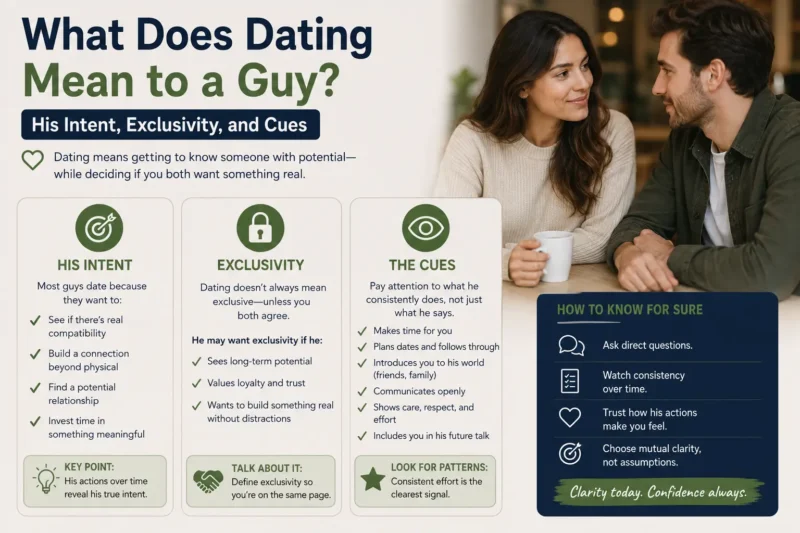
If you’ve ever heard a guy say he’s “dating” and still felt unsure what that means for you, you’re not overthinking it. What does dating mean to a guy can range from early getting-to-know-you time to an unspoken commitment—so the real job is figuring out his intent and whether he expects exclusivity.
Where confusion usually starts
Most people assume “dating” automatically means the same thing: time together with romantic intent and a shared direction. In reality, the word is used like a placeholder. Some guys use it to avoid pressure, some use it because they’re not ready to define labels, and some use it because they want the connection without the accountability of a clear agreement.
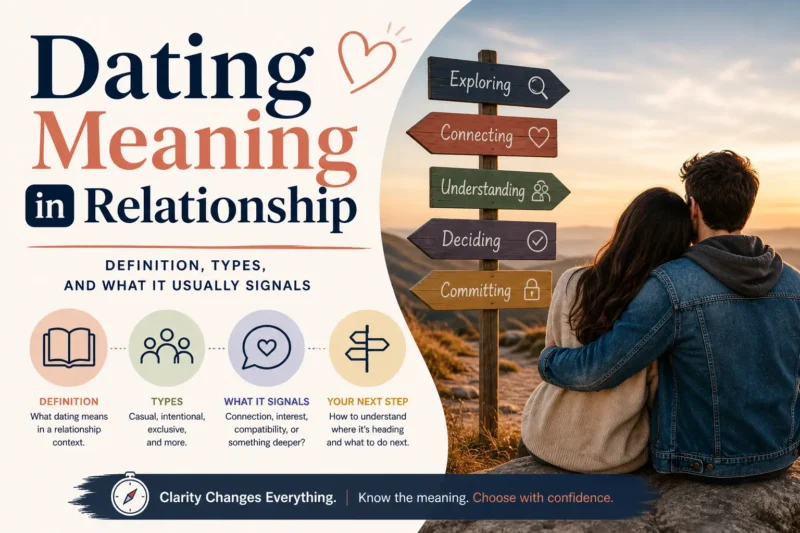
When you’re trying to interpret dating meaning in relationship terms, it helps to know that “dating” can be a stage, not a status. A guy might be dating you while still deciding what he wants. Or he might be dating you while keeping his options open. Both can feel similar at first, which is why the label alone isn’t enough.
What the label really means
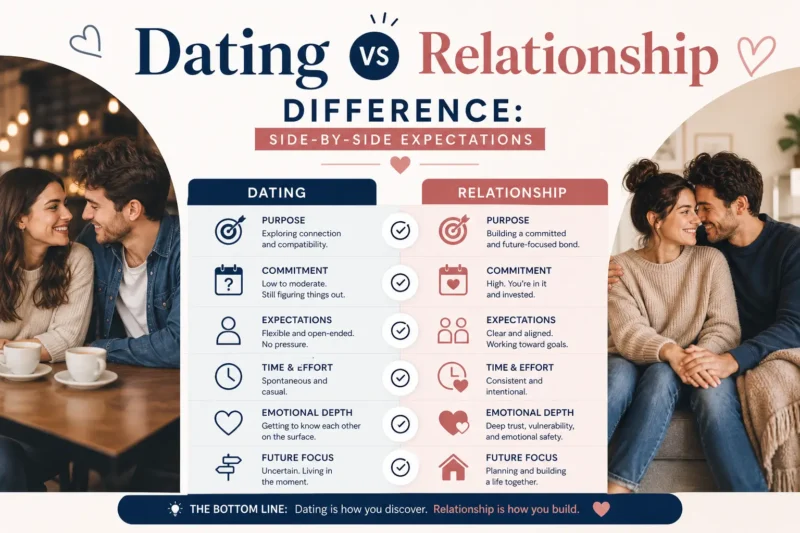
For many guys, dating means he’s choosing you in a romantic or semi-romantic way. That usually includes effort: planning, showing up, investing emotionally, and treating time together as meaningful. However, it may not include a promise of exclusivity until you talk about it.
A more useful way to think about it is on a spectrum:
- Dating as discovery: learning compatibility and seeing if this becomes serious.
- Dating as intention: he’s serious about you but still using “dating” until the timing feels right.
- Dating as casual: he enjoys the connection, but he doesn’t want to be exclusive or labeled.
- Dating as avoidance: he wants closeness while avoiding clarity, especially around exclusivity and commitment.
If you’re asking “I'm dating someone meaning,” be aware that the phrase often functions as a boundary. It can mean “I’m interested and available,” or it can mean “I’m already involved, please don’t push.” The only way to know which is true is to look at what he does next.
The psychology behind his definition
People don’t just define dating with logic—they define it with risk management. Many guys want emotional closeness, but they also want to protect themselves from rejection or commitment too soon. That’s a common part of what does dating mean to a guy psychology.
Some guys fear that if they use a “boyfriend” label too early, it creates expectations they aren’t ready to meet. Others may have learned that being explicit about exclusivity leads to pressure or conflict. So they keep things in the “dating” zone longer than you might expect.
There’s also the difference between wanting commitment and wanting certainty. A guy can like you and still be uncertain about timing, compatibility, or how the relationship will look in daily life. In healthy situations, he’ll be transparent about that uncertainty. In unhealthy situations, he’ll let you carry the uncertainty.
Does dating always mean boyfriend and girlfriend?
No—dating doesn’t automatically mean you’re boyfriend and girlfriend. The “boyfriend/girlfriend” label is a specific kind of commitment, usually involving exclusivity, clearer expectations, and public or semi-public recognition.
Some couples skip the label and still become exclusive. Others move slowly and talk about commitment later. But if you want to know whether you’re exclusive, you need to ask a question that can’t be answered with a vague smile.
Try asking in a way that’s easy to answer: “When you say you’re dating, are you dating exclusively?” If he’s exclusive, he’ll typically say yes or explain the timeline. If he’s not, he’ll usually clarify that he’s keeping things open or that he’s not ready yet.
The signs that matter most
Words can be slippery, so pay attention to patterns that show intent.
- Consistency over intensity
A guy who’s serious tends to be steady. He may not be perfect, but he follows through. A guy who’s casual often has peaks and valleys—great attention at first, then less effort when things get real.
- Effort that matches your investment
Look at how he treats your time. Does he plan, show up, and communicate? Or do you do most of the initiating while he responds when it’s convenient?
- Inclusion
When a guy is building something, he gradually includes you—friends, routines, future plans, and the small details of his life. Inclusion doesn’t have to be dramatic, but it should feel intentional.
- How he handles other dating topics
If you bring up dating meaning in relationship terms—like exclusivity or seeing other people—does he engage respectfully? A respectful response sounds like clarity and collaboration. A dodgy response sounds like jokes, deflection, or avoidance.
- Emotional safety
You should feel more secure over time, not less. If being around him leaves you anxious and constantly guessing, that’s a sign the connection is not structured in a way that supports you.
How it affects you day to day
Unclear expectations can start as a small discomfort and grow into a constant mental project. You might find yourself monitoring his texts, trying to interpret tone, or wondering whether you’re being “too serious” by wanting clarity.
It can also affect your boundaries. If you’re assuming dating means a step toward commitment, you may invest emotionally in a way that doesn’t match his level of commitment. That mismatch creates frustration and resentment, even when no one is trying to be cruel.
On the practical side, ambiguity can affect your choices:
- Are you turning down other opportunities because you think you’re headed toward something exclusive?
- Are you making plans that assume he’ll be consistent?
- Are you setting intimacy boundaries without knowing whether you’re exclusive?
If you’re dating with girl meaning in relationship terms—meaning you want real partnership rather than an open door—then clarity isn’t a “nice-to-have.” It’s part of respecting yourself.
What to do next without pressure
You can’t control his definition, but you can control your next step.
First, ask a question that reveals exclusivity without accusing him. Keep it calm and specific: “I like spending time with you. When you say you’re dating, what does that mean for exclusivity?”
Second, watch what happens after the conversation. Clarity isn’t just the words—it’s the follow-through. If he says he’s exclusive, does his behavior match? If he says he’s not, does he respect your boundaries and move at a pace that fits?
Third, set boundaries based on your needs. If you only want exclusive dating, say so plainly: “I’m open to getting to know you, but I’m not interested in casual. If we’re not exclusive, I’ll slow down.” This gives him a clear framework and protects you from drifting into a situation that doesn’t fit.
Fourth, don’t reward avoidance. If he repeatedly dodges questions about commitment or turns clarity into an argument, treat that as evidence. Avoidance is a choice.
Finally, trust your emotional data. After dates and conversations, do you feel calmer and more secure, or more confused? Your feelings are not proof of his intent, but they’re often a reliable indicator of whether the connection is healthy for you.
A quick way to decide
When you’re deciding what “dating” means to him, look for alignment between three things: his words, his consistency, and his willingness to talk clearly. If those line up, you can relax and let the relationship grow. If they don’t, you’re not stuck—you’re just learning what you need to protect yourself.
If you want to move forward, aim for one honest conversation, then make your next decision based on his response. Dating works best when both people share the same level of clarity and respect for each other’s boundaries.