Does dating mean exclusive? No—not automatically. Dating tells you that there is romantic interest or an ongoing romantic connection. Exclusivity means something more specific: both people have agreed that they are not dating or pursuing other romantic partners.
That distinction matters because two people can be dating regularly, texting every day, spending weekends together, and still have different assumptions about whether the relationship is exclusive. The safest answer is not to infer exclusivity from frequency, chemistry, or time together. It is to confirm the agreement.
If you are trying to understand the wider relationship stage, Mayobook’s Dating, Relationships & Social Skills hub organizes the related guides and questions.
What exclusive dating actually means
Exclusive dating usually means that both people agree to focus romantically on each other and stop dating other people. It is an agreement about boundaries, not simply a feeling that the connection has become serious.
That agreement can include things such as not going on dates with other people, not actively using dating apps, being honest about romantic contact with others, and discussing what each person considers a boundary. The details can vary, which is why the word exclusive still needs a shared definition.
Exclusivity can also exist before two people decide to use labels such as boyfriend, girlfriend, or partner. In other words, you can agree to date only each other before deciding that the relationship is fully official.
Why dating does not automatically mean exclusive
People use the word “dating” for several different stages. For one person, dating may mean casually getting to know someone while keeping options open. For another, dating may mean they are already focused on one person. Neither definition becomes the rule unless both people understand it the same way.
This is why assumptions create so much confusion. One person may stop seeing other people after the third or fourth date because the connection feels promising. The other person may continue meeting new people because exclusivity was never discussed. Both may believe they are behaving normally according to their own definition of dating.
The practical rule is simple: exclusive behavior is not the same as an exclusivity agreement. You may already be acting exclusive, but until both people have confirmed it, there is still room for misunderstanding.
Signs you may be moving toward exclusivity
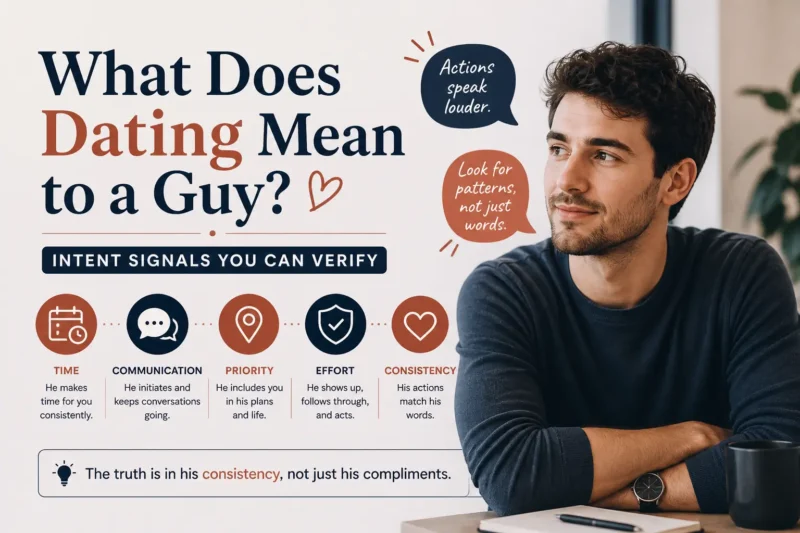
Certain patterns can suggest that a relationship is becoming more focused. You may be spending more time together, planning ahead, introducing each other to friends, talking openly about feelings, or naturally losing interest in dating other people.
Those signs matter, but they are not proof by themselves. Someone can be attentive and consistent while still believing the relationship is non-exclusive. Likewise, deleting a dating app or spending most weekends together does not create a mutual agreement unless you have actually discussed what those actions mean.
The strongest sign is not a behavior you have to decode. It is a conversation in which both people can clearly answer whether they are seeing other people and what boundaries they want going forward.
What does not prove that you are exclusive
It is easy to treat relationship milestones as evidence of exclusivity when they may only show closeness. Sleeping together, spending several nights a week together, meeting friends or family, taking a trip, exchanging affectionate messages, or making future plans can all happen before exclusivity is defined.
Likewise, phrases such as “I really like you,” “I’m not talking to anyone else right now,” or “I want to see where this goes” can be encouraging without being a complete agreement. If exclusivity matters to you, ask for language that is clear enough that neither person has to interpret it later.
Exclusive dating vs. boyfriend and girlfriend
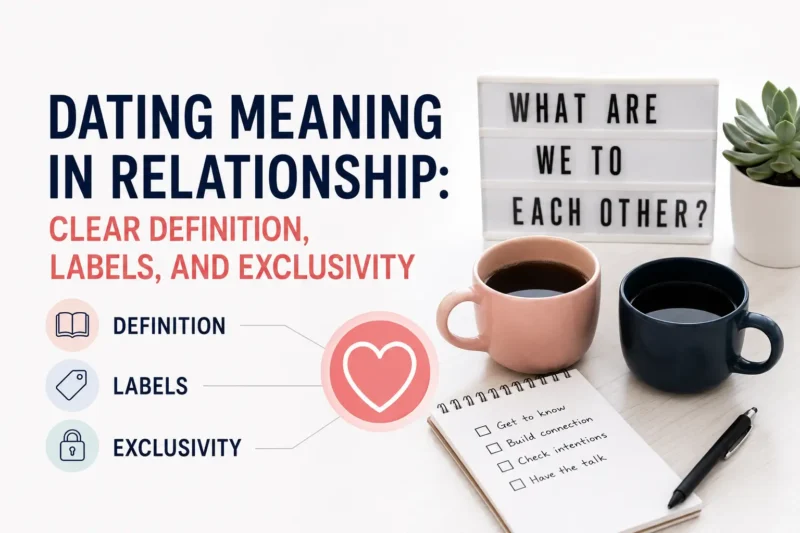
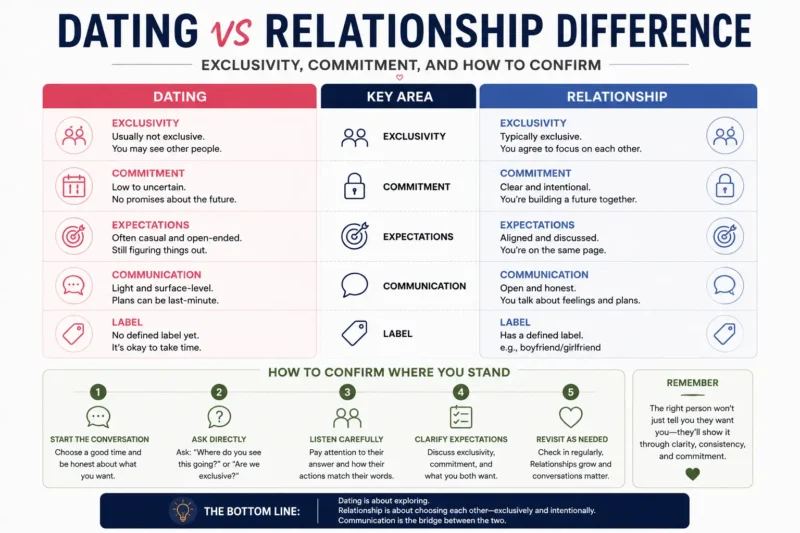
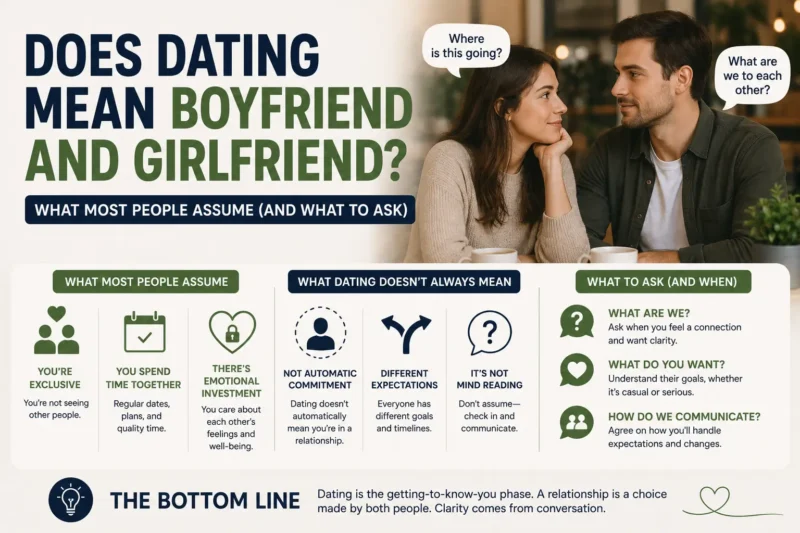
Exclusivity and relationship labels overlap, but they are not always the same milestone. Exclusive dating usually answers the question, “Are we seeing other people?” A boyfriend-and-girlfriend label usually answers a broader question: “What are we calling this relationship, and what expectations come with that label?”
If your main question is about the label itself, see Does Dating Mean Boyfriend and Girlfriend?. That page focuses on relationship status. This page focuses specifically on whether dating implies exclusivity.
Some couples make both decisions at once. Others become exclusive first and define the relationship later. What matters is that the sequence is understood by both people rather than assumed by one.
How to ask whether you are exclusive
You do not need a dramatic “define the relationship” speech. A short, direct conversation is usually clearer.
You could say: “I’m enjoying what we’re building, and I’m not interested in dating other people. How are you thinking about us—are you ready to be exclusive?”
Another option is: “I want to make sure we mean the same thing by dating. Are we both agreeing not to see other people?”
The wording matters less than the clarity. State what you want, ask what they want, and make sure the answer covers behavior as well as labels. If you both agree to exclusivity, it can help to clarify practical boundaries around dating apps, flirting, former partners, and what each of you considers crossing the line.
When should you have the exclusivity conversation?
There is no universal number of dates that makes exclusivity automatic. A better time to talk is when the answer has started to affect your choices.
That may be when you are becoming emotionally invested, when you have stopped wanting to date other people, when physical intimacy raises questions about boundaries, or when uncertainty is starting to make the relationship stressful.
You do not need to wait until you are anxious enough to demand an answer. Asking while things are going well can make the conversation calmer and more collaborative.
What if one person wants exclusivity and the other does not?
A mismatch is not something you can solve by pretending the conversation never happened. If one person wants an exclusive relationship and the other wants to continue dating other people, the important question becomes whether either person is genuinely comfortable with the arrangement.
You can say, “I respect that you are not ready for exclusivity, but I know I am looking for something exclusive. I need to decide whether continuing like this works for me.”
That is a boundary rather than an ultimatum. It lets both people make an informed choice instead of remaining in a situation built on different expectations.
What if you are exclusive but not official yet?
That can be a real relationship stage. You may have agreed not to date anyone else while still deciding whether you want the boyfriend/girlfriend label or a longer-term commitment.
If that stage works for both of you, it does not need to be rushed. But it should still be clear. Ask what exclusivity means now and when you expect to revisit the relationship label. Otherwise, “exclusive but undefined” can become another kind of uncertainty.
If both of you want to move toward a defined relationship, Mayobook’s step-by-step exclusivity plan can help you make that transition more deliberately.
The bottom line
Dating does not automatically mean exclusive. Exclusivity begins when both people agree that they are no longer dating or pursuing other romantic partners and understand the boundaries that come with that decision.
Look at actions for context, but do not make them carry the entire meaning of the relationship. If exclusivity matters to you, ask directly. A clear conversation is more reliable than weeks of trying to decode signals.