Comparison

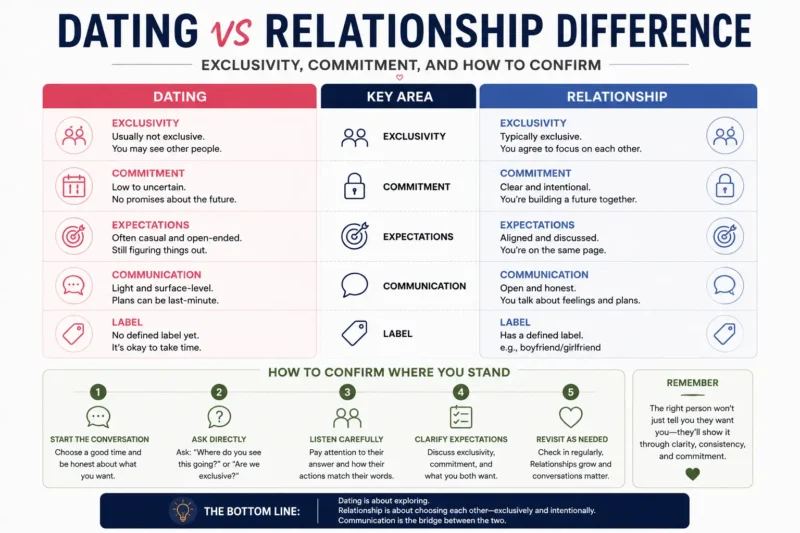
Dating vs Relationship Difference: Exclusivity, Commitment, and How to Confirm

A side-by-side guide to what you’re actually agreeing to—plus a simple way to confirm it.

Melissa 6 min readMay 25, 2026
Dating vs Relationship Difference: Exclusivity, Commitment, and How to Confirm
Quick verdict

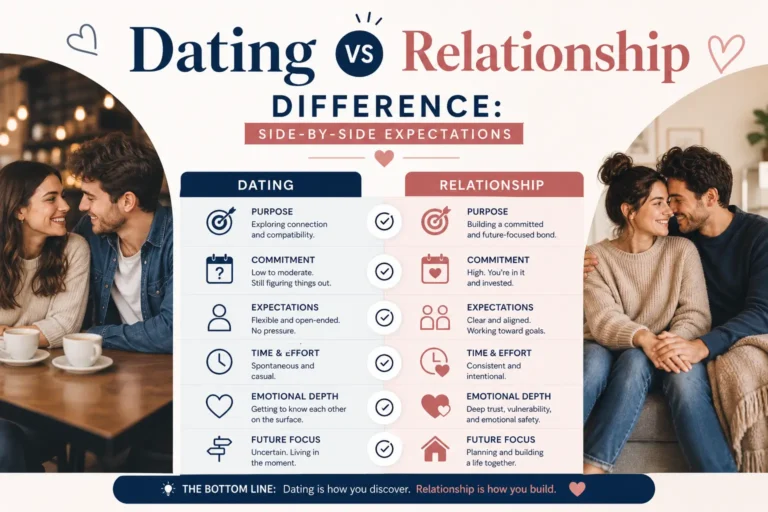
“Dating” usually means you’re spending time together to get to know each other, but the label can be flexible—sometimes exclusive, sometimes not. A “relationship” typically implies a shared understanding of commitment, expectations, and often exclusivity (though the exact boundaries vary). If you’re unsure, don’t rely on assumptions or social scripts. Look for clear signals: how you’re introduced, whether you’re planning as a unit, and whether you’ve discussed what “us” means. The fastest, kindest path is a calm, direct conversation that asks for the label and the boundaries behind it.

Quick context

People use “dating” and “relationship” interchangeably, but they don’t always mean the same thing. That mismatch is where confusion, mixed signals, and hurt feelings start—especially when one person thinks they’re moving toward a “boyfriend and girlfriend” situation while the other feels they’re still in the “dating meaning in relationship” gray zone. This comparison page helps you sort out the difference by focusing on the practical parts: exclusivity, commitment, public vs private signals, and what you can reasonably ask for. You’ll also get decision guidance for common scenarios, including what to do when you’re dating but want clarity, or when you’re in a relationship but the other person treats it like casual dating. Most importantly, you’ll learn how to confirm the status without pressure or games.

On this page

Start with what matters most

Best choice by situation

Which should you choose?

Start by separating two questions: what you are doing (spending time together) and what you’ve agreed to (the rules). “Dating vs relationship” often gets blurred because both can include affection, consistency, and effort. The difference is usually what’s been discussed and confirmed—especially exclusivity and commitment expectations.

If you want clarity, ask yourself what you need to feel secure. For many people, that’s exclusivity (“Are we seeing other people?”), transparency (“How do we handle social life and introductions?”), and investment (“Do we plan as a team sometimes, or is it always individual-first?”). If those answers are still uncertain, you’re likely still in the dating phase—even if it feels emotionally serious.

If you’ve already aligned on being a couple, then the relationship label is the natural next step. A relationship doesn’t guarantee perfect behavior, but it does mean there’s a shared baseline: you’re each other’s partner, you communicate more directly about boundaries, and you show up with reliability.

When you’re deciding how to go from dating to boyfriend girlfriend, timing matters less than alignment. A good approach is to bring the conversation back to shared definitions: “When you say we’re dating, what does that mean for exclusivity and commitment?” If your partner wants the same thing, you’ll both be able to name the next step. If they avoid specifics or keep the rules vague, that’s information. You can choose to continue dating only if your needs are genuinely met—or step back if they aren’t.

Finally, remember that “boyfriend and girlfriend relationship rules” aren’t universal. The best-fit choice is the one that matches your goals and the boundaries you both can uphold with respect.

Build the full picture

Use these connected pages to deepen context, compare alternatives, and move confidently toward the right next step.

Choose your next step

Decision-focused questions

FAQ

Does dating mean boyfriend and girlfriend?

Not automatically. “Dating” can be casual or it can be exclusive, depending on what you’ve agreed to. Some couples date exclusively before they use the boyfriend and girlfriend label; others keep dating open-ended. The only reliable way to know is to ask directly what exclusivity and commitment mean for you both.

What does dating meaning in relationship usually include?+

When people blur the terms, “dating meaning in relationship” often describes the emotional experience: regular time together, affection, and a sense of getting closer. But the label can still be unclear about rules—especially exclusivity, introductions, and future expectations. If your feelings are moving ahead of the agreement, it’s time to clarify the boundaries.

How do I go from dating to boyfriend and girlfriend?+

Start by aligning on definitions: ask whether you’re exclusive and how each of you views commitment. Then discuss what “official” means—how you’ll introduce each other, what you expect socially, and how you want to handle the future. If your partner is on the same page, the conversation should become easier, not more evasive.

What are common boyfriend and girlfriend relationship rules?+

There aren’t universal rules, but many couples agree on a baseline: exclusivity (or clear exceptions), honesty about intentions, respectful boundaries with other people, and consistent effort. You may also agree on how to communicate when conflicts happen and how to handle public vs private expectations. The best “rules” are the ones you both understand and can follow.

How can I confirm the status without sounding demanding?+

Keep it calm and specific. Use wording like, “Can we talk about what we mean by dating?” Then ask two clear questions: whether you’re exclusive and how you each see the relationship progressing. A caring partner will engage and clarify. If they dodge the questions repeatedly, that’s useful information.

What if we act like a couple but still call it dating?+

That’s a common source of frustration. Behavior can be consistent, but the label may stay vague to avoid commitment. If you feel uneasy, bring the conversation back to expectations: “What are we agreeing to?” If you want the relationship label for emotional security, you can ask for it. If they can’t or won’t align, you’ll need to decide what you can realistically accept.

Final thought

Dating and relationship aren’t just word choices—they’re shorthand for expectations, especially around exclusivity and commitment. If you’re unsure, don’t guess from vibes or social posts. Use a calm, direct conversation to confirm what “dating” means to them and whether you’re aligned on being a couple. When both people can name the rules, the connection feels safer and easier to build. If one person avoids clarity or keeps expectations fuzzy, that’s not a small detail—it’s the real answer. Choose the option that matches your goals, not the one that only sounds hopeful.

Explore the full topic