
Marcus Aurelius on Ego, Status, and Power: How Not to Become ‘Caesarified’
Marcus Aurelius occupied the highest status in Rome yet repeatedly warned himself against becoming ‘Caesarified.’ His reflections on praise, luxury, reputation, office, and mortality reveal a Stoic attempt to hold power without letting power become identity.

Keep Learning—Listen Free
Short, practical audiobooks for your next step.

Imposter Syndrome: Why Success Still Makes You Feel Like a Fraud | Full Audiobook
Imposter syndrome can make real success feel undeserved and every new achievement…

How to Stop Catastrophizing: Break the Worst-Case Thinking Loop | Full Audiobook
Learn how to stop catastrophizing and break the worst-case thinking loop that…

Emotionally Immature Parents: How Their Patterns Shape Your Adult Life | Full Audiobook
Emotionally immature parents can shape adult relationships, boundaries, self-worth and the way…

High-Functioning Anxiety: Why You Look Fine but Never Feel at Peace | Full Audiobook
High-functioning anxiety can make you look calm, capable and successful while constant…

The Art of War Explained: Sun Tzu’s Strategy for Winning Without Fighting | Full Audiobook
The Art of War, Sun Tzu, Art of War explained, strategy, winning…

Arthur Schopenhauer: Why You’re Never Satisfied — The Psychology of Desire | Full Audiobook
Arthur Schopenhauer, Schopenhauer philosophy, the psychology of desire, hedonic adaptation, the hedonic…

Friedrich Nietzsche: What “God Is Dead” Really Means — And How to Create Meaning | Full Audiobook
Friedrich Nietzsche, “God is dead,” Nietzsche philosophy, nihilism, existentialism, the meaning of…

High Agency: How to Become the Person Who Always Finds a Way | Full Audiobook
High agency is the psychology of becoming resourceful, taking initiative, and creating…

How to Find Your Purpose When You Feel Lost: Build a Life That Actually Means Something
Learn how to find your purpose when you feel lost, discover what…
Marcus Aurelius had an unusually direct reason to think about ego: almost everyone around him had incentives to treat him as extraordinary. He was emperor, commander in chief, chief patron, legal authority, dynastic center, and one of the most visible people in the Roman world. Meditations repeatedly shows him trying to reduce the moral importance of those facts.
Marcus Aurelius Feared What Power Could Do to Character
Marcus warns himself against vanity, praise, luxury, anger, reputation, and the deformation of character that can come from imperial life. The striking feature is that he does not assume philosophical education has made him immune. He keeps rehearsing the warning because status exerts pressure continuously.
For Stoicism, rank is an external. It can create responsibilities and practical influence, but it cannot by itself make a person wise, courageous, just, or temperate.
‘Do Not Be Caesarified’ in Context
One of Marcus’s most memorable self-warnings is commonly translated as a caution not to become “Caesarified” or dyed by the purple. English wording varies, but the image is clear: imperial office can seep into identity until the role begins to define the person morally.
The warning appears in Meditations, Book VI, section 30. Readers can examine it in the George Long translation preserved by MIT’s Internet Classics Archive. Marcus is not arguing that office itself is corrupting or that responsibility should be abandoned; he is warning himself not to let imperial prestige rewrite his judgment or conduct.
The warning is powerful because it comes from someone who cannot simply stop being emperor. Stoicism does not require Marcus to abandon office. It requires him to remember that the office remains a role to be used, not the good itself.
Rank and Reputation Are Externals
Stoics can reasonably prefer a useful reputation when credibility helps fulfill duties. An emperor needs legitimacy. A doctor needs trust. A business needs a good name. The mistake is treating reputation as proof of virtue.
This distinction becomes easier to apply when reputation is treated as a resource rather than an identity. Mayobook’s reference on preferred indifferents in Stoicism explains how an advantage such as status can be worth using responsibly without becoming a substitute for wisdom, justice, or self-command.
Once status becomes moral identity, criticism feels like injury to the self. Leaders may begin suppressing bad news, surrounding themselves with flatterers, or making decisions designed to preserve prestige rather than serve the actual problem.
Praise Cannot Make a Choice Better
Marcus repeatedly points out how brief fame is. Admirers die. The people remembering them die. Future generations change their judgments. This does not make feedback worthless. It makes applause a poor moral measuring instrument.
Useful feedback contains information. Praise contains evaluation. Stoic judgment asks what part is true and relevant, then refuses to let social approval transform into ethical authority.
Imperial Comfort vs Temperance
Ancient sources and Marcus’s own writing support an image of someone suspicious of luxury, though later biography can idealize imperial austerity. The philosophically important point is not whether Marcus lived like a poor man—he did not—but whether comfort remained subordinate to duty.
Temperance is not poverty theater. A leader can use excellent tools, housing, travel, or staff without confusing privilege with personal superiority. The moral problem begins when access becomes entitlement and entitlement makes ordinary limits feel insulting.
Power as Responsibility Rather Than Personal Importance
Marcus’s social Stoicism treats humans as made for cooperation and justice. Power therefore enlarges the field of responsibility. The more a decision affects other people, the less adequate private serenity becomes as a measure of leadership.
A Stoic ruler should ask: who bears the cost, what does justice require, what facts are being filtered by hierarchy, and which personal preference is masquerading as public necessity?
Status Creates Information Problems
Power changes what people tell you. Employees soften bad news. Followers reward certainty. Friends may become cautious. Audiences repeat flattering narratives. Marcus’s warning against Caesarification can therefore be read as an epistemic problem as well as a moral one.
A powerful person needs deliberate systems for hearing disagreement. Otherwise status does not merely inflate ego; it damages access to reality.
Where the Ideal Meets the Emperor’s Actual Record
Private warnings do not prove perfect public conduct. Marcus conducted long wars on Rome’s northern frontier. Christians suffered persecution in some regions during his reign, though his personal responsibility for particular episodes is debated. He elevated Commodus, whose later rule badly damaged the dynasty’s reputation.
These facts should not be erased to preserve the philosopher-emperor image. They show why self-awareness is not the same thing as infallibility. A person can understand the dangers of status and still make consequential errors within power.
A Status Check for Modern Life
- Title: If the role disappeared tomorrow, which values would remain?
- Praise: Am I seeking useful feedback or reassurance that I am important?
- Expertise: When did I last change my mind because someone with less status had better evidence?
- Visibility: Would I still do this if nobody could see it?
- Promotion: Which principle am I tempted to trade for advancement?
- Followers: Am I treating reach as proof of truth?
- Power: Who pays when I make a mistake?
Ambition Is Not Automatically Un-Stoic
Stoicism does not require rejecting advancement. You can seek promotion, influence, expertise, or a larger platform because they provide better tools for worthwhile work. The discipline is to keep the objective conditional on virtue.
If advancement requires dishonesty, exploitation, or surrender of judgment, the price has become morally larger than the external gain.
For the wider Marcus Aurelius framework behind ego, status, virtue, and the responsible use of power, continue with Think Like Marcus Aurelius.
Hold the Role; Do Not Let the Role Hold You
Marcus Aurelius’s warning about Caesarification survives because the mechanism is familiar even when the purple robe is gone. Titles, wealth, followers, credentials, and influence can begin as tools and end as identities that demand protection.
The Stoic alternative is stewardship: use the role, listen past the flattery, remember mortality, accept legitimate criticism, and keep the moral measure of a life somewhere status cannot reach.
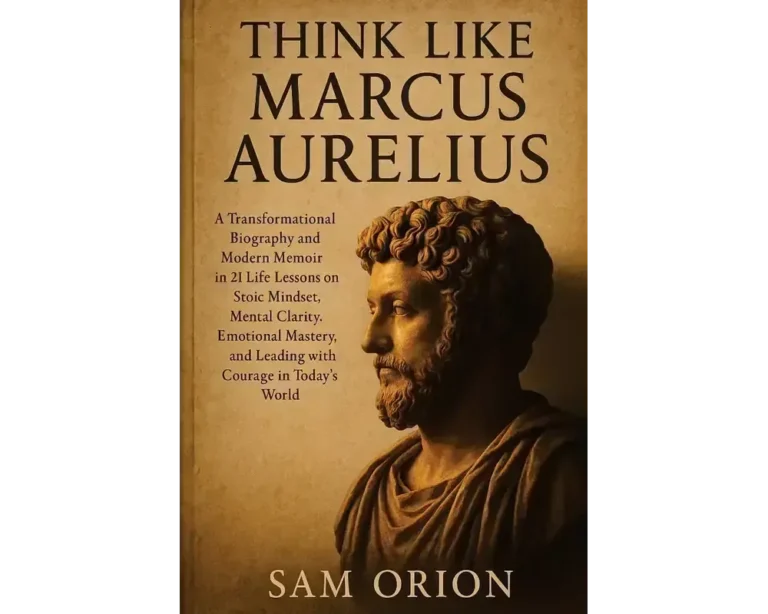
Want the complete system?
Explore the full book for a deeper, structured guide.
Think Like Marcus Aurelius
Discover timeless Stoic wisdom reimagined for the modern world. Think Like Marcus Aurelius blends biography and memoir to deliver 21 powerful life lessons on…
View the BookMore in Mindset & Self-Growth
View category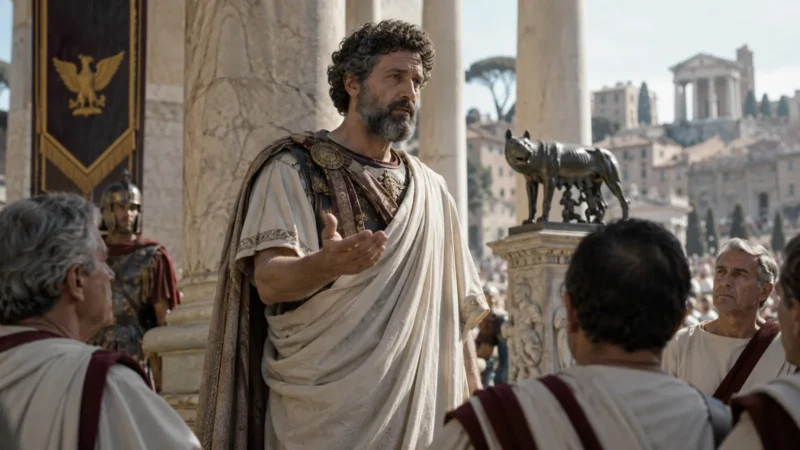
Marcus Aurelius’ Accomplishments: Emperor, Philosopher, and Stoic
Marcus Aurelius is remembered for Meditations and the ideal of the philosopher-emperor, but his record also includes frontier defense, administration through plague and revolt, and difficult choices that complicate the legend.
Keep exploring

Money, Business & Personal Growth
See the wider Mayobook topic hub with guides, answers, comparisons, and books.
Explore the topic
Marcus Aurelius Biography: The Life of Rome’s Philosopher-Emperor
Go deeper with a longer structured guide connected to this topic.
View guide