
Marcus Aurelius and the Marcomannic Wars: The Emperor on the Frontier
The Marcomannic Wars were not a single battle but a prolonged frontier crisis that consumed much of Marcus Aurelius’s later reign. Here is what happened, why Rome struggled, and how the wars shaped the world in which Meditations was written.
Keep Learning—Listen Free
Short, practical audiobooks for your next step.

Imposter Syndrome: Why Success Still Makes You Feel Like a Fraud | Full Audiobook
Imposter syndrome can make real success feel undeserved and every new achievement…

How to Stop Catastrophizing: Break the Worst-Case Thinking Loop | Full Audiobook
Learn how to stop catastrophizing and break the worst-case thinking loop that…

Emotionally Immature Parents: How Their Patterns Shape Your Adult Life | Full Audiobook
Emotionally immature parents can shape adult relationships, boundaries, self-worth and the way…

High-Functioning Anxiety: Why You Look Fine but Never Feel at Peace | Full Audiobook
High-functioning anxiety can make you look calm, capable and successful while constant…
The Art of War Explained: Sun Tzu’s Strategy for Winning Without Fighting | Full Audiobook
The Art of War, Sun Tzu, Art of War explained, strategy, winning…

Arthur Schopenhauer: Why You’re Never Satisfied — The Psychology of Desire | Full Audiobook
Arthur Schopenhauer, Schopenhauer philosophy, the psychology of desire, hedonic adaptation, the hedonic…

Friedrich Nietzsche: What “God Is Dead” Really Means — And How to Create Meaning | Full Audiobook
Friedrich Nietzsche, “God is dead,” Nietzsche philosophy, nihilism, existentialism, the meaning of…

High Agency: How to Become the Person Who Always Finds a Way | Full Audiobook
High agency is the psychology of becoming resourceful, taking initiative, and creating…

How to Find Your Purpose When You Feel Lost: Build a Life That Actually Means Something
Learn how to find your purpose when you feel lost, discover what…
Marcus Aurelius is remembered today as the emperor who wrote Meditations. To many of his contemporaries, however, he was also the emperor who spent years confronting a severe military crisis along Rome's Danube frontier. The Marcomannic Wars, fought in overlapping phases from the later 160s until Marcus's death in 180, involved the Marcomanni, Quadi, Sarmatian groups including the Iazyges, and other peoples north of the empire. They were not one campaign and not a simple Rome-versus-“barbarians” story. They were a prolonged struggle shaped by migration, diplomacy, disease, manpower shortages, and the limits of Roman frontier power.
Why the Marcomannic Wars Mattered to Marcus Aurelius
The wars mattered because they brought danger unusually close to Italy and required sustained imperial attention. Rome had faced northern enemies before, but the pressure of the 160s and 170s arrived while the empire was already dealing with the aftermath of war in the East and the Antonine Plague. Marcus's later reign became inseparable from military mobilization, diplomacy, recruitment, fiscal strain, and long absences from Rome.
The conflict also matters for readers of Meditations. Some parts of the work carry location headings associated with the northern campaigning world, including the Quadi and Carnuntum. Those headings do not let us date every entry precisely, but they remind us that at least part of Marcus's private philosophy was written amid frontier command rather than in peaceful retirement.
Rome’s Danube Frontier Before the Crisis
The Danube was not a hard cultural wall separating a stable Rome from a single hostile population. Communities on both sides traded, negotiated, fought, migrated, served as allies, and responded to pressures farther north and east. Roman strategy depended on forts, roads, provincial armies, diplomatic arrangements, client relationships, and the ability to project force beyond the formal border.
By the mid-second century, movements of peoples and competition beyond the frontier increased pressure on groups closer to Roman territory. At the same time, Roman forces had been heavily committed to the Parthian War. The epidemic usually called the Antonine Plague further strained manpower. These factors did not mechanically “cause” the Marcomannic Wars, but they help explain why a frontier system that had often been managed through force and diplomacy became much harder to stabilize.
From Invasion to Counteroffensive
| Period | Development | Why it mattered |
|---|---|---|
| Late 160s | Pressure and incursions intensify along the Danube | Rome faces northern instability while recovering from eastern war and epidemic |
| c. 169–171 | Major invasions penetrate Roman provinces; fighting reaches northern Italy | The crisis demonstrates that the frontier can no longer be treated as a distant problem |
| Early–mid 170s | Roman armies regain the initiative through campaigns against the Marcomanni, Quadi, and others | Marcus spends extended periods near the frontier |
| 175 | Avidius Cassius revolts in the East | The northern effort is interrupted by an internal political emergency |
| Late 170s | Renewed campaigning in the north | Marcus seeks a more durable settlement before his death in 180 |
Ancient sources preserve dramatic episodes, including stories of miraculous rain and desperate battles. Such accounts need careful handling because later religious and political traditions could reshape how events were remembered. The larger chronology is more secure than every anecdote attached to it.
Marcus Aurelius as a Wartime Emperor
Marcus's role was not simply that of a philosopher watching generals fight. Roman emperors were central to military legitimacy, appointments, diplomacy, finance, rewards, and strategic direction. Marcus spent substantial time near the theater of operations and worked through experienced commanders and provincial structures rather than personally performing every tactical act later legend might attribute to him.
The wars also forced difficult resource choices. Recruiting and maintaining armies during epidemic and economic disruption was expensive. Ancient reports describe extraordinary measures, some of which are difficult to quantify precisely. What is clear is that the frontier crisis demanded sustained mobilization and reshaped the priorities of the reign.
The Frontier World Behind Meditations
Readers sometimes imagine Meditations as a calm book written in a philosophical study. Its actual setting is more complicated. Internal headings associate portions of the text with places connected to the northern campaigns, including Carnuntum and territory among the Quadi. Scholars remain cautious about reconstructing a neat composition timeline from these clues.
Still, the context changes how several recurring themes sound. Marcus's reflections on death, difficult people, fatigue, duty, bodily discomfort, reputation, and the shortness of life were not written by someone insulated from administration and war. That does not prove that a specific passage was triggered by a specific battle. It does show that philosophical self-discipline and imperial crisis occupied the same life. Readers who want to connect that historical setting with the wider practical philosophy can continue with Think Like Marcus Aurelius.
War, Plague, Captivity, and Pressure on the Empire
The human cost cannot be reduced to Marcus's personal resilience. Frontier warfare meant deaths, displacement, captivity, damaged settlements, requisitions, and military burdens for populations across the region. Roman campaigns also inflicted violence beyond the imperial border. The Antonine Plague overlapped with these pressures, complicating recruitment, logistics, and economic life.
A balanced account therefore avoids turning the wars into a motivational backdrop for a Stoic hero. Marcus was defending an imperial system through warfare. His private ethics of justice and common humanity existed alongside the coercive realities of Roman rule—a tension worth preserving rather than resolving too neatly.
What Marcus Left Unfinished in 180
Marcus died in 180 while the northern conflict was still active. Commodus, already co-emperor and his legitimate successor, soon pursued a settlement and returned attention toward Rome. Later writers often present this as an obvious abandonment of Marcus's near-complete plan for permanent conquest. The counterfactual is less certain than that narrative suggests. We cannot know exactly what Marcus would have achieved or how sustainable further annexation would have been.
What can be said is that Marcus's death ended his personal direction of the campaigns and that Commodus adopted a different strategic and political course.
The Philosopher-Emperor Was Also a Frontier Commander
The Marcomannic Wars complicate the easy image of Marcus Aurelius. He was not only a reader of Epictetus or a writer of private maxims. He was the head of an empire fighting prolonged wars under demographic, fiscal, and political pressure. Reading him in that setting makes Meditations less like a book of timeless slogans and more like the working notes of a ruler trying—imperfectly—to govern himself while governing through power.
Want the complete system?
Explore the full book for a deeper, structured guide.
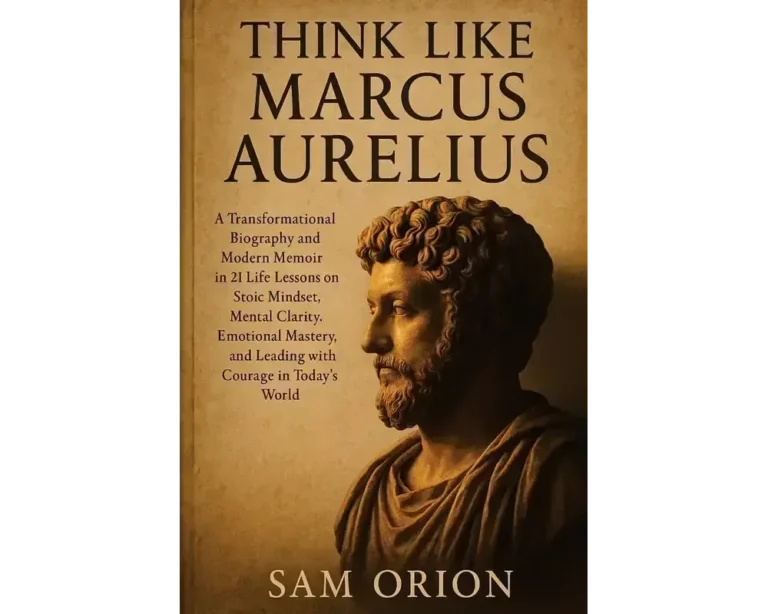
Think Like Marcus Aurelius
Discover timeless Stoic wisdom reimagined for the modern world. Think Like Marcus Aurelius blends biography and memoir to deliver 21 powerful life lessons on…
View the BookKeep exploring

Money, Business & Personal Growth
See the wider Mayobook topic hub with guides, answers, comparisons, and books.
Explore the topic
Stoic Journaling Like Marcus Aurelius: A Practical Guide to Daily Reflection
Go deeper with a longer structured guide connected to this topic.
View guide