
People-Pleasing Recovery: How to Rebuild Boundaries, Self-Trust, and Your Voice
People-pleasing recovery is the process of replacing automatic approval-seeking with honest choice. Follow a practical roadmap for pausing before yes, rediscovering preferences, setting boundaries, tolerating guilt, rebuilding self-trust, and creating more reciprocal relationships.

Keep Learning—Listen Free
Short, practical audiobooks for your next step.

Imposter Syndrome: Why Success Still Makes You Feel Like a Fraud | Full Audiobook
Imposter syndrome can make real success feel undeserved and every new achievement…

How to Stop Catastrophizing: Break the Worst-Case Thinking Loop | Full Audiobook
Learn how to stop catastrophizing and break the worst-case thinking loop that…

Emotionally Immature Parents: How Their Patterns Shape Your Adult Life | Full Audiobook
Emotionally immature parents can shape adult relationships, boundaries, self-worth and the way…

High-Functioning Anxiety: Why You Look Fine but Never Feel at Peace | Full Audiobook
High-functioning anxiety can make you look calm, capable and successful while constant…

The Art of War Explained: Sun Tzu’s Strategy for Winning Without Fighting | Full Audiobook
The Art of War, Sun Tzu, Art of War explained, strategy, winning…

Arthur Schopenhauer: Why You’re Never Satisfied — The Psychology of Desire | Full Audiobook
Arthur Schopenhauer, Schopenhauer philosophy, the psychology of desire, hedonic adaptation, the hedonic…

Friedrich Nietzsche: What “God Is Dead” Really Means — And How to Create Meaning | Full Audiobook
Friedrich Nietzsche, “God is dead,” Nietzsche philosophy, nihilism, existentialism, the meaning of…

High Agency: How to Become the Person Who Always Finds a Way | Full Audiobook
High agency is the psychology of becoming resourceful, taking initiative, and creating…

How to Find Your Purpose When You Feel Lost: Build a Life That Actually Means Something
Learn how to find your purpose when you feel lost, discover what…
People-pleasing recovery is not about becoming harder, colder, or less generous. It is about restoring choice. Instead of automatically organizing your life around other people’s approval, you learn to notice what you want, check what you can realistically give, communicate limits, tolerate ordinary disappointment, and trust yourself enough to make decisions without collecting permission from everyone around you.
Recovery rarely happens in one dramatic moment. It usually develops through repeated small experiences: pausing before saying yes, noticing resentment earlier, stating a preference, surviving someone else’s disappointment, and discovering that a healthy relationship can tolerate difference.
Start by identifying the real cost of people-pleasing
People-pleasing often survives because it works in the short term. Saying yes may prevent an awkward conversation. Apologizing may reduce tension. Overhelping may bring praise. Staying quiet may avoid criticism.
The cost often appears later:
- overcommitment and exhaustion;
- resentment after repeated unwanted yeses;
- difficulty knowing what you actually prefer;
- anxiety when other people are disappointed;
- relationships built around your usefulness rather than mutuality;
- loss of confidence in your own decisions;
- cycles of overgiving followed by withdrawal.
Recovery begins when the long-term cost becomes more important than the short-term relief.
Stage 1: Pause before the automatic yes
The most practical early change is also one of the smallest: stop answering requests immediately when no immediate answer is required.
Try:
- “Let me check my schedule.”
- “I need to think about that.”
- “Can I get back to you tomorrow?”
- “I am not sure yet.”
This pause matters because chronic people-pleasing often happens faster than conscious preference. Time gives your own needs a chance to enter the decision.
Stage 2: Relearn your preferences
Many chronic people-pleasers say, “I do not even know what I want anymore.” That is not unusual after years of scanning everyone else first.
Start with low-stakes choices. Which restaurant sounds good to you? Do you want company or quiet tonight? Would you prefer to leave at 8 or 10? Which task do you want to do first?
The goal is not to become rigid about every preference. It is to prove that your internal experience deserves a place in the decision.
Stage 3: Separate kindness from obligation
Before helping, ask three questions:
- Do I genuinely want to help?
- Do I realistically have the capacity?
- Am I saying yes mainly to avoid guilt, rejection, or conflict?
A generous act can involve inconvenience and still be freely chosen. The warning sign is when “no” does not feel psychologically available.
Stage 4: Practice boundaries in small doses
Boundaries are easier to learn through repetition than through one giant confrontation. Start with specific limits you can actually maintain:
- “I cannot take calls after 9 p.m.”
- “I can help for one hour.”
- “I am not available this weekend.”
- “Please ask before borrowing that.”
- “I can take this project, but then the other deadline needs to move.”
Cleveland Clinic recommends starting small when changing people-pleasing patterns and identifies assertiveness, self-confidence, and self-care as useful areas of work. Research on assertiveness training, although conducted in specific populations such as healthcare professionals and psychiatric patients, also supports the broader idea that assertive communication skills can be learned and practiced rather than treated as fixed personality traits.
Stage 5: Learn to tolerate guilt without obeying it
A boundary can be reasonable and still feel wrong. That is one of the hardest parts of recovery.
When guilt appears, ask:
- Did I actually harm someone?
- Did I break a commitment I had clearly made?
- Or did I simply disappoint someone by having a limit?
Guilt after setting a boundary is not automatically evidence that the boundary was selfish. Sometimes it is simply the emotional residue of an old rule: “Good people never disappoint anyone.”
Stage 6: Rebuild self-trust
Self-trust grows when your actions repeatedly show that your judgment matters.
Choose one small decision each day without polling several people for approval. Keep one promise to yourself. Notice when you change an answer only because someone seems unhappy. Review decisions based on your values and available information rather than on whether everyone approved.
Self-compassion can support this process. Reviews of the literature have found that self-compassion is generally associated with healthier close-relationship functioning, constructive conflict behavior, and more secure attachment patterns. A large 2025 systematic review also identified repetitive negative thinking and experiential avoidance as important mechanisms connecting self-compassion with psychological outcomes, although much of the evidence remains observational.
Stage 7: Expect relationships to adjust
When you change a long-standing role, other people have to recalibrate. Someone who is used to instant availability may ask why you are suddenly saying no. A friend may be disappointed. A coworker may need to take back responsibility you quietly absorbed.
Pushback does not automatically mean the boundary is wrong. At the same time, recovery should not become an excuse for rigid or punitive behavior. Healthy boundaries still allow dialogue, negotiation, flexibility, apology when you cause harm, and genuine generosity.
Stage 8: Let some relationships become more reciprocal
People-pleasing can make relationships look harmonious while hiding important information. If you never express preferences, the other person may know only the agreeable version of you.
Recovery allows more honest reciprocity. You can ask for help rather than hoping someone notices. You can disagree without threatening the whole relationship. You can give because you want to, not because you fear what will happen if you do not.
What progress actually looks like
Progress is not measured by how often you say no. Useful signs include:
- you pause before committing;
- you know what you prefer more often;
- you explain boundaries less defensively;
- you can tolerate temporary guilt;
- you recover faster after a people-pleasing slip;
- you ask directly for what you need;
- you notice resentment earlier;
- you can let someone be disappointed without rushing to repair their mood.
When extra support can help
Consider professional support when people-pleasing is tied to severe anxiety, trauma symptoms, unsafe relationships, depression, panic, significant impairment, or a persistent inability to identify and protect basic needs. A therapist can help assess what is maintaining the pattern and tailor treatment to the actual problem rather than to an internet label.
A practical 30-day recovery experiment
You do not need to change your entire personality. For the next month, try four repeatable practices:
- Pause once a day before answering a non-urgent request.
- Name one preference without apologizing for having it.
- Keep one small boundary even if mild guilt appears.
- Review the result: what did you fear, what actually happened, and what did you learn?
That is how self-trust grows: not from waiting until boundaries feel comfortable, but from gathering evidence that you can survive normal disagreement and still remain caring.
Recovery means becoming more honest, not less kind
The opposite of people-pleasing is not selfishness. It is a more sustainable form of relationship in which your needs and another person’s needs can both exist. You can be generous without being permanently available, caring without becoming responsible for every emotion, and connected without disappearing inside the relationship.
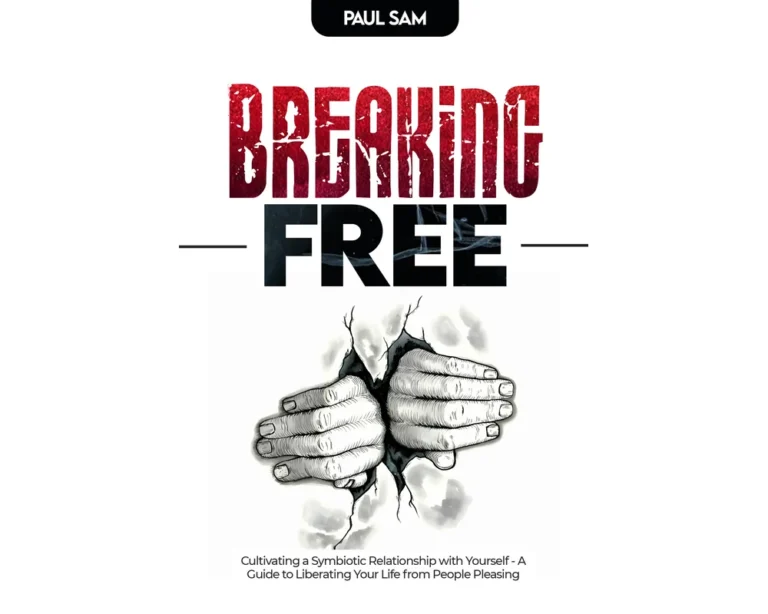
For a structured self-help path, Breaking Free: A Guide to Liberating Your Life from People Pleasing explores boundaries, approval-seeking, self-respect, and identity in greater depth. Use it as one resource within a broader recovery process.
For a complementary Mayobook resource on rebuilding inner safety and emotional strength, see Self Healing Practices: Rebuild Your Inner Safety and Emotional Strength. You can also explore the Self-Help, Habits & Life Mastery topic hub for related guidance.
Sources and evidence
Want the complete system?
Explore the full book for a deeper, structured guide.
Breaking Free: A Guide to Liberating Your Life from People Pleasing
Discover how to end the exhausting cycle of people-pleasing and reclaim your life with clarity, courage and self-love. In Breaking Free: Cultivating a Symbiotic…
View the BookMore in Boundaries
View category
Self Healing Practices: Rebuild Your Inner Safety and Emotional Strength
A deeply human, science-informed guide to self healing practices that help you calm your nervous system, release stored pain, and rebuild inner safety and emotional strength from within.

People-Pleasing and Resentment: Why Saying Yes Can Turn Into Anger
People-pleasing can create resentment when repeated yeses hide unspoken limits and expectations. Learn why the cycle develops, how to recognize it early, and how to replace fearful overgiving with clearer boundaries and honest requests.