
People-Pleasing and Resentment: Why Saying Yes Can Turn Into Anger
People-pleasing can create resentment when repeated yeses hide unspoken limits and expectations. Learn why the cycle develops, how to recognize it early, and how to replace fearful overgiving with clearer boundaries and honest requests.

Keep Learning—Listen Free
Short, practical audiobooks for your next step.

High-Functioning Anxiety: Why You Look Fine but Never Feel at Peace | Full Audiobook
High-functioning anxiety can make you look calm, capable and successful while constant…

The Art of War Explained: Sun Tzu’s Strategy for Winning Without Fighting | Full Audiobook
The Art of War, Sun Tzu, Art of War explained, strategy, winning…

Arthur Schopenhauer: Why You’re Never Satisfied — The Psychology of Desire | Full Audiobook
Arthur Schopenhauer, Schopenhauer philosophy, the psychology of desire, hedonic adaptation, the hedonic…

Friedrich Nietzsche: What “God Is Dead” Really Means — And How to Create Meaning | Full Audiobook
Friedrich Nietzsche, “God is dead,” Nietzsche philosophy, nihilism, existentialism, the meaning of…

High Agency: How to Become the Person Who Always Finds a Way | Full Audiobook
High agency is the psychology of becoming resourceful, taking initiative, and creating…

How to Find Your Purpose When You Feel Lost: Build a Life That Actually Means Something
Learn how to find your purpose when you feel lost, discover what…

How to Be Happy Alone Without Feeling Lonely: The Psychology of Emotional Independence
Learn how to be happy alone without feeling lonely and build emotional…

How to Stay Unbothered When People Disrespect You: The Psychology of Unshakable Self-Respect
How to deal with disrespect without losing your peace, confidence, or self-respect…

How to Learn Anything: Self-Education in the Age of AI | Full Audiobook
How to learn anything, become self-educated, and think for yourself in the…
People-pleasing can turn into resentment when your outward yes repeatedly hides an inward no. The problem is not generosity itself. Healthy relationships often involve sacrifice, compromise, and helping. Resentment tends to build when giving is driven by fear, obligation, or avoidance and the person keeps suppressing needs they never clearly communicate.
This is why people-pleasing resentment can feel confusing. You may be the one who volunteered, agreed, stayed late, lent the money, listened for hours, or said “it’s fine.” Yet later you feel angry that no one noticed the cost. The emotional logic is understandable: part of you expected the sacrifice to be recognized, reciprocated, or rewarded even though the expectation was never openly negotiated.
The people-pleasing-to-resentment cycle
A common cycle looks like this:
- Someone asks for something.
- You notice reluctance but quickly predict conflict, guilt, disappointment, or rejection if you refuse.
- You say yes before checking your real capacity.
- You absorb the cost in time, energy, money, or emotional labor.
- You hope the other person will notice how much you are giving.
- They accept the help at face value because you said yes.
- You feel unseen, used, or taken for granted.
- You become irritable, withdrawn, sarcastic, or suddenly angry.
The cycle can repeat for months before anyone realizes what is happening.
Why motive matters
Relationship research suggests that sacrifice is not automatically good or bad. Studies led by Emily Impett and colleagues have found that sacrifices made for approach-oriented reasons—such as wanting to support a partner or strengthen the relationship—are associated with better outcomes than sacrifices made primarily to avoid conflict, guilt, or negative consequences. Avoidance-motivated sacrifice has been associated with poorer personal and relationship well-being.
That fits the people-pleasing pattern. Two people may do exactly the same favor, but the internal experience can be very different. One thinks, “I genuinely want to help.” The other thinks, “I have to do this or they will be upset with me.” The second response is more likely to create emotional debt.
Early signs resentment is building
Resentment usually announces itself before it explodes. Watch for patterns such as:
- feeling irritated when someone asks for a perfectly ordinary favor;
- thinking, “After everything I do for them…”;
- keeping a mental score of who gives more;
- fantasizing about disappearing so people cannot ask anything of you;
- agreeing while hoping the other person will insist you rest;
- sarcasm or passive-aggressive comments;
- dread before seeing someone you normally care about;
- feeling responsible for everyone but supported by no one;
- withdrawing without explaining why.
These signs do not automatically mean another person is exploiting you. They may indicate that your limits have not been communicated clearly enough—or that they have been communicated and repeatedly ignored. Those situations require different responses.
Resentment is information, not a verdict
Resentment can signal that something needs attention: an unfair workload, repeated boundary violations, unspoken expectations, or a habit of volunteering beyond your capacity. But the feeling alone does not prove who is at fault.
Sometimes people genuinely take advantage of chronic helpers. Other times they assume your yes means yes because you have trained the relationship to work that way. A more useful question than “Who is the bad person?” is “What agreement, expectation, or boundary is missing here?”
How hidden expectations make resentment worse
People-pleasing often contains an invisible contract: “I will make your life easier, and in return you will appreciate me, choose me, protect me, or eventually notice what I need without my asking.” The other person may never know this contract exists.
When the expected appreciation or reciprocity does not arrive, the sacrifice can start to feel unfair. That is why direct requests matter. If you need rest, help, appreciation, time, money repaid, or responsibilities shared, it is usually healthier to communicate the need than to keep giving until the other person guesses correctly.
Replace the automatic yes with a decision
Pause before answering
Use phrases such as, “Let me check what I have on my plate,” or, “I need to think about that before I commit.” A pause prevents anxiety from making the decision for you.
Check capacity, not just willingness
You can care about someone and still not have the time, money, energy, or emotional bandwidth to help in the requested way. Ask: What will this yes cost me tomorrow?
Negotiate instead of choosing between yes and no
Many requests have a middle option: “I cannot do the whole thing, but I can help for an hour,” or, “I cannot talk tonight, but I can check in tomorrow.” Sustainable help is often better than resentful overgiving.
Stop using long explanations to earn permission
A boundary does not need a courtroom defense. “I can’t take that on this week” is often enough. Excessive explanation can invite debate about whether your reason is good enough.
How to address resentment that already exists
If resentment has built up, disappearing or exploding may feel tempting. A more constructive conversation separates what happened from what you assumed.
Try this structure:
- Observation: “I have been taking most of the weekend errands.”
- Impact: “I am feeling overloaded and increasingly resentful.”
- Ownership: “I also realize I kept agreeing instead of saying I was at capacity.”
- Request: “I want us to divide these tasks differently starting this week.”
Taking responsibility for your silence does not require excusing another person's unfair behavior. Both things can be true: you may need clearer boundaries, and someone else may need to respect them.
When resentment points to exploitation
A healthy relationship can survive a reasonable no. The other person may feel disappointed, but they can usually negotiate, adapt, or hear your limit. Repeated guilt-tripping, threats, punishment, coercion, financial control, humiliation, or retaliation are different. If saying no creates genuine safety concerns, prioritize support and safety planning rather than trying to become better at boundary scripts.
Prevent resentment by making generosity voluntary
The goal is not to stop helping. It is to make help more honest. Before agreeing, ask:
- Would I still want to do this if nobody praised me?
- Am I hoping this favor will secure love or prevent conflict?
- Do I have the capacity?
- Can I say no without believing I am a bad person?
- If I say yes, can I give without keeping an invisible score?
A genuine yes tends to create less emotional debt than a fearful yes.
From resentment to clearer relationships
Resentment often decreases when expectations become visible and choices become more honest. You may still help a lot. You may still compromise. But the difference is that generosity comes from willingness rather than self-erasure.
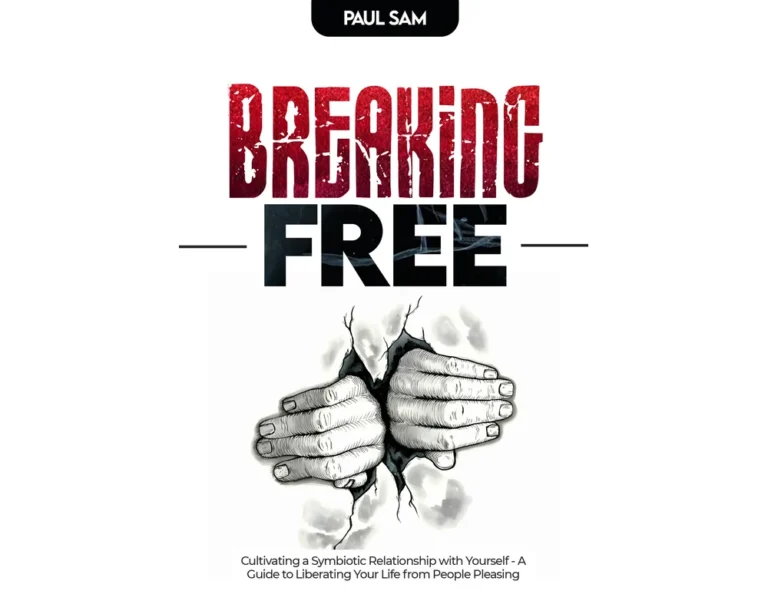
For the wider recovery process, Breaking Free: A Guide to Liberating Your Life from People Pleasing offers a structured path for reducing approval-seeking and building healthier limits. The broader Mayobook cluster also explores boundaries, guilt, burnout, friendship imbalance, and self-trust as separate but related parts of recovery.
Sources and evidence
Want the complete system?
Explore the full book for a deeper, structured guide.
Breaking Free: A Guide to Liberating Your Life from People Pleasing
Discover how to end the exhausting cycle of people-pleasing and reclaim your life with clarity, courage and self-love. In Breaking Free: Cultivating a Symbiotic…
View the Book