
Marcus Aurelius and Commodus: Father, Son, Emperor—and the Problem of Succession
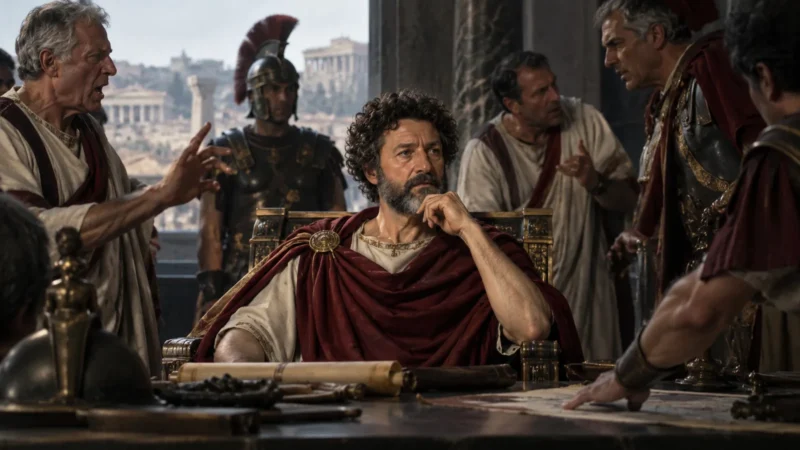
Marcus Aurelius did not choose Commodus in a last-minute mistake. His biological son had been positioned for power for years and became co-emperor before Marcus died. The real succession problem is more complex than the Gladiator version.
Keep Learning—Listen Free
Short, practical audiobooks for your next step.

Imposter Syndrome: Why Success Still Makes You Feel Like a Fraud | Full Audiobook
Imposter syndrome can make real success feel undeserved and every new achievement…

How to Stop Catastrophizing: Break the Worst-Case Thinking Loop | Full Audiobook
Learn how to stop catastrophizing and break the worst-case thinking loop that…

Emotionally Immature Parents: How Their Patterns Shape Your Adult Life | Full Audiobook
Emotionally immature parents can shape adult relationships, boundaries, self-worth and the way…

High-Functioning Anxiety: Why You Look Fine but Never Feel at Peace | Full Audiobook
High-functioning anxiety can make you look calm, capable and successful while constant…

The Art of War Explained: Sun Tzu’s Strategy for Winning Without Fighting | Full Audiobook
The Art of War, Sun Tzu, Art of War explained, strategy, winning…

Arthur Schopenhauer: Why You’re Never Satisfied — The Psychology of Desire | Full Audiobook
Arthur Schopenhauer, Schopenhauer philosophy, the psychology of desire, hedonic adaptation, the hedonic…

Friedrich Nietzsche: What “God Is Dead” Really Means — And How to Create Meaning | Full Audiobook
Friedrich Nietzsche, “God is dead,” Nietzsche philosophy, nihilism, existentialism, the meaning of…

High Agency: How to Become the Person Who Always Finds a Way | Full Audiobook
High agency is the psychology of becoming resourceful, taking initiative, and creating…

How to Find Your Purpose When You Feel Lost: Build a Life That Actually Means Something
Learn how to find your purpose when you feel lost, discover what…
Few facts complicate Marcus Aurelius’s reputation more than the emperor who followed him. Commodus, his biological son, became one of Rome’s most notorious rulers in later historical memory. That makes the obvious question irresistible: how could the philosopher-emperor have chosen him? The answer begins by correcting the premise. Commodus was not a last-minute deathbed selection. He had been publicly prepared for succession for years and was already co-emperor before Marcus Aurelius died in 180.
Marcus Aurelius Really Did Make Commodus His Successor
Unlike the plot of Gladiator, Marcus did not secretly plan to replace Commodus with a virtuous general. Maximus is fictional. Commodus was Marcus’s son by Faustina the Younger and was incorporated into the imperial succession during his father’s lifetime.
By the time Marcus died, the legal and political path was clear. Commodus was not merely an heir awaiting a decision; he held imperial rank as co-emperor.
Why Biological Succession Returned After the Adoptive Emperors
The emperors from Nerva through Antoninus Pius are often described as proving a superior system in which each ruler “adopted the best man.” That summary is too neat. Several of those rulers did not have surviving biological sons available to inherit. Adoption was an important instrument of succession, but there was no constitutional Roman rule requiring emperors to bypass sons in favor of merit-based adult adoption.
Marcus therefore did not obviously violate a settled tradition by advancing Commodus. Dynastic succession remained politically powerful, and a biological son could provide legitimacy that an alternative candidate would have to contest.
Commodus Was Prepared for Power From Childhood
Commodus’s advancement began long before 180. He received imperial titles and public visibility while young, signaling that the dynasty expected him to occupy a central role. Such preparation mattered because succession in Rome was not simply a private family decision. Armies, senators, provincial elites, court networks, and the population of Rome all had interests in recognizing a credible future ruler.
Hindsight makes every early honor look like a step toward disaster. Contemporary actors did not possess the later history. A fair analysis must distinguish what Marcus could know then from what readers know about Commodus’s subsequent reign.
The Co-Emperor Years
In 177, Commodus was elevated to the rank of Augustus and became co-emperor with Marcus. This is decisive evidence against the idea of an unresolved deathbed succession. He participated in the imperial order before his father’s death and accompanied the wider political and military world of the northern campaigns.
Co-rule did not necessarily mean equal experience or influence, but it made the dynastic intention unmistakable.
What Choices Did Marcus Actually Have?
In theory, an emperor with immense authority could imagine alternatives. In practice, removing or bypassing a publicly elevated biological son could create serious political risks. Another adult candidate would need legitimacy, military support, and a plausible answer to why the emperor’s son had been displaced.
Could Marcus have done it? Counterfactual history cannot provide certainty. Perhaps another arrangement was possible. But the choice was not between “obviously bad son” and “safe meritocratic successor” in a neutral institution. Roman succession could trigger rivalry and civil war, and every alternative came with political costs.
What We Know—and Do Not Know—About the Father-Son Relationship
Ancient authors wrote about Commodus with the knowledge of what his reign became. Stories about Marcus worrying over his son’s character may preserve real tensions, but later moral narrative can sharpen them. We should be cautious about reconstructing private conversations, disappointment, diagnoses, or motives that the sources cannot securely establish.
Meditations itself is not a diary of family conflict. Its silence does not prove harmony, and scattered later stories do not give us direct access to Marcus’s private calculation.
Commodus’s Reign Changed How Posterity Judged Marcus
Commodus’s later rule made succession look like the great contradiction in Marcus’s life. A man remembered for judgment elevated a son remembered for poor rule. Yet outcomes can distort evaluation of the earlier decision. If Commodus had ruled competently, biological succession might attract far less criticism.
That does not excuse Marcus from responsibility. Succession was one of the most consequential decisions of his reign. It means the historical question should be framed carefully: Was the choice unreasonable given what Marcus knew and the institutions available, or did dynastic preference override warning signs he should have taken more seriously?
Was Choosing Commodus a Mistake?
From the standpoint of outcomes, the succession clearly damaged Marcus’s legacy and contributed to a difficult period for the empire. From the standpoint of decision-making under uncertainty, the judgment is harder. Dynastic legitimacy, the absence of a risk-free alternative, the dangers of civil conflict, and Commodus’s established public status all matter.
The strongest conclusion is not that Marcus had no choice or that he obviously chose correctly. It is that the decision cannot be reduced to a philosopher irrationally ignoring an obvious villain. The real story is a dynastic system, a father-emperor, a prepared heir, uncertain alternatives, and a future no one could see as clearly as we can in retrospect. For a wider account of how Marcus’s philosophy intersected with power, duty, judgment, and succession, see Think Like Marcus Aurelius.

Want the complete system?
Explore the full book for a deeper, structured guide.
Think Like Marcus Aurelius
Discover timeless Stoic wisdom reimagined for the modern world. Think Like Marcus Aurelius blends biography and memoir to deliver 21 powerful life lessons on…
View the BookMore in Mindset & Self-Growth
View category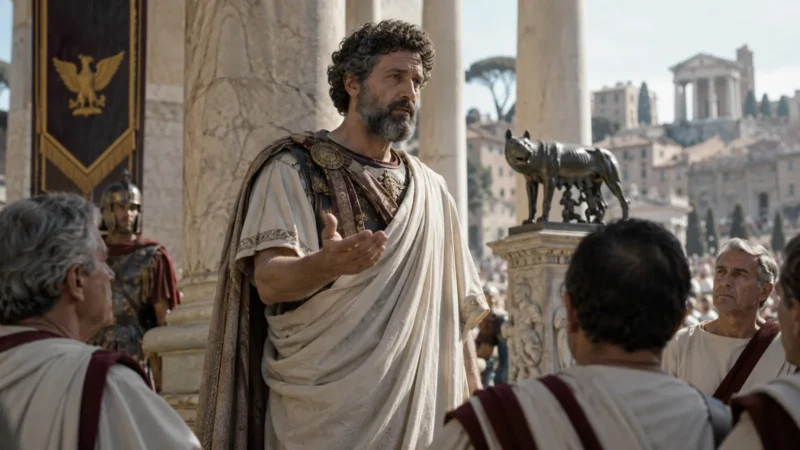
Marcus Aurelius’ Accomplishments: Emperor, Philosopher, and Stoic
Marcus Aurelius is remembered for Meditations and the ideal of the philosopher-emperor, but his record also includes frontier defense, administration through plague and revolt, and difficult choices that complicate the legend.
Keep exploring

Money, Business & Personal Growth
See the wider Mayobook topic hub with guides, answers, comparisons, and books.
Explore the topic
Stoic Journaling Like Marcus Aurelius: A Practical Guide to Daily Reflection
Go deeper with a longer structured guide connected to this topic.
View guide