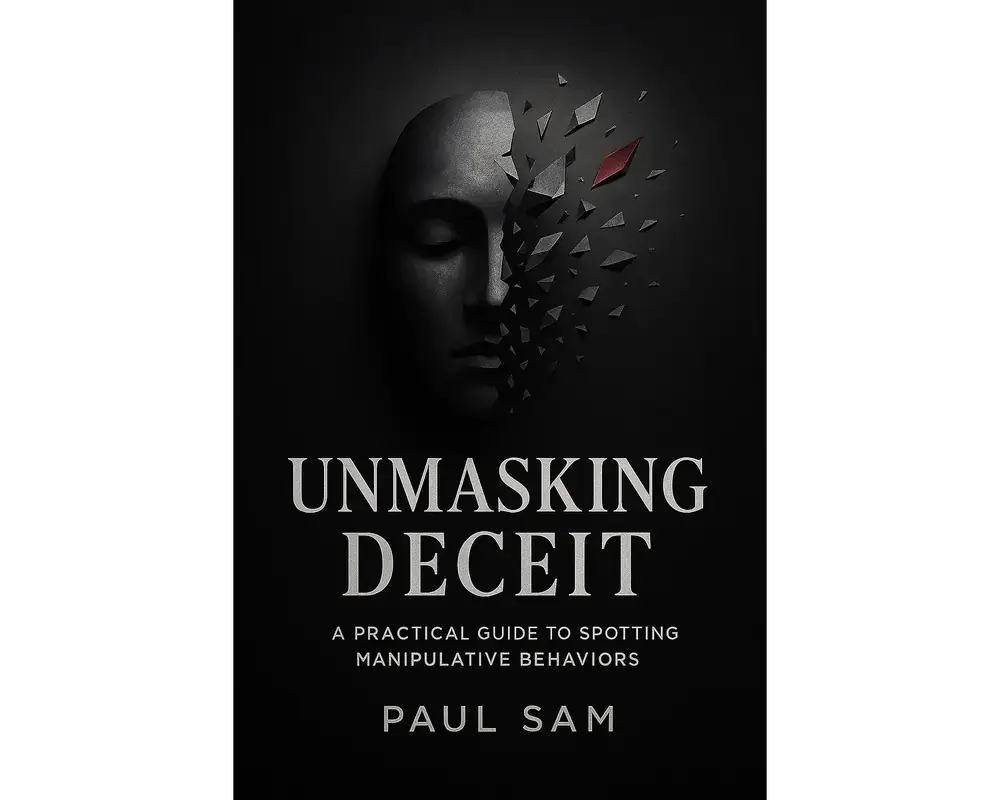
Unmasking Deceit: A Guide to Spotting Manipulative Behaviors
Written by Paul Sam
Store Rank #74

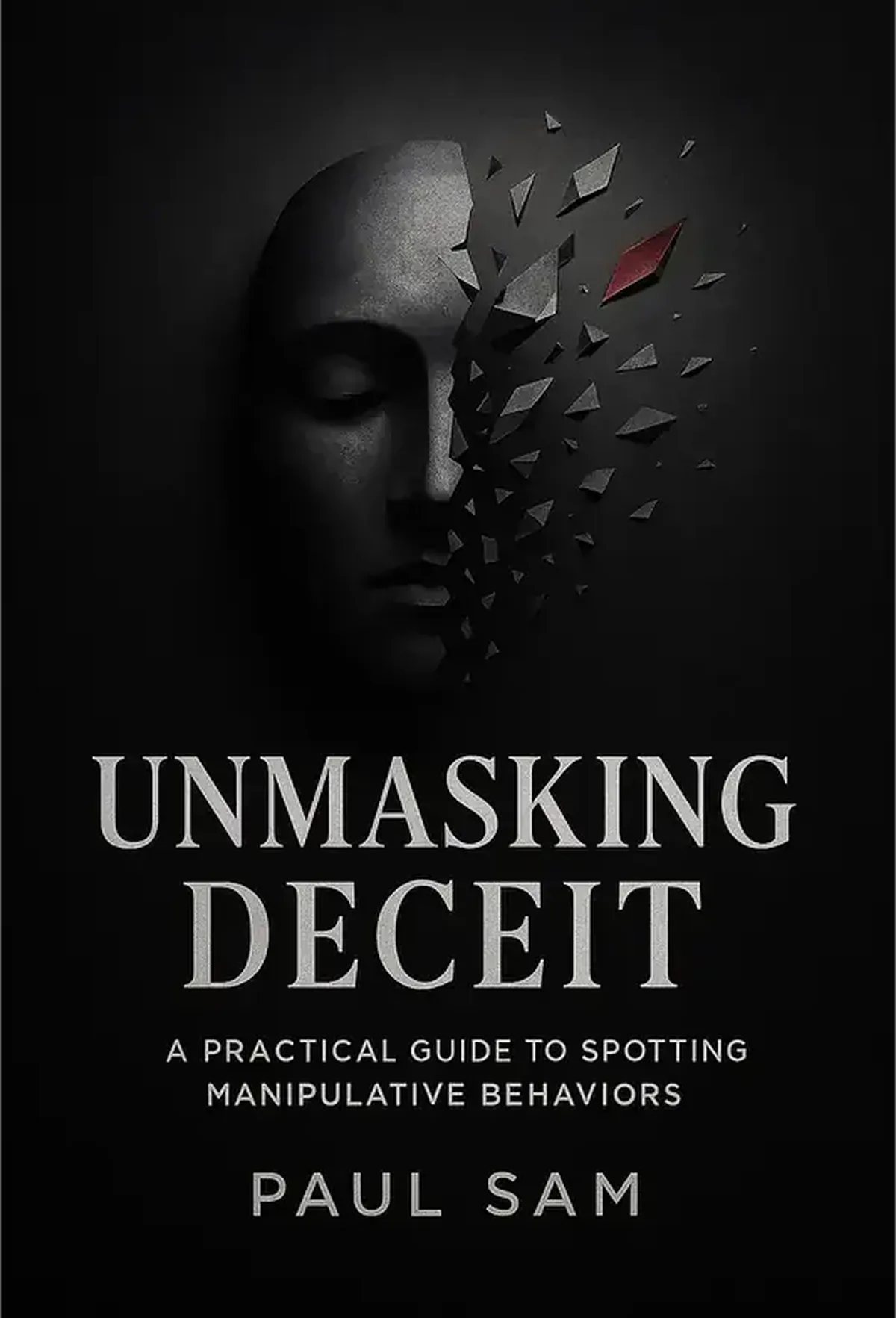
Unmasking Deceit: A Guide to Spotting Manipulative Behaviors

A practical guide to recognizing manipulative behavior, gaslighting, guilt-based pressure and emotional control in relationships and workplaces. Explore recurring patterns, self-a…

AuthorPaul Sam

Book Blurb

Sometimes the most troubling part of a conversation is not what was said, but the confusion that remains afterward. You may find yourself apologizing for raising a reasonable concern, questioning a memory that previously seemed clear or feeling responsible for resolving a problem someone else created.

Unmasking Deceit: A Guide to Spotting Manipulative Behaviors explores how emotional pressure and covert control can appear in ordinary interactions. This practical self-help book focuses on recognizing recurring behavior patterns, considering their effects and developing ways to respond with greater clarity.

Recognize patterns rather than rush to label people

A disagreement, an inconsiderate remark or a misunderstanding does not automatically establish manipulation. What deserves closer attention is the pattern surrounding an interaction: whether your concerns are repeatedly dismissed, whether expectations change whenever you try to meet them, or whether guilt is routinely used to obtain your compliance.

The book examines examples of manipulative behavior in friendships, families, romantic relationships and professional settings. Its coverage includes gaslighting, guilt-based pressure, emotional blackmail and withdrawal used as leverage. These concepts can help readers articulate experiences that have been difficult to explain, without requiring them to diagnose another person.

Understand the effect of repeated emotional pressure

When a relationship regularly leaves you questioning your own perspective, it can become harder to decide how to respond. The guide explores self-awareness and the emotional consequences of manipulative dynamics, encouraging readers to distinguish their own responsibilities from expectations imposed by others.

Reflecting on what actually occurred, rather than relying solely on impressions or assumptions about motives, can provide a more useful basis for deciding whether a situation needs clarification, limits or outside support.

Consider practical ways to protect your boundaries

Recognizing a difficult pattern is one step; deciding what to do about it is another. The book’s stated four-step framework addresses assessing relational dynamics, setting boundaries, protecting emotional well-being and restoring a sense of balance.

Its real-world examples and exercises invite readers to consider how they respond under pressure and which choices remain available to them. A workplace interaction may call for documentation or professional guidance, while an unsafe personal relationship may require specialized support. No single response fits every circumstance.

Develop a more considered approach to trust

Learning about manipulation should not require viewing every relationship with suspicion. This guide encourages readers to notice behavior, reflect on their experience and make decisions that respect their own limits. It is relevant to adults navigating difficult relationships, workplace pressure or uncertainty about another person’s influence.

This book is educational and non-diagnostic. It does not replace mental health care, legal advice or professional assistance in situations involving abuse, coercion or immediate danger. Where confrontation could increase risk, safety and appropriate support should take priority.

Read Unmasking Deceit if you want a structured introduction to recognizing manipulative behavior and understanding how awareness can inform safer, more deliberate choices.

Explore the benefits, ideal readers and key subjects.

Benefits

  • Develop language for describing recurring emotional pressure.
  • Distinguish observable patterns from assumptions about intentions.
  • Reflect on the effects of guilt and invalidation.
View more
  • Consider appropriate personal limits and response options.
  • Recognize when additional support may be needed.
  • Approach questions of trust with greater care and perspective.

Who This Book Is For

  • For adults who want to understand confusing or pressuring relationship dynamics, including workplace interactions, friendships and family relationships. It is suitable for readers seeking non-diagnostic education about manipulation rather than a clinical assessment of another person.

What’s Inside

  • Recognizing recurring patterns of manipulative behavior
  • Understanding gaslighting, guilt traps and emotional blackmail
  • Examples involving partners, friends, families and coworkers
View more
  • A four-step framework for assessing dynamics and considering boundaries
  • Exercises in self-awareness and emotional resilience
  • Applying behavior-focused reflection to everyday relationships
PUBLICATION & EDITION

Product details

Format
eBook

Recognize what repeated pressure does to your judgment

Manipulation is often easier to understand when you examine what happens across several interactions rather than search for one decisive clue. This guide brings emotional tactics, real-world scenarios and reflective exercises together so readers can consider their experiences and the boundaries or support that may be appropriate.

Customer reviews

L
Luca 4

Exactly What I Needed Right Now

The tone of the whole book felt like a conversation rather than a lecture, which made it easy to keep turning pages. It left me feeling hopeful and capable rather than guilty about where I’m starting.

This didn’t read like a dry leadership manual—more like sitting with a mentor who has actually lived through hard decisions. What stood out to me was how honest the author was about the messy middle of change, not just the happy ending. The reflection questions at the end of each section forced me to slow down and ask whether I’m leading from fear or from clarity. I ended up highlighting more lines than I expected, and I don’t do that often. It never talked down to me, which I really value in a book like this.

T
Tia 2

Practical, Honest, and Very Encouraging

It left me feeling hopeful and capable rather than guilty about where I’m starting. I started applying just one idea per week at work, and the change in my confidence has been noticeable.

I dog-eared more sections than I expected, and I’ve already gone back to re-read a few favourite bits. The reflection questions at the end of each section forced me to slow down and ask whether I’m leading from fear or from clarity. This didn’t read like a dry leadership manual—more like sitting with a mentor who has actually lived through hard decisions. It never talked down to me, which I really value in a book like this. I ended up highlighting more lines than I expected, and I don’t do that often. I could feel small shifts in how I was thinking and behaving almost immediately.

G
Gabey

Worth Every Minute I Spent Reading

It left me feeling like leadership is a skill I can grow into instead of a personality I either have or don’t have. The tone of the whole book felt like a conversation rather than a lecture, which made it easy to keep turning pages.

This didn’t read like a dry leadership manual—more like sitting with a mentor who has actually lived through hard decisions. Even after I finished, a couple of ideas from the book stayed in the back of my mind during the week. I could feel small shifts in how I was thinking and behaving almost immediately.

I
I.M.

Detailed, Clear, and Surprisingly Warm

I especially loved the way the author tied big concepts back to everyday conversations and conflicts. The practical steps are small enough that I didn’t feel overwhelmed trying to apply them.

It left me feeling like leadership is a skill I can grow into instead of a personality I either have or don’t have. I kept catching myself nodding along because so many examples felt like they were pulled from my own life. I ended up highlighting more lines than I expected, and I don’t do that often.

G
G.N.

Exactly What I Needed Right Now

I especially loved the way the author tied big concepts back to everyday conversations and conflicts. It left me feeling like leadership is a skill I can grow into instead of a personality I either have or don’t have. The tone of the whole book felt like a conversation rather than a lecture, which made it easy to keep turning pages.

What stood out to me was how honest the author was about the messy middle of change, not just the happy ending. It never talked down to me, which I really value in a book like this. I could feel small shifts in how I was thinking and behaving almost immediately.

HELPFUL ANSWERS

Frequently Asked Questions

Questions about the book, its subjects and available editions.

What does Unmasking Deceit cover?

It explores manipulative behavior, emotional pressure, gaslighting, guilt-based tactics and boundary-setting through examples and reflective exercises.

Does the book cover manipulation at work?

Yes. Its existing description includes workplace dynamics and examples involving colleagues, alongside family, friendship and romantic situations.

Is every disagreement a form of manipulation?

No. Disagreement and misunderstanding are common. Repeated patterns of pressure, coercion or undermining deserve careful attention in context.

What is the book's practical framework?

Its stated four-step approach focuses on assessing relationship dynamics, considering boundaries, protecting emotional well-being and restoring a sense of balance.

Can I use the book to diagnose someone?

No. It is a general educational guide about behavior patterns, not a clinical diagnostic tool or a method for establishing another person's motives.

Does it explain gaslighting and guilt-tripping?

Yes. These are among the emotional tactics covered, together with withdrawal used as leverage and emotional blackmail.

What if setting a boundary could put me in danger?

Prioritize safety and seek appropriate specialized support. A general self-help book cannot determine the safest response to an abusive or dangerous situation.