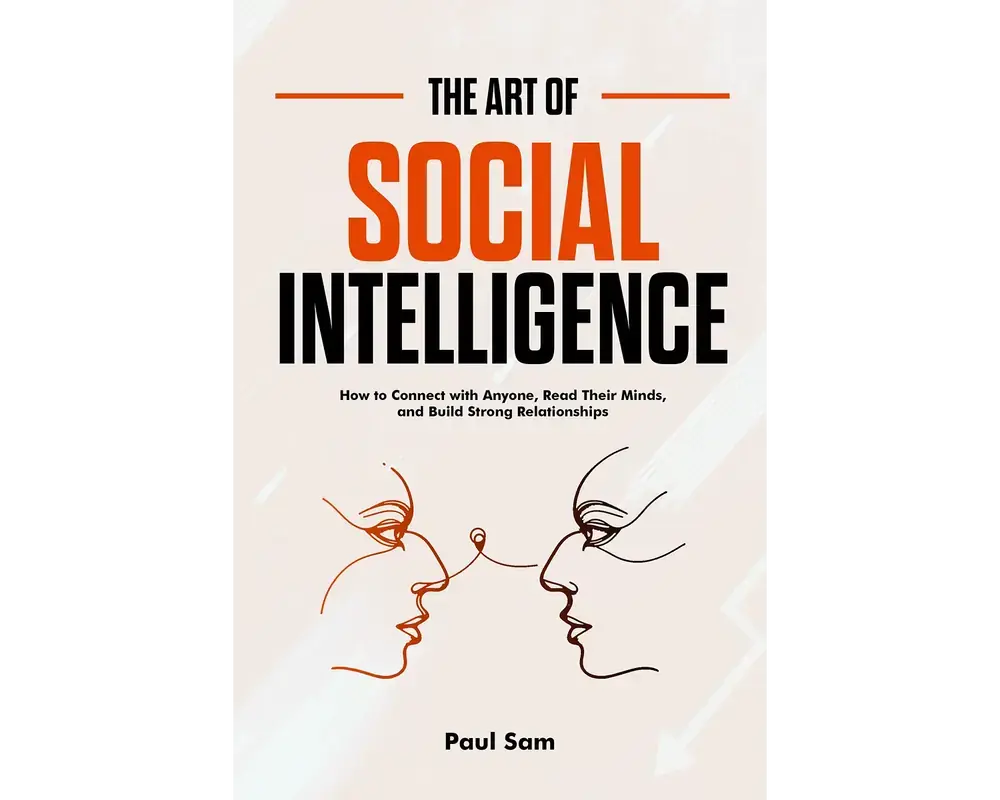
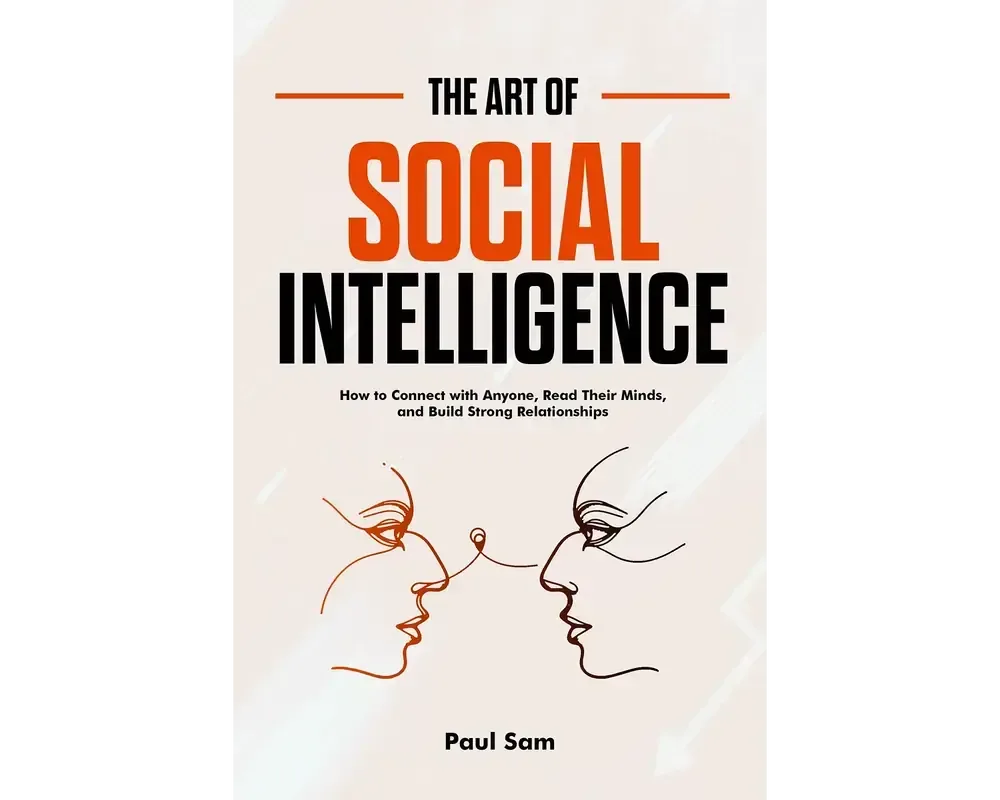
The Art of Social Intelligence: How to Connect with Anyone, Read Their Minds, and Build Strong Relationships
Written by Paul Sam
Store Rank #72

The Art of Social Intelligence

A practical social intelligence book on conversation, nonverbal communication, empathy, rapport and ethical influence. Explore ways to interpret social situations with care and de…

AuthorPaul Sam

Book Blurb

A conversation can change when you stop concentrating on what you ought to say next and begin paying closer attention to the person in front of you. You notice a question they have not quite finished asking, a hesitation that deserves patience or a subject that seems genuinely important to them. These ordinary moments are where social intelligence becomes useful.

The Art of Social Intelligence is a practical communication and interpersonal skills book for readers who want to understand social interactions more thoughtfully. It explores first impressions, nonverbal communication, empathy, conversation, ethical influence and the habits that contribute to stronger relationships across different settings.

Pay attention to context, not just individual cues

Posture, tone and facial expressions can contribute to the way a message is received, but none provides reliable access to another person’s private thoughts. The same gesture may reflect discomfort, fatigue, habit or something unrelated to the conversation.

The guide introduces social cues as part of a wider approach to interpersonal awareness. Readers can consider how the setting, relationship, words and behavior contribute to an interaction, and how asking a thoughtful question can be more useful than assuming they already understand what someone means.

Develop conversations that allow people to participate

Good conversation is not limited to having interesting stories or an impressive vocabulary. It also involves listening, recognizing when someone wants to elaborate and responding in ways that show genuine interest. These skills can help move an exchange beyond surface-level small talk when both people are comfortable doing so.

The book explores building rapport and communicating with empathy. It invites readers to reflect on the habits they bring to a conversation and the difference between trying to make an impression and actually creating room for another person’s perspective.

Use influence responsibly

Interpersonal awareness can be useful in sales, leadership and professional relationships, where explaining an idea clearly and understanding another person’s concerns may support cooperation. The book considers influence through the lens of integrity rather than pressure.

Its approach also has relevance outside work. Friends, partners and family members encounter different communication challenges, yet each relationship benefits from attention to context, respect for individual preferences and a willingness to clarify misunderstandings.

Build relationships beyond the first encounter

Making a favorable impression may open a conversation, but trust usually depends on what happens afterward. Consistency, thoughtful communication and respect for limits matter as people become more familiar with one another.

This guide brings together examples and practical tools for readers who want to examine their social habits, including introverts, professionals, leaders and adults interested in developing interpersonal confidence. It is educational, not a clinical assessment or a promise of literal mind-reading. Social cues vary across individuals, cultures and circumstances.

Explore The Art of Social Intelligence if you want to develop a more attentive, considerate approach to communication and connection in the relationships that form part of your daily life.

Explore the benefits, ideal readers and key subjects.

Benefits

  • Notice how context shapes the meaning of social cues.
  • Reflect on habits that affect first impressions.
  • Develop a more attentive approach to conversation.
View more
  • Consider other perspectives with empathy.
  • Understand the distinction between ethical influence and pressure.
  • Explore ways to support rapport and trust over time.

Who This Book Is For

  • For adults seeking practical communication skills, including introverts, professionals, salespeople, leaders and readers who want to develop greater interpersonal awareness in everyday relationships. It is not intended as a technical psychology textbook.

What’s Inside

  • First impressions, tone and personal presence
  • Nonverbal communication and contextual interpretation
  • Conversation skills, rapport and active listening
View more
  • Emotional awareness and empathy
  • Ethical influence and respectful persuasion
  • Social skills in leadership, sales, friendship and dating
  • Habits that support lasting interpersonal relationships
PUBLICATION & EDITION

Product details

Format
eBook

Social intelligence begins with curiosity, not certainty

This guide connects the way people communicate with the context in which their interactions occur. Its focus on conversation, empathy and responsible influence helps readers examine their own habits without assuming that body language or facial expressions reveal exactly what someone is thinking.

Customer reviews

K
Kira Brown

So Much More Helpful Than I Expected

What stood out to me was how honest the author was about the messy middle of change, not just the happy ending. The tone of the whole book felt like a conversation rather than a lecture, which made it easy to keep turning pages.

This didn’t read like a dry leadership manual—more like sitting with a mentor who has actually lived through hard decisions. I ended up highlighting more lines than I expected, and I don’t do that often. Even after I finished, a couple of ideas from the book stayed in the back of my mind during the week.

I
Iris Hansen

A Guide I’ll Keep Coming Back To

It left me feeling hopeful and capable rather than guilty about where I’m starting. The practical steps are small enough that I didn’t feel overwhelmed trying to apply them. This didn’t read like a dry leadership manual—more like sitting with a mentor who has actually lived through hard decisions.

It left me feeling like leadership is a skill I can grow into instead of a personality I either have or don’t have. I started applying just one idea per week at work, and the change in my confidence has been noticeable. I ended up highlighting more lines than I expected, and I don’t do that often.

R
Riley Singh

Helped Me Take Action, Not Just Think

I dog-eared more sections than I expected, and I’ve already gone back to re-read a few favourite bits. What stood out to me was how honest the author was about the messy middle of change, not just the happy ending.

The tone of the whole book felt like a conversation rather than a lecture, which made it easy to keep turning pages. This didn’t read like a dry leadership manual—more like sitting with a mentor who has actually lived through hard decisions. I could feel small shifts in how I was thinking and behaving almost immediately.

G
Gus Popescu

Practical, Honest, and Very Encouraging

The tone of the whole book felt like a conversation rather than a lecture, which made it easy to keep turning pages. I especially loved the way the author tied big concepts back to everyday conversations and conflicts.

It left me feeling hopeful and capable rather than guilty about where I’m starting. I dog-eared more sections than I expected, and I’ve already gone back to re-read a few favourite bits. I could feel small shifts in how I was thinking and behaving almost immediately. I kept catching myself nodding along because so many examples felt like they were pulled from my own life.

C
C.S.

Detailed, Clear, and Surprisingly Warm

The practical steps are small enough that I didn’t feel overwhelmed trying to apply them. It left me feeling hopeful and capable rather than guilty about where I’m starting.

I especially loved the way the author tied big concepts back to everyday conversations and conflicts. I started applying just one idea per week at work, and the change in my confidence has been noticeable. The reflection questions at the end of each section forced me to slow down and ask whether I’m leading from fear or from clarity. It never talked down to me, which I really value in a book like this.

HELPFUL ANSWERS

Frequently Asked Questions

Questions about the book, its subjects and available editions.

What is The Art of Social Intelligence about?

It explores social awareness, first impressions, nonverbal communication, empathy, conversation, ethical influence and longer-term interpersonal relationships.

Is this a social skills book for introverts?

Yes. Introverts are among its stated audiences, alongside professionals and readers interested in developing social confidence without changing their personality.

Does the book teach literal mind-reading?

No. The subtitle uses that language figuratively. Its stated topics include interpreting social cues, but another person's thoughts cannot reliably be determined from gestures or expressions alone.

Can the book help with professional communication?

Its coverage includes leadership, sales, rapport and interpersonal relationships at work, offering principles that readers can consider in professional settings.

Does it cover emotional intelligence and empathy?

Yes. Emotional attunement and empathy are central themes, alongside social awareness and communication skills.

Is influence the same as manipulation?

No. The guide's stated approach distinguishes ethical persuasion and cooperation from pressuring or controlling another person.

Does it focus only on first impressions?

No. It also explores conversation, building trust and sustaining relationships after the initial encounter.