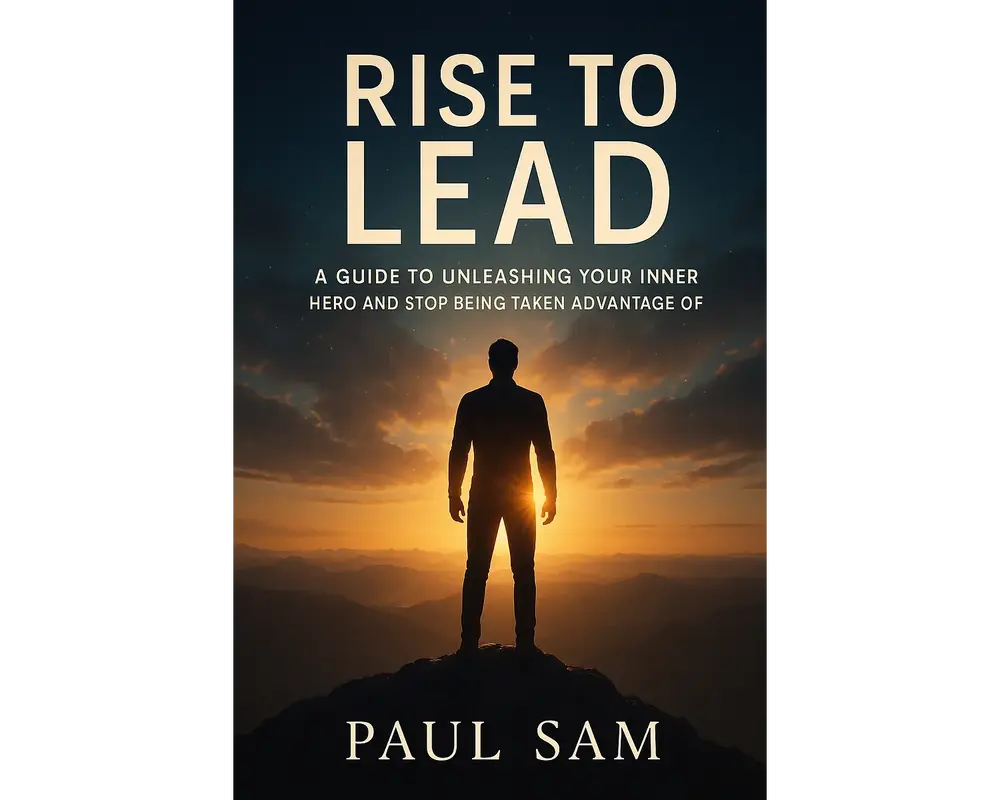
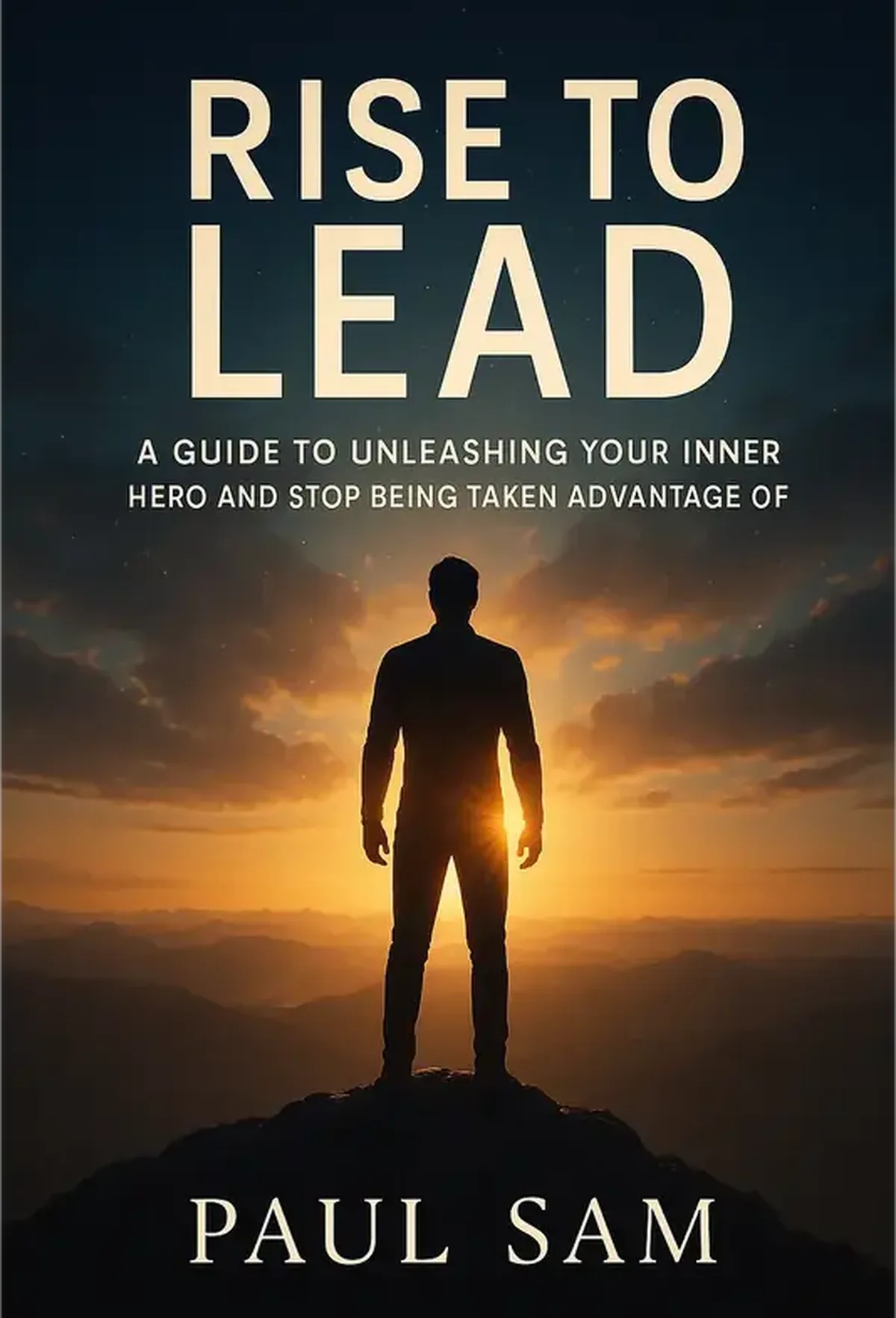
Rise to Lead: A Guide to Unleashing Your Inner Hero and Stop Being Taken Advantage Of
Written by Paul Sam
Store Rank #77

Rise to Lead: A Guide to Unleashing Your Inner Hero and Stop Being Taken Advantage Of

A personal leadership and self-advocacy guide for readers who feel overlooked or pressured. Explore assertive communication, healthy boundaries, personal values and the confidence…

AuthorPaul Sam

Book Blurb

Leadership begins long before anyone gives you a title. It can begin when you express a concern that others would prefer you to keep quiet, take responsibility for a decision you believe in or recognize that your willingness to help does not give someone else the right to decide how you should live.

Rise to Lead is a personal leadership and self-advocacy book for readers who have felt overlooked, pressured or uncertain about their own ability to make decisions. It explores the connection between personal values, assertive communication and the confidence to act with integrity in everyday life.

Recognize the dynamics that undermine your agency

Some experiences of being taken advantage of develop gradually. A colleague repeatedly assumes you will absorb extra work, a friend dismisses your preferences or a familiar expectation leaves little room for your own judgment. The book encourages readers to examine patterns of manipulation, exploitation and deference without assuming that every disagreement is evidence of bad intent.

Recognizing a pattern can help you consider which responsibilities genuinely belong to you and which expectations deserve to be questioned. It can also clarify when a conversation, a boundary or outside support may be appropriate.

Practice self-advocacy in everyday situations

Assertiveness is different from dominating a conversation. The guide explores ways to communicate your views, maintain appropriate limits and make decisions that reflect your priorities. Its approach considers both the discomfort of speaking up and the importance of respecting the needs and rights of others.

These skills have applications beyond formal leadership positions. At work, they can support clearer communication about responsibilities. In personal relationships, they can help you express a preference or raise a concern. In your own life, they can help you move from repeatedly postponing a decision to taking a considered next step.

Develop leadership through responsibility and values

The book invites readers to reflect on what personal leadership means when there is no audience to impress. Rather than equating confidence with authority over other people, it considers the importance of knowing what you stand for, making decisions with care and accepting responsibility for the choices you make.

It also addresses criticism, setbacks and difficult environments as part of the wider process of developing personal agency. Through examples and reflective exercises, readers can explore how their responses to pressure relate to their longer-term goals.

Choose a direction that reflects your own priorities

Developing a stronger sense of agency does not mean that every decision will be easy or every relationship will change. The book encourages readers to consider the habits and commitments that support their intended direction and recognize the importance of continuing to practice after difficult experiences.

This is an educational self-development book, not a substitute for individual mental health, legal or safety support. If you are dealing with coercion, abuse or a dangerous environment, seek appropriate assistance rather than assuming that greater assertiveness alone will resolve the situation.

For readers who want to move beyond the idea that leadership belongs only to managers or public figures, Rise to Lead offers a framework for examining how you communicate, make decisions and participate in the parts of life that matter to you.

Explore the benefits, ideal readers and key subjects.

Benefits

  • Recognize situations that undermine your ability to choose.
  • Reflect on values that guide your decisions.
  • Explore respectful ways to express concerns and limits.
View more
  • Understand leadership as responsibility rather than domination.
  • Consider constructive responses to criticism and setbacks.
  • Build habits that support a more intentional personal direction.

Who This Book Is For

  • For emerging professionals, caregivers, creatives and adults who want to strengthen their ability to express opinions and make decisions under pressure. It is particularly relevant to readers seeking personal leadership and self-advocacy rather than a technical management handbook.

What’s Inside

  • Recognizing manipulation and patterns of deference
  • Clarifying personal values and priorities
  • Developing assertive communication and self-advocacy
View more
  • Maintaining appropriate boundaries in everyday relationships
  • Responding to criticism, setbacks and pressure
  • Practicing leadership habits beyond formal roles
  • Developing a considered personal direction
PUBLICATION & EDITION

Product details

Format
eBook

Develop a voice that reflects what you believe

Leadership is not reserved for people with formal authority. This guide connects personal agency with the ordinary choices through which you express your values, communicate limits and take responsibility for your direction. Its reflective approach makes leadership relevant to work, relationships and life beyond a job title.

Customer reviews

S
S.I.

Detailed, Clear, and Surprisingly Warm

It left me feeling hopeful and capable rather than guilty about where I’m starting. What stood out to me was how honest the author was about the messy middle of change, not just the happy ending.

The reflection questions at the end of each section forced me to slow down and ask whether I’m leading from fear or from clarity. The tone of the whole book felt like a conversation rather than a lecture, which made it easy to keep turning pages. Even after I finished, a couple of ideas from the book stayed in the back of my mind during the week. I kept catching myself nodding along because so many examples felt like they were pulled from my own life. I ended up highlighting more lines than I expected, and I don’t do that often.

N
Noah Ivanov

Grounded, Relatable, and Very Useful

It left me feeling like leadership is a skill I can grow into instead of a personality I either have or don’t have. The practical steps are small enough that I didn’t feel overwhelmed trying to apply them.

The tone of the whole book felt like a conversation rather than a lecture, which made it easy to keep turning pages. I especially loved the way the author tied big concepts back to everyday conversations and conflicts. Even after I finished, a couple of ideas from the book stayed in the back of my mind during the week.

M
Mateo

Finally Something That Actually Clicked

This didn’t read like a dry leadership manual—more like sitting with a mentor who has actually lived through hard decisions. I especially loved the way the author tied big concepts back to everyday conversations and conflicts. I started applying just one idea per week at work, and the change in my confidence has been noticeable.

What stood out to me was how honest the author was about the messy middle of change, not just the happy ending. I could feel small shifts in how I was thinking and behaving almost immediately. I kept catching myself nodding along because so many examples felt like they were pulled from my own life.

N
Noa 4

Grounded, Relatable, and Very Useful

It left me feeling hopeful and capable rather than guilty about where I’m starting. I started applying just one idea per week at work, and the change in my confidence has been noticeable. This didn’t read like a dry leadership manual—more like sitting with a mentor who has actually lived through hard decisions.

The practical steps are small enough that I didn’t feel overwhelmed trying to apply them. I dog-eared more sections than I expected, and I’ve already gone back to re-read a few favourite bits. Even after I finished, a couple of ideas from the book stayed in the back of my mind during the week. I could feel small shifts in how I was thinking and behaving almost immediately.

N
Nils Singh

Helped Me Take Action, Not Just Think

The reflection questions at the end of each section forced me to slow down and ask whether I’m leading from fear or from clarity. It left me feeling like leadership is a skill I can grow into instead of a personality I either have or don’t have.

The practical steps are small enough that I didn’t feel overwhelmed trying to apply them. I could feel small shifts in how I was thinking and behaving almost immediately. I kept catching myself nodding along because so many examples felt like they were pulled from my own life. It never talked down to me, which I really value in a book like this.

HELPFUL ANSWERS

Frequently Asked Questions

Questions about the book, its subjects and available editions.

What is Rise to Lead about?

It is a personal-development guide focused on self-advocacy, personal agency, assertive communication, boundaries and leadership habits in everyday life.

Do I need to be a manager to read this leadership book?

No. The book treats leadership as a set of personal responsibilities and habits that can apply at work, in relationships and in decisions outside formal leadership roles.

Does it address being taken advantage of?

Yes. It explores patterns of manipulation, exploitation and deference, encouraging readers to reflect on their responses and appropriate limits.

Is the book about becoming more dominant?

No. Its focus is on personal values, clarity, responsible decisions and respectful communication, rather than controlling other people.

Does it contain practical exercises?

The book's stated approach includes reflective exercises, everyday examples and strategies for considering communication, boundaries and personal direction.

How does this differ from a people-pleasing book?

There is some overlap in boundaries and assertiveness, but Rise to Lead centers on personal leadership, self-advocacy and responsible decision-making rather than primarily examining approval-seeking habits.

Can it resolve abusive or unsafe relationships?

No. It is a general educational resource. Coercion, abuse and unsafe situations may require specialized support and safety planning.