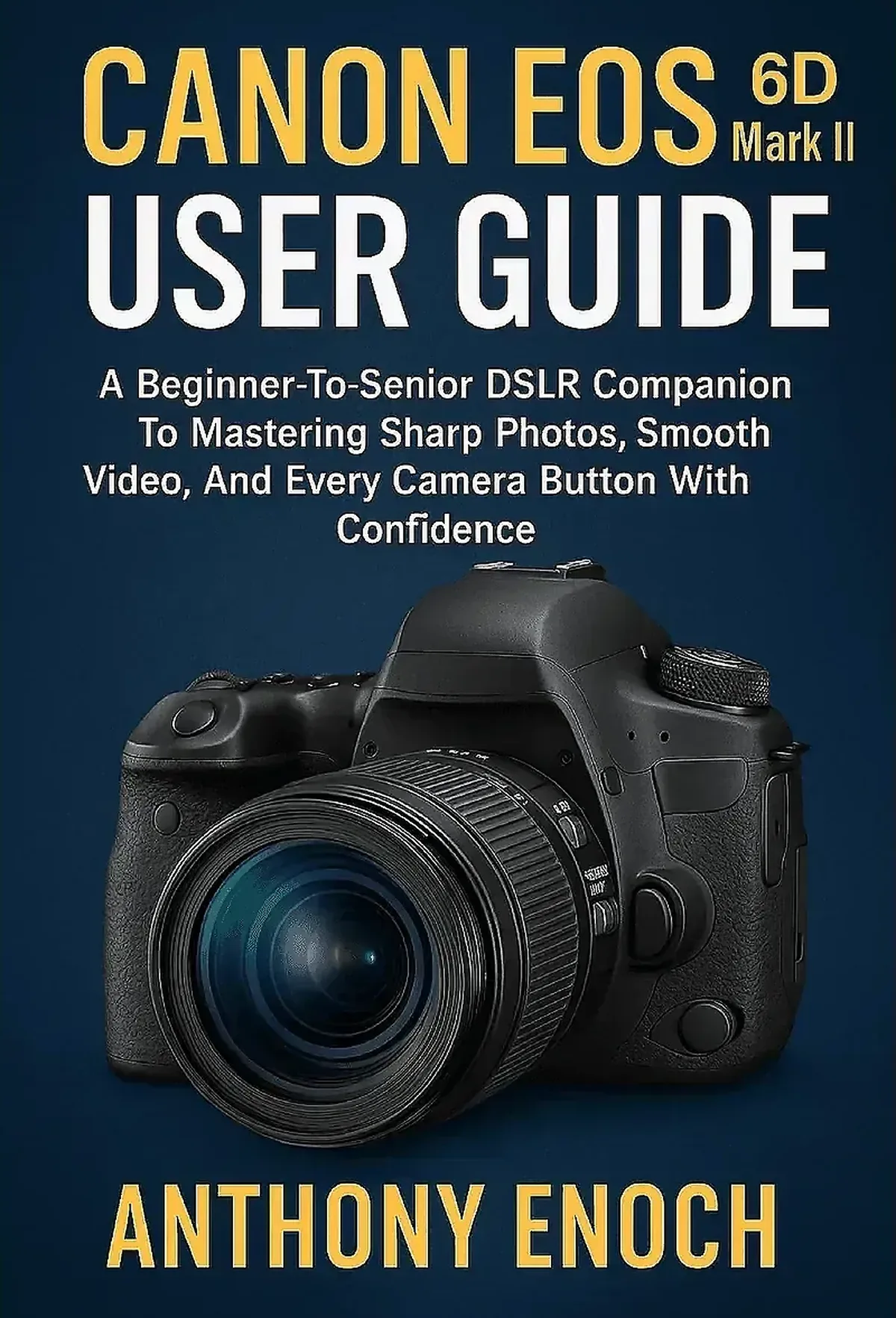
The Canon EOS 6D Mark II gives photographers considerable control over how a picture is made. The challenge for a new owner is understanding which controls matter for a particular subject, rather than changing settings at random and hoping the next photograph turns out better.
Canon EOS 6D Mark II User Guide is an independent photography handbook for beginners, older learners and hobbyists using this full-frame DSLR. It connects the camera’s physical controls with the photographic decisions behind them, from initial setup to exposure, focusing, video and everyday maintenance.
Get acquainted with your DSLR
Start with the camera’s buttons, dials, menus and shooting modes. If you are coming from a smartphone or compact camera, the guide offers a way to understand the separate decisions involved in operating a DSLR. You can work through the basic controls before experimenting with settings that give you more creative choice.
Understand exposure through the photographs you want to take
A portrait, a moving pet and a landscape at dusk present different photographic problems. The book introduces aperture, shutter speed and ISO, explaining how these settings influence light, motion and depth of field. It discusses portraits, landscapes, events and low-light scenes, giving readers a practical context for learning when to move beyond automatic shooting.
The guide also introduces focusing, picture styles, HDR and other creative options. Rather than relying on a single supposedly perfect setting, photographers can consider their subject, available light and intended result.
Explore video and a more organized workflow
The 6D Mark II includes a vari-angle display and Live View capabilities. The guide addresses video settings, autofocus, external microphone use and practical considerations for recording family events, interviews or online content. It also discusses transferring photographs, organizing files and backing up work after a shoot.
Look after the equipment you already own
Battery management, memory cards, lenses, cleaning, firmware and troubleshooting are included in the book’s stated coverage. Gear discussions help readers consider which accessories might serve their photography before committing to more purchases. For firmware installation, sensor cleaning or equipment faults, follow the current manufacturer instructions and seek service when appropriate.
This handbook specifically covers the EOS 6D Mark II, not the original EOS 6D. It is a companion to learning the camera, not a replacement for Canon’s official technical documentation. App compatibility and available software can change over time.
Choose this book if you want a practical introduction to the camera you own and a foundation for exploring photography at your own pace.