Natural Antimicrobial Agents: Herbs and Foods That Defend Without Drugs
An evidence-aware explanation of antimicrobial compounds in herbs and foods, what laboratory studies can show, and why they do not replace infection treatment.

Keep Learning—Listen Free
Short, practical audiobooks for your next step.

Imposter Syndrome: Why Success Still Makes You Feel Like a Fraud | Full Audiobook
Imposter syndrome can make real success feel undeserved and every new achievement…

How to Stop Catastrophizing: Break the Worst-Case Thinking Loop | Full Audiobook
Learn how to stop catastrophizing and break the worst-case thinking loop that…

Emotionally Immature Parents: How Their Patterns Shape Your Adult Life | Full Audiobook
Emotionally immature parents can shape adult relationships, boundaries, self-worth and the way…

High-Functioning Anxiety: Why You Look Fine but Never Feel at Peace | Full Audiobook
High-functioning anxiety can make you look calm, capable and successful while constant…

The Art of War Explained: Sun Tzu’s Strategy for Winning Without Fighting | Full Audiobook
The Art of War, Sun Tzu, Art of War explained, strategy, winning…

Arthur Schopenhauer: Why You’re Never Satisfied — The Psychology of Desire | Full Audiobook
Arthur Schopenhauer, Schopenhauer philosophy, the psychology of desire, hedonic adaptation, the hedonic…

Friedrich Nietzsche: What “God Is Dead” Really Means — And How to Create Meaning | Full Audiobook
Friedrich Nietzsche, “God is dead,” Nietzsche philosophy, nihilism, existentialism, the meaning of…

High Agency: How to Become the Person Who Always Finds a Way | Full Audiobook
High agency is the psychology of becoming resourceful, taking initiative, and creating…

How to Find Your Purpose When You Feel Lost: Build a Life That Actually Means Something
Learn how to find your purpose when you feel lost, discover what…
Natural antimicrobial agents are substances found in plants and foods that may slow or inhibit microorganisms under specific conditions. Compounds in garlic, ginger, turmeric, and other botanicals have been studied for such effects, often in laboratory experiments. Those findings are scientifically interesting, but eating a food is not equivalent to delivering a tested antimicrobial treatment to infected tissue. Responsible interpretation distinguishes the chemistry of a substance, the traditions surrounding it, and the evidence available from studies in humans.
To explore that distinction further, read Natural Antibacterial Agents: Everyday Herbs and Foods That Help Your Body Defend alongside the Herbal Medicine hub. A nutritious diet can support overall health, but neither a kitchen remedy nor a concentrated extract should be presented as a proven substitute for a medical assessment or prescribed infection treatment.
Understanding How Natural Antimicrobials Work
Every plant is an ecosystem. To survive insects, fungi, and microbes, plants produce protective phytochemicals—flavonoids, terpenes, and phenolics. When we consume these compounds, their defensive benefits often carry over. Some disrupt bacterial cell membranes; others block viral replication or inhibit fungal growth. Rather than killing indiscriminately, natural agents help rebalance microbial communities.
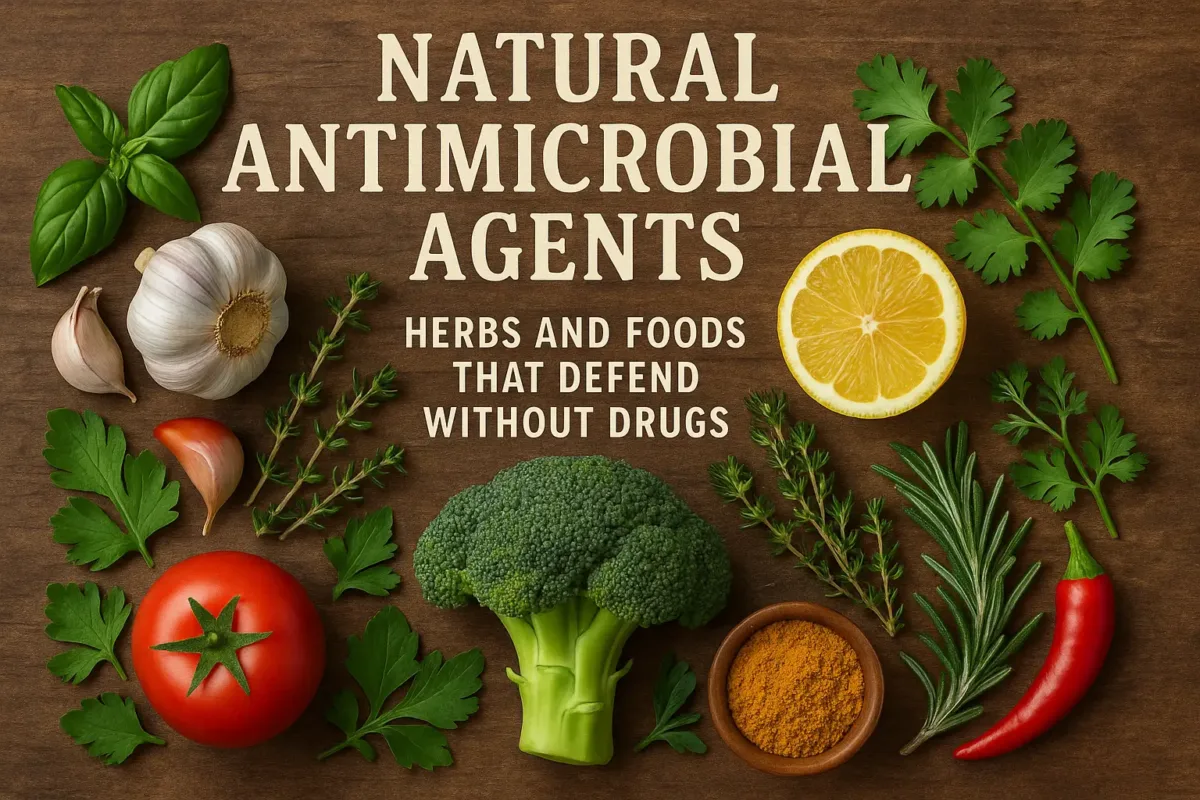
This gentler approach is why herbal antimicrobials rarely cause resistance. They nudge, rather than obliterate, maintaining harmony between body and microbiome.
1. Garlic: The Timeless Natural Antibiotic
Garlic’s allicin remains one of the most studied natural antimicrobial compounds. It interferes with bacterial enzyme systems and combats fungi such as Candida albicans. Regular garlic consumption supports immunity and cardiovascular health. Crush cloves before eating to activate allicin, and enjoy raw in dressings or lightly warmed in soups.
2. Ginger: The Warming Defender
Ginger’s active compounds, gingerols and shogaols, exhibit both antibacterial and antiviral effects. Studies show ginger may inhibit respiratory viruses and digestive pathogens. Beyond chemistry, its warming nature stimulates circulation and detox pathways, helping the immune system reach peripheral tissues faster.
3. Turmeric: Golden Anti-Inflammatory Power
Turmeric’s bright pigment curcumin is both antimicrobial and antioxidant. It modulates inflammatory signals while directly reducing bacterial load. Combined with black pepper (which boosts absorption), turmeric becomes a multipurpose tonic—supporting liver health, reducing chronic inflammation, and defending against microbes simultaneously.
4. Clove and Cinnamon: Nature’s Dual Guardians
Clove oil’s eugenol and cinnamon’s cinnamaldehyde are potent antifungal and antibacterial molecules. Together they preserve food, clean oral bacteria, and stimulate digestion. Adding these spices to teas or baked goods offers not just aroma but subtle infection control. A clove-cinnamon tea after meals aids both gut health and immune resilience.
5. Thyme and Oregano: The Mediterranean Shield
These aromatic herbs contain thymol and carvacrol—two phenolic compounds with strong antimicrobial action. They break down bacterial membranes and inhibit growth of pathogens like Streptococcus and Salmonella. Oregano oil, in particular, is used as a concentrated natural disinfectant (diluted, of course). Culinary use still brings measurable health protection.
6. Manuka Honey and Raw Honey
Honey acts as an osmotic agent, drawing moisture from bacterial cells and creating an environment too acidic for growth. Manuka honey’s methylglyoxal content gives it special strength, but all raw honeys offer enzymes that release hydrogen peroxide slowly, keeping wounds clean and soothing sore throats. A teaspoon daily or in warm tea supports immunity with sweetness and science.
7. Coconut Oil: Antimicrobial from the Tropics
Coconut oil’s lauric acid converts into monolaurin in the body—a compound that disrupts lipid-coated bacteria and viruses. It’s particularly effective against staphylococcal infections and yeast overgrowth. Use virgin coconut oil for cooking or oil pulling to support oral health naturally.
8. Herbal Teas and Infusions
Chamomile, peppermint, lemongrass, and licorice root teas offer mild antimicrobial benefits while hydrating tissues. Their volatile oils calm inflammation, while warm liquids flush out toxins and mucus. Drinking herbal infusions daily is preventive medicine disguised as comfort.
9. The Mind-Body Connection in Immunity
Modern immunology confirms what herbalists have long observed: chronic stress suppresses immune response. Plants rich in adaptogens—like tulsi (holy basil), ashwagandha, and reishi mushroom—don’t act directly as antimicrobials but regulate stress hormones, giving your body more capacity to fight infection.
In this way, emotional balance is itself an antimicrobial force.
How to Integrate Natural Antimicrobials into Everyday Life
- Add garlic and ginger to daily meals—raw when possible.
- Drink turmeric or ginger tea in the morning for gentle detoxification.
- Use clove, cinnamon, and honey to replace refined sugars in desserts.
- Diffuse thyme or eucalyptus essential oils for cleaner indoor air.
- Rotate herbs seasonally—your body thrives on diversity.
Healing isn’t about taking one herb in crisis; it’s about cultivating microbial harmony through consistent nourishment.
Safety and Synergy
Natural doesn’t mean harmless. Some herbs interact with medications or are unsuitable during pregnancy. Always research dosages, use food-level quantities first, and consult professionals when combining multiple strong extracts. Balance ensures potency without harm.
Synergy is where real magic lies: garlic with honey, turmeric with black pepper, oregano with thyme—these pairs amplify benefits through natural chemistry cooperation.
FAQs
What are natural antimicrobial agents?
They’re compounds in herbs and foods that inhibit bacteria, fungi, or viruses—examples include allicin in garlic and curcumin in turmeric.
Can they replace antibiotics?
No, but they can prevent infection and complement mild cases under guidance.
Which herbs are strongest?
Garlic, oregano, thyme, clove, and turmeric are among the most researched and effective.
Can I take multiple herbs together?
Yes, combining in small culinary amounts enhances synergy and diversity of defense.
How often should I use them?
Daily use in food is safest and most effective long-term.
Do these herbs affect gut bacteria?
They help balance gut flora rather than sterilize it, supporting overall microbiome health.
Are there side effects?
Large doses may cause stomach upset; essential oils must be diluted to avoid irritation.
Can stress reduce antimicrobial effectiveness?
Yes—stress hormones suppress immune function, making mindfulness and rest vital parts of defense.
In nature’s design, every flavor carries purpose. By embracing herbs and spices not just as taste but as protection, we remember that the line between food and medicine was never meant to exist.