Honey Antibacterial Properties: Evidence, Wound Care and Safety
Explore the science behind honey’s antibacterial properties, what clinical studies say about medical-grade wound dressings, and where professional care matters.
Keep Learning—Listen Free
Short, practical audiobooks for your next step.

Imposter Syndrome: Why Success Still Makes You Feel Like a Fraud | Full Audiobook
Imposter syndrome can make real success feel undeserved and every new achievement…

How to Stop Catastrophizing: Break the Worst-Case Thinking Loop | Full Audiobook
Learn how to stop catastrophizing and break the worst-case thinking loop that…

Emotionally Immature Parents: How Their Patterns Shape Your Adult Life | Full Audiobook
Emotionally immature parents can shape adult relationships, boundaries, self-worth and the way…

High-Functioning Anxiety: Why You Look Fine but Never Feel at Peace | Full Audiobook
High-functioning anxiety can make you look calm, capable and successful while constant…

The Art of War Explained: Sun Tzu’s Strategy for Winning Without Fighting | Full Audiobook
The Art of War, Sun Tzu, Art of War explained, strategy, winning…

Arthur Schopenhauer: Why You’re Never Satisfied — The Psychology of Desire | Full Audiobook
Arthur Schopenhauer, Schopenhauer philosophy, the psychology of desire, hedonic adaptation, the hedonic…

Friedrich Nietzsche: What “God Is Dead” Really Means — And How to Create Meaning | Full Audiobook
Friedrich Nietzsche, “God is dead,” Nietzsche philosophy, nihilism, existentialism, the meaning of…

High Agency: How to Become the Person Who Always Finds a Way | Full Audiobook
High agency is the psychology of becoming resourceful, taking initiative, and creating…

How to Find Your Purpose When You Feel Lost: Build a Life That Actually Means Something
Learn how to find your purpose when you feel lost, discover what…
Honey’s antibacterial properties are real, but the claims surrounding them need careful boundaries. Under laboratory conditions, honey can inhibit some microorganisms. Certain sterile, medical-grade honey dressings also have a place in wound care. Neither fact means a spoonful from the kitchen is a substitute for an antibiotic, an antiseptic, or an assessment of an infected wound.
The important question is not whether honey is “natural” or whether it “beats modern creams.” It is which preparation was studied, for which condition, compared with what treatment, and with what quality of evidence. Those distinctions help readers appreciate an intriguing traditional ingredient without mistaking it for universal medical advice.
What makes honey antimicrobial in a laboratory?
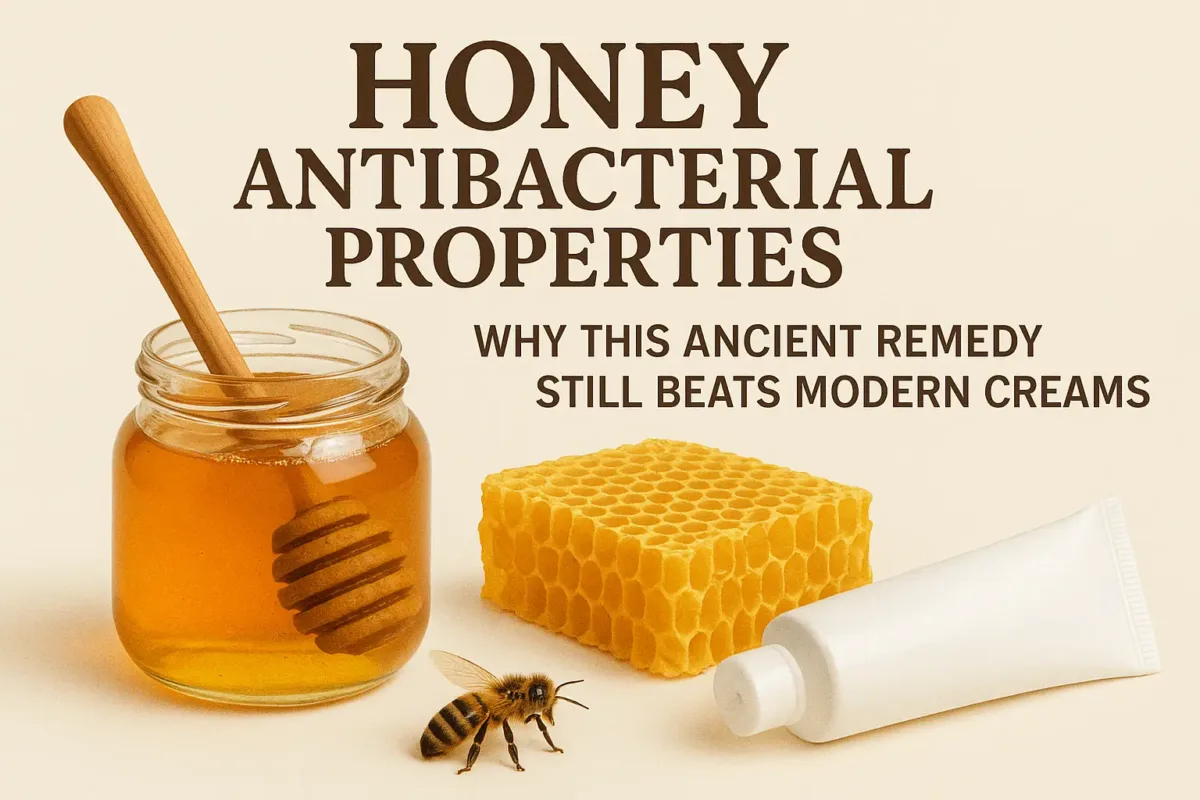
Honey’s concentrated sugars limit the water available to many microorganisms, while its acidity can make growth less favorable. Depending on its floral origin and processing, honey may also produce small amounts of hydrogen peroxide when diluted. Some varieties, particularly certain mānuka honeys, contain methylglyoxal, a compound studied for antibacterial activity.
These properties are interesting, but laboratory tests do not establish a safe dose or treatment for a human infection. The effect can vary substantially among honey samples, organisms, test conditions and formulations. A product that inhibits bacterial growth in a dish is not thereby equivalent to a proven medicine applied to living tissue.
What have clinical studies actually found?
The evidence is most encouraging for some specific wound-care comparisons, not for the sweeping claim that honey is better than every modern cream. A Cochrane review of honey as a topical wound treatment found that honey dressings could shorten healing time for certain partial-thickness burns compared with some conventional dressings. It also reported uncertainty about several outcomes, including infection and adverse events, and found that evidence for many other wound types was limited or inconsistent.
The same review identified comparisons involving silver sulfadiazine, other dressings and postoperative wounds. Outcomes differed by setting, and not all comparisons were supported by reliable evidence. It would be misleading to turn a finding about a particular type of burn into the assertion that honey cures infected wounds, replaces antibiotics or routinely outperforms medical treatment.
For chronic wounds, including diabetic foot ulcers and venous leg ulcers, choices must reflect the wound’s cause, circulation, infection risk and the patient’s wider health. A wound specialist may sometimes choose a medical-grade honey dressing, but that choice belongs within an individualized care plan. NICE’s evidence summary explains why findings from one wound type should not automatically be applied to another.
Medical-grade honey is not the same as pantry honey
This distinction is essential. Honey sold as food is not prepared, tested or packaged for use inside a wound. A medical-grade honey dressing is a wound-care product made and processed to meet the manufacturer’s medical-use specifications; some products are sterilized and supplied in controlled dressings or gels. The label, intended use and clinical instructions matter more than a fashionable variety name.
“Raw,” “organic,” “unfiltered,” “mānuka,” “UMF,” and “MGO” are not interchangeable terms, and a potency rating by itself does not certify a jar as an appropriate wound dressing. Do not put ordinary kitchen honey onto open wounds, burns, punctures or infected skin. Do not attempt to sterilize pantry honey at home.
Cuts, burns and infections: where the safety line sits
A minor scrape generally calls for basic first aid: clean the area with water, protect it with an appropriate clean dressing and monitor healing. Burns require prompt, burn-specific first aid and assessment according to severity. Applying food-grade honey can complicate care and should not displace established first-aid measures. If a clinician prescribes a medical-grade dressing, follow their product and change-of-dressing instructions.
Seek medical assessment for wounds that are deep, punctured, heavily contaminated, spreading, increasingly painful, unusually warm or producing pus, or for associated fever or feeling unwell. People with diabetes, impaired circulation, immune suppression or poorly healing wounds should be especially cautious about self-treatment. Serious bacterial infections may need antibiotics, drainage, tetanus protection or other care that honey cannot provide.
Can honey help a cough or sore throat?
The best-known home use is not wound care at all. Honey can provide temporary soothing relief for some coughs or throat irritation, partly because its texture coats the throat. That comfort is not proof that it kills the organism causing an infection or treats pneumonia, strep throat or other conditions. Persistent cough, difficulty breathing, dehydration, high fever or worsening symptoms need appropriate medical attention.
Never give honey to a child younger than 12 months, even if it is pasteurized or mixed into a drink or food. The CDC warns that honey can expose infants to botulism spores. For older children, follow age-appropriate clinical guidance for cough care rather than relying on an internet recipe.
Why “natural antibiotic” is an imprecise phrase
The word antibiotic has a specific medical meaning. Honey’s laboratory antimicrobial activity does not make food honey a licensed antibiotic medicine. Our related discussion of honey as a natural antibiotic should be read with that distinction in mind: promising chemistry and centuries of traditional use cannot establish that an untreated infection is safe to manage without professional care.
Readers exploring plant-derived practices can browse Mayobook’s Herbal Medicine topic, but topical authority should always begin with accurately distinguishing historical practices, preclinical research and demonstrated clinical benefit. The most helpful resource explains what the evidence supports—and where it stops.
What about mānuka honey, acne and skin conditions?
Mānuka honey has been studied for its distinctive chemical profile, including methylglyoxal, but results from a laboratory or a medical dressing cannot be transferred automatically to cosmetic masks or food-grade products. Evidence for self-treating acne, eczema and other inflammatory skin conditions with honey is not sufficient to replace established care. Honey can also irritate skin or trigger reactions in people sensitive to its components.
For a rash that is painful, extensive, recurrent or becoming infected, seek an appropriate assessment. Avoid applying experimental mixtures to broken skin or to the eyes. For an established condition, a treatment that seems gentle can still delay more effective care if its effects have not been studied adequately.
Practical questions to ask before believing a honey-health claim
- What was studied? Food honey, a sterilized dressing, a laboratory extract or a chemical compound can have very different implications.
- What was the comparator? Better healing than one dressing for a particular burn does not mean superiority to all medicines.
- Who was studied? A result in adults with a defined wound may not apply to infants, people with diabetes or other conditions.
- What was measured? Faster healing, reduced bacterial growth and fewer infections are distinct outcomes.
- What are the risks? Allergic reactions, contamination, delayed care and high sugar intake must be considered alongside potential benefits.
The bottom line
Honey is more scientifically interesting than a simple folk remedy, yet less universally effective than online promotion suggests. Some medical-grade preparations can be useful in selected, professionally managed wound-care situations. Food-grade honey may soothe an irritated throat for eligible age groups, but it does not replace prescription antibiotics or clinical assessment. The right question is never “Is honey stronger than medicine?” It is “What does good evidence say about this specific use, and what is safest for the person who needs care?”
Sources: Cochrane, Honey as a topical treatment for wounds; NICE, evidence on antimicrobial wound dressings; CDC, honey and infant feeding safety. This article is educational and does not provide diagnosis, prescribing or individualized treatment.